

Recommended Texts & Manuals
Tai Chi Instructor Certification
Tai Chi Instructor Certification
Earn your Tai Chi Instructor Certification and lead low-impact sessions focused on balance, mobility, controlled movement and mindful practice.
Pay Only If You Pass
Fully Accredited
100% Online & Self-Paced
No Required Coursework
Instant Digital Certificate
100,000+ Certifications Issued Worldwide
Couldn't load pickup availability
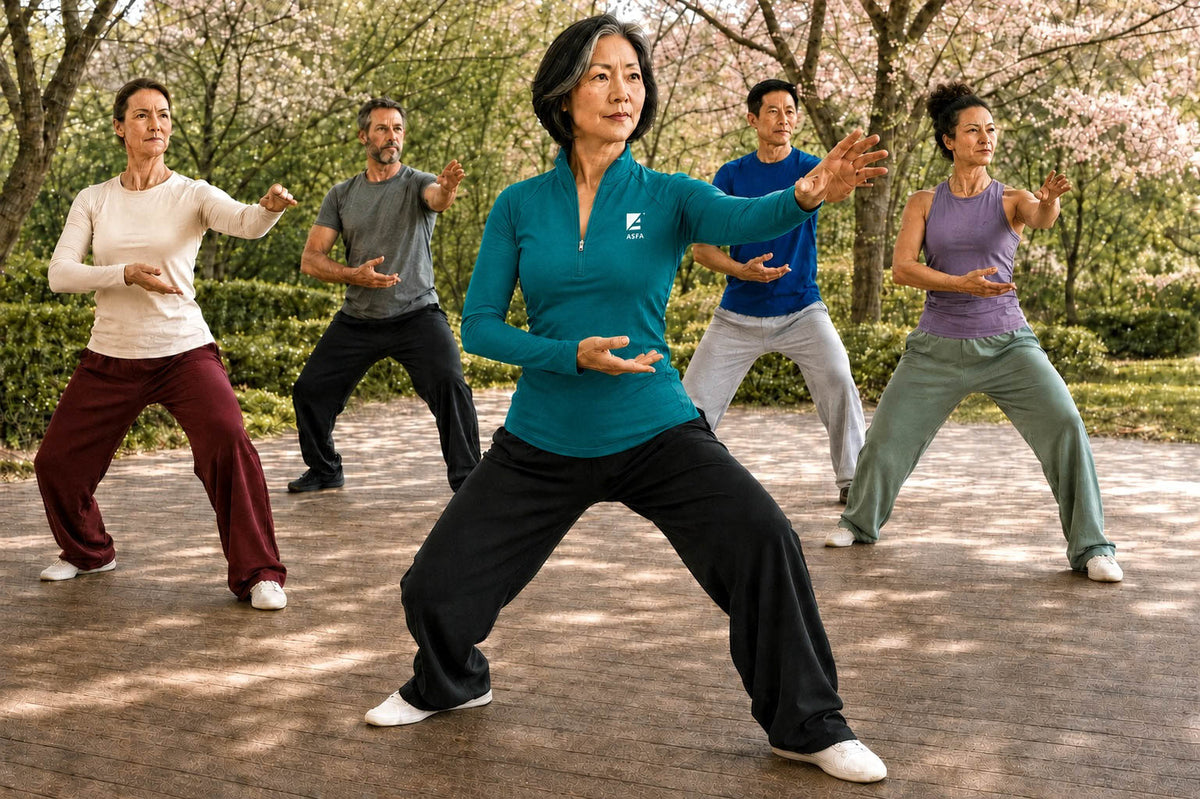
About Our Tai Chi Instructor Certification
Slower Movement Demands More Attention, Not Less
Tai Chi can look simple from a distance. The movements are controlled, the pace is measured, and the transitions may appear quiet. Teaching it well requires close attention to posture, weight transfer, balance, sequencing, cueing, breathing, and the participant's ability to move without rushing.
ASFA's Tai Chi Instructor Certification gives prepared candidates a way to demonstrate knowledge of low-impact movement instruction, flow, balance, coordination, class structure, and professional scope. Some candidates arrive through years of Tai Chi practice. Others bring backgrounds in fitness, wellness, martial arts, senior programming, yoga, or independent study.
You may take the online examination before buying the certification. A passing result lets you decide whether to purchase the credential. If you do not pass, you are not charged. Study further, deepen your understanding, and return when you are ready.
What Is a Tai Chi Instructor Certification?
A Tai Chi Instructor Certification is a fitness and wellness credential that recognizes knowledge of leading structured Tai Chi-based movement sessions. It addresses posture, balance, weight transfer, coordination, controlled movement, breathing awareness, class pacing, participant options, and safe instruction within a fitness professional's scope.
This certification does not confer lineage, rank, or mastery in a particular traditional school of Tai Chi. Those distinctions belong to the teachers and organizations that govern them. The credential has a practical purpose: validating knowledge relevant to leading Tai Chi-informed fitness and wellness sessions.
Control Is Built in the Transitions
It is easy to focus on the visible positions and miss what connects them. In Tai Chi, the transition often reveals whether the participant understands the movement. Weight must shift with control. The feet, hips, torso, and arms need a clear relationship. Breathing and pacing should support the sequence rather than compete with it.
An instructor has to make those details understandable without flooding the class with technical language. One participant may need a smaller stance. Another may need more time to complete the weight shift. A third may be ready to connect several movements with greater continuity.
The objective is not uniform appearance. It is purposeful movement. Good instruction gives participants enough structure to improve while preserving the calm, deliberate quality that makes the format distinctive.
What the Examination Calls on You to Know
- Posture and alignment: organizing the body in a way that supports controlled movement without forcing a rigid position.
- Weight transfer: understanding how shifts through the feet and legs affect balance, direction, and continuity.
- Movement sequencing: teaching individual patterns and linking them into a flow participants can follow.
- Balance and coordination: using stance, pace, range, and support options appropriately.
- Breathing awareness: integrating natural breathing cues without turning the class into a clinical breathing intervention.
- Class pacing: allowing enough repetition for learning while keeping the session engaged and coherent.
- Instructional cueing: combining concise verbal explanation, demonstration, imagery, and observation.
- Participant modification: adjusting stance, depth, range, complexity, or support while preserving the movement's purpose.
- Professional scope: avoiding promises or services that extend beyond fitness and wellness instruction.
Tai Chi instruction is not improved by saying more. It is improved by choosing the cue that helps the participant feel or see the next useful change.
Why People Choose Tai Chi
Participants may be drawn to Tai Chi for different reasons. Some want low-impact movement. Others value balance practice, coordination, body awareness, a calmer class environment, or an activity that can remain meaningful across different stages of life.
That range is part of the format's strength. A class can be accessible without becoming empty of challenge. Control, sequencing, attention, and consistency provide their own form of progression. The instructor should understand how to create that progression without turning a measured practice into a rushed workout.
Who May Be Ready to Take the Examination?
The certification may fit fitness instructors, wellness coaches, senior-fitness professionals, martial-arts practitioners, yoga or mobility instructors, and knowledgeable enthusiasts with a serious Tai Chi background. ASFA does not require a current professional title.
What matters is preparation. If you have studied and practiced enough to understand the principles of instruction, you can test the knowledge directly. If the examination shows that you are not ready, you are not charged. Use the attempt to guide further practice and study.
Professional Application Without Overstatement
A Tai Chi specialty can complement wellness programs, active-aging services, community classes, low-impact group exercise, and private movement instruction. It may help a professional serve people who want a quieter and more deliberate alternative to conventional group fitness.
No credential guarantees employment, clients, or specific outcomes. It can make your area of knowledge easier to communicate. Instructors who work in this space often combine Tai Chi with Balance & Stability, Senior Fitness, Stretching, or Yoga.
How ASFA's Test-First Process Works
Take the examination online when you believe you are prepared. You do not have to purchase a required course or wait for a scheduled test date. Optional resources are available if you want to review.
After you pass, complete checkout only if the certification is worthwhile to you; your digital certificate is normally emailed within minutes. If you do not pass, there is no charge. Continue learning and return when your knowledge is stronger.
ASFA is fully accredited by the International Council for Online Educational Standards (ICOES).
Frequently Asked Questions
Do I need years of professional teaching experience?
No specific employment history is required by ASFA. You do need enough knowledge of Tai Chi movement and instruction to pass the examination. Practice, study, and teaching experience can all contribute to readiness.
Does this certification make me a Tai Chi master or confer a traditional rank?
No. It is a fitness and wellness instructor certification. It does not award lineage, martial-arts rank, or mastery within a traditional Tai Chi school.
Can a fitness enthusiast take the test?
Yes. A knowledgeable practitioner may be ready even without a current fitness job. The examination determines whether the required understanding is present.
Will employers and community programs accept it?
Requirements vary by employer, facility, program, and insurer. Confirm the credentials required for the position or class you plan to lead. Some organizations may also request a general group-fitness certification or separate safety training.
Is ASFA fully accredited?
Yes. ASFA is fully accredited by the International Council for Online Educational Standards (ICOES).
Do I have to buy study materials?
No. Optional resources are available, but you may test based on your current knowledge.
What happens if I do not pass?
You are not charged. Continue practicing and studying, then take the examination again when you are ready.
When is the digital certificate available?
After you pass and complete checkout, your digital certificate is normally emailed within minutes.