

Advanced Health & Wellness Coach Certification
Advanced Health & Wellness Coach Certification
Earn your Advanced Health & Wellness Coach Certification and deepen your ability to guide behavior change, build lasting habits, and support long-term wellness.
Pay Only If You Pass
Fully Accredited
100% Online & Self-Paced
No Required Coursework
Instant Digital Certificate
100,000+ Certifications Issued Worldwide
Couldn't load pickup availability
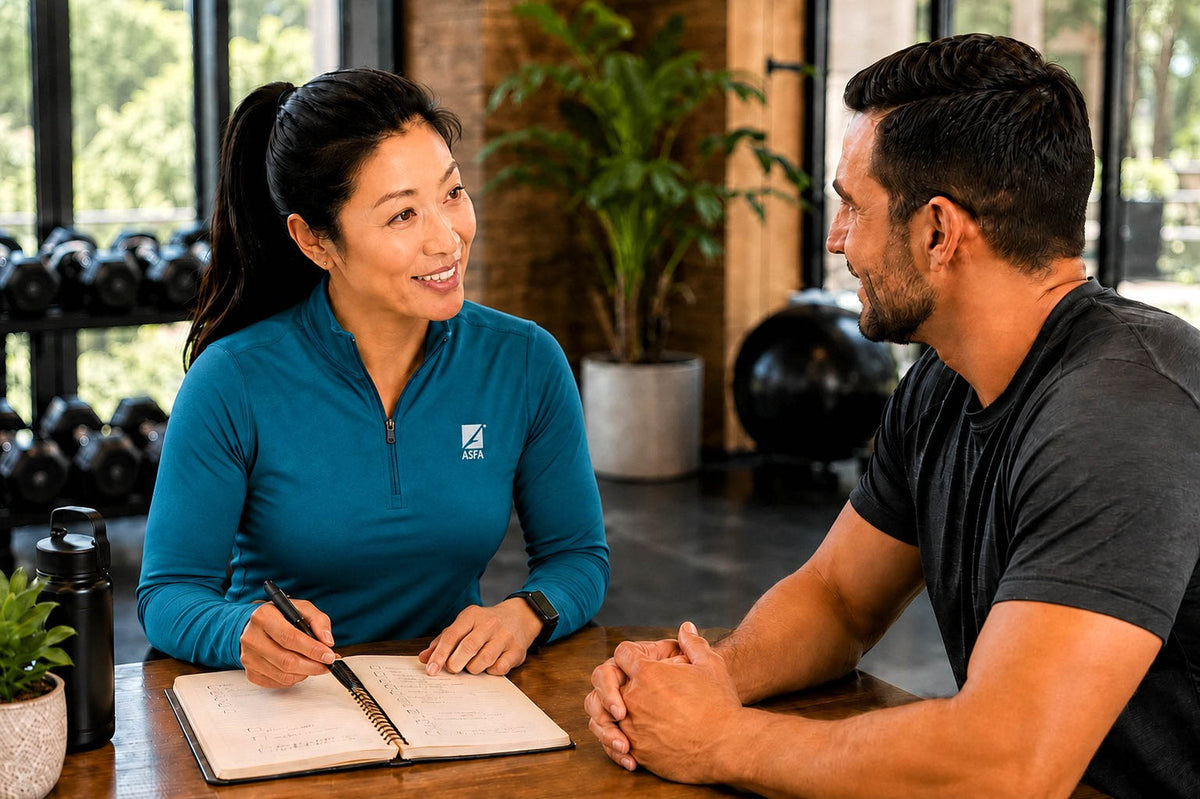
About Our Advanced Health & Wellness Coach Certification
A Clear Goal Can Still Be Hard to Follow
Clients do not usually struggle because they have never heard that movement, sleep, nutrition habits, recovery, and stress management matter. The harder question is why a sensible plan repeatedly loses to a busy week, an unsupportive environment, unrealistic expectations, or a pattern the client has not yet learned to recognize.
Advanced wellness coaching begins in that gap. It requires more than encouragement and more than a checklist of healthy behaviors. The coach must listen for competing priorities, help the client define what is actually controllable, and adjust the process without taking ownership away from the person doing the work.
ASFA's Advanced Health & Wellness Coach Certification is an online, exam-based credential for candidates who understand that level of coaching. You can demonstrate what you know before paying for the certification. Pass first, then decide whether the credential belongs in your professional portfolio.
What Is an Advanced Health & Wellness Coach Certification?
An Advanced Health & Wellness Coach Certification recognizes deeper knowledge of behavior change, client communication, motivation, habit development, accountability, lifestyle planning, and professional boundaries. It is intended for candidates who can move beyond basic goal setting and reason through the practical difficulties that affect long-term follow-through.
Advanced does not mean providing clinical care or giving more forceful advice. It means using better judgment: knowing when to ask, when to listen, when to narrow the goal, when to challenge an assumption, and when the client's needs fall outside a coach's scope.
Advanced Coaching Is Not Louder Accountability
Accountability can be useful, but it becomes shallow when it means repeatedly asking whether the client completed a task. A stronger coaching process examines what the answer reveals.
If the client followed through, what made the action workable? If not, was the plan too large, poorly timed, disconnected from a real priority, or dependent on circumstances that rarely occur? If the client says one goal matters but repeatedly acts toward another, the coach should explore the conflict rather than add pressure.
This is where advanced communication earns its value. The client needs room to be honest without feeling graded. The coach needs enough structure to keep the conversation useful. Progress depends on both.
What You Should Be Prepared to Apply
The advanced examination expects a working understanding of wellness coaching principles and their practical application. Areas of emphasis include:
- Readiness and motivation: recognizing that willingness can change and adapting the conversation without manipulating the client.
- Layered goal planning: connecting long-term outcomes to shorter actions, decision points, and realistic measures of progress.
- Behavior patterns: identifying cues, friction, environmental influences, competing rewards, and routines that maintain an unwanted pattern.
- Communication under resistance: responding to ambivalence, defensiveness, discouragement, or inconsistent follow-through without turning coaching into confrontation.
- Setbacks and recovery: helping a client learn from a lapse, restart quickly, and avoid treating one difficult period as total failure.
- Progress monitoring: considering actions, confidence, consistency, and client feedback rather than relying on a single outcome measure.
- Integrated lifestyle context: understanding how schedule, movement, sleep, recovery, stress, social environment, and general nutrition behaviors may affect one another.
- Scope and referral: maintaining clear boundaries when a client's concerns require a licensed healthcare, mental-health, or nutrition professional.
The examination is not asking whether you know a collection of wellness terms. It is asking whether you can use the concepts coherently while respecting client autonomy.
Who Is Ready for the Advanced Level?
The credential may fit working wellness coaches, personal trainers, fitness managers, corporate wellness staff, online coaches, and professionals who already use behavior-change conversations in their work. It may also fit a well-prepared independent learner with a strong background in coaching psychology, habit formation, and lifestyle principles.
ASFA does not require the foundational Health & Wellness Coach Certification first. A candidate who already understands the advanced material can take the examination directly. Someone still learning the basics may find the foundational level more appropriate.
The test-first structure makes that decision less risky. You can see whether your knowledge meets the standard without purchasing a bundled course package in advance.
Where Advanced Knowledge Creates Professional Value
Long-term coaching services depend on more than acquiring a client. They depend on creating a process the client finds useful enough to continue. Advanced coaching knowledge can improve the quality of check-ins, the clarity of action planning, and the way setbacks are handled. Those improvements may support retention, referrals, and a more differentiated service offering.
A specialty credential can also help explain your role. Instead of presenting yourself as someone who simply gives wellness tips, you can describe a structured coaching service centered on goals, behavior, accountability, and client-directed change. That clearer positioning may support premium services when it is backed by sound practice and relevant experience. It does not guarantee clients or income.
Test Your Knowledge Before Making the Purchase
There are no mandatory seminars or required textbooks. Review optional resources if they would help, or move directly to the online examination if you believe your preparation is sufficient.
A passing result gives you the choice to purchase the certification. After you pass, complete checkout only if the certification is worthwhile to you; your digital certificate is normally emailed within minutes. If you do not pass, no payment is due. Study the areas that need work and return when your understanding is stronger.
ASFA is fully accredited by the International Council for Online Educational Standards (ICOES).
Frequently Asked Questions
How is the advanced certification different from the foundational credential?
The foundational certification addresses core coaching concepts. The advanced credential expects more depth in behavior analysis, communication, setbacks, progress review, integrated lifestyle planning, and professional judgment.
Do I need the Health & Wellness Coach Certification first?
No. Prepared candidates may take the advanced examination directly. The foundational certification remains a sensible starting point when core concepts are still new.
Can a fitness enthusiast take the advanced test?
Yes. ASFA evaluates knowledge rather than job title. A serious independent learner may be ready, although the advanced examination assumes more than introductory familiarity with wellness coaching.
Is coursework required?
No. Study resources are optional. Candidates may prepare through prior education, professional experience, independent study, or a combination of approaches.
What if I do not pass?
There is no charge. Review the result, strengthen the weaker areas, and attempt the examination again after further preparation.
Is ASFA fully accredited?
Yes. ASFA is fully accredited by the International Council for Online Educational Standards (ICOES).
Will an employer or wellness program accept it?
Acceptance depends on the organization, position, insurer, and local requirements. Ask the employer or contracting organization which credentials and prerequisites it recognizes before purchasing when that decision is important.
Does advanced wellness coaching include clinical care?
No. The certification does not authorize diagnosis, treatment, psychotherapy, or individualized clinical nutrition services. Coaches must work within their qualifications and refer when a client's needs exceed that scope.
When do I receive the certificate?
After you pass and complete checkout, your digital certificate is normally emailed within minutes.
Continue Developing a Focused Coaching Practice
Advanced wellness coaching can serve as a central credential or complement a more specialized service. Related options include ASFA's Health & Wellness Coach Certification, Master Health & Wellness Coach Certification, Advanced Weight Loss Coach Certification, Sport Psychology Coach Certification, and Personal Trainer Certification.
Choose specialties because they fit the work you intend to do, not because a longer credential list looks impressive. Relevance is what makes specialization marketable.