

Women's Fitness Instructor Certification
Women's Fitness Instructor Certification
Earn your Women's Fitness Instructor Certification and expand your ability to coach women across strength, conditioning, wellness and life-stage goals.
Pay Only If You Pass
Fully Accredited
100% Online & Self-Paced
No Required Coursework
Instant Digital Certificate
100,000+ Certifications Issued Worldwide
Couldn't load pickup availability
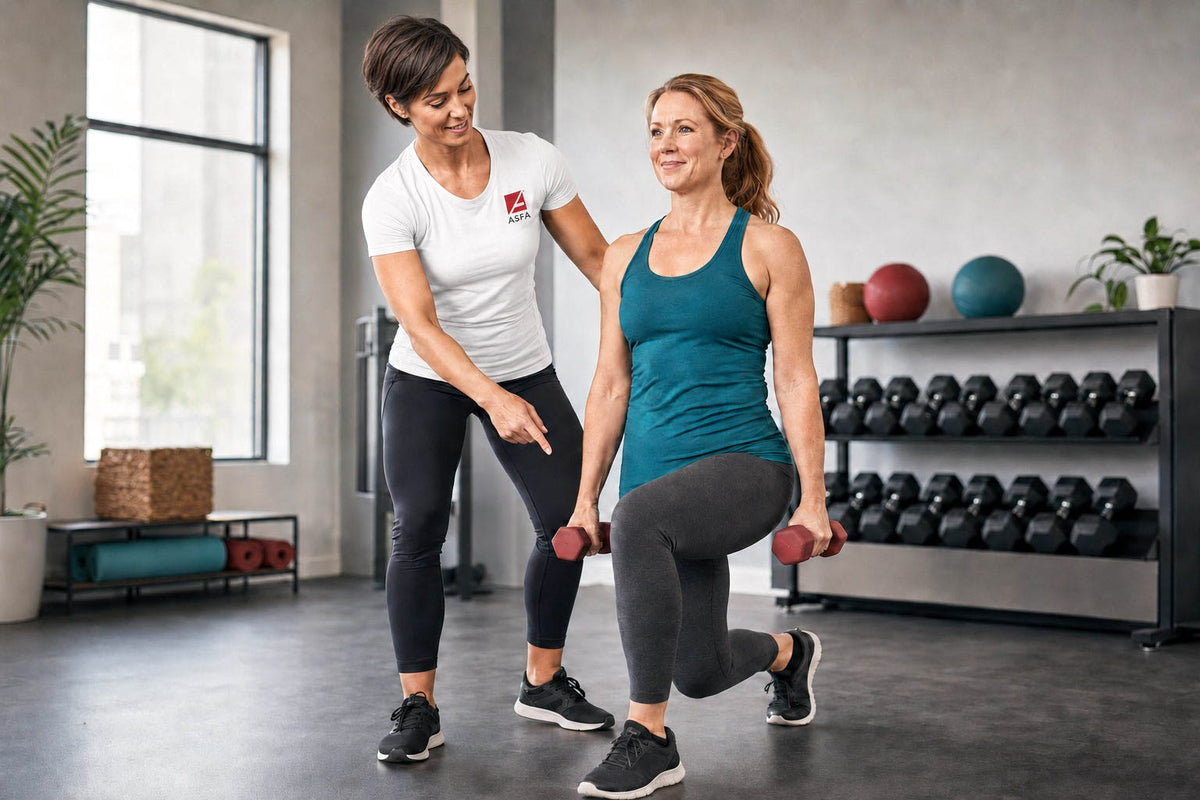
About Our Women's Fitness Instructor Certification
Women's Fitness Is Not One Program for Half the Population
Women train for strength, performance, confidence, competition, mobility, stress relief, body composition, and the simple satisfaction of getting better at something difficult. Their goals are varied because women are varied. Effective instruction begins by understanding the person, not by relying on a pink version of a generic workout.
ASFA's Women's Fitness Instructor Certification is for candidates who understand that distinction. It recognizes knowledge of resistance training, cardiovascular conditioning, program design, movement change, recovery, communication, and professional scope across a range of female clients and life stages.
You may already coach clients. You may be adding a specialty to a broader fitness practice. You may also be a fitness enthusiast who has spent years studying and applying sound training principles and is ready to move into professional work. ASFA allows you to test what you know before paying for the certification.
What Is a Women's Fitness Instructor Certification?
A Women's Fitness Instructor Certification is a specialty credential that recognizes knowledge of fitness programming for female clients. It covers the practical decisions involved in building strength, improving conditioning, supporting mobility, modifying exercise, communicating effectively, and respecting the boundaries of non-clinical fitness practice.
The certification does not suggest that women require entirely separate exercise science. The fundamentals of adaptation, progression, technique, recovery, and consistency still matter. The specialty lies in applying those fundamentals without stereotypes and with appropriate awareness of individual goals, training history, preferences, and life-stage considerations.
Program the Client, Not the Marketing Category
Women are often given conflicting messages about exercise. Lift heavy, but do not get bulky. Train hard, but keep every workout low impact. Focus on appearance, but also ignore appearance. A professional instructor should be able to move beyond slogans and help the client build a plan that makes sense.
That may mean teaching a beginner to become comfortable with foundational resistance exercises. It may mean helping an experienced client organize training variables more effectively. It may mean adjusting a group session so participants with different abilities can work toward the same training goal without being forced into identical movement.
Good coaching is specific. It asks what the client wants, what she can do now, what obstacles are likely to interfere, and what progression is realistic. The answer is rarely found in a one-size-fits-all "women's workout."
Knowledge the Examination Recognizes
- Strength training: exercise selection, technique, progressive overload, muscular development, and sensible progression.
- Cardiovascular conditioning: matching modality, intensity, frequency, and duration to the client's goals and current ability.
- Movement quality: observing setup, control, range, stability, and confidence without diagnosing conditions.
- Program modification: changing load, range, tempo, support, complexity, or exercise choice while preserving the intended stimulus.
- Recovery: organizing training around workload, experience, schedule, and the client's response over time.
- Behavior and adherence: creating plans that can be repeated in real life rather than only completed during a motivated week.
- Communication: discussing goals professionally and avoiding shame, assumptions, or promises that cannot be supported.
- Scope of practice: knowing where fitness instruction ends and licensed healthcare or nutrition care begins.
Different Life Stages, Different Contexts
A younger athlete, a new parent returning to exercise, a midlife client, and an active older adult may all benefit from strength and conditioning. They may not need the same session structure, recovery expectations, coaching language, or priorities.
The instructor's responsibility is not to become a medical expert in every life stage. It is to understand how context influences fitness participation, ask appropriate questions, make reasonable changes, and refer concerns that fall outside fitness practice. That combination of competence and restraint builds trust.
Who Should Consider Testing?
This credential may fit personal trainers, group fitness instructors, wellness professionals, coaches, and aspiring fitness professionals who want a clear women-focused specialty. It is also open to well-prepared enthusiasts. Knowledge may come from formal study, experience, independent learning, athletics, or a combination of sources.
ASFA's position is straightforward: the route you took matters less than whether you can show the knowledge. If you are prepared, test. If you discover that you are not yet prepared, you are not charged and can return after more study.
A Certification Model That Lets You See the Standard First
Traditional certification programs often require a large up-front purchase before a candidate knows whether the content is too basic, too advanced, or a poor fit. ASFA uses a different model. Take the online examination first. After passing, choose the certification option you want and complete payment.
ASFA is fully accredited by the International Council for Online Educational Standards (ICOES). After you pass and complete checkout, your digital certificate is normally emailed within minutes.
How This Specialty Can Support Your Business
A women's fitness credential can help define a service niche, support women-focused classes, strengthen personal training positioning, and make a professional profile easier for prospective clients to understand. It can be particularly useful for instructors who already serve many female clients but want the specialization reflected in their credentials.
The certification does not guarantee income or authorize work beyond your qualifications. Pricing power comes from the complete value you provide: knowledge, coaching ability, client experience, communication, reliability, and results that stay within reasonable professional claims.
Frequently Asked Questions
Do I have to be a woman to earn this certification?
No. The credential is based on knowledge and professional readiness, not the candidate's sex or gender.
Can a beginner take the exam?
Yes. ASFA does not limit testing to currently employed professionals. An aspiring instructor or serious enthusiast may test if prepared. Passing is the evidence that the candidate met the examination standard.
Is ASFA fully accredited?
Yes. ASFA is fully accredited by the International Council for Online Educational Standards (ICOES).
Will an employer accept the certification?
Acceptance depends on the employer, job description, insurer, facility, and local requirements. Check directly with the organization where you plan to work.
Does this credential permit medical, rehabilitation, or clinical nutrition advice?
No. It recognizes fitness instruction knowledge. Candidates must work within their existing scope and refer clinical concerns to appropriately qualified professionals.
What if I do not pass?
You are not charged. Study the areas that need improvement and attempt the examination again when ready.
Related Paths for a Broader Women's Fitness Practice
Depending on the population you serve, useful additions may include the Menopause Fitness Coach Certification, Personal Trainer Certification, Strength & Conditioning Coach Certification, Health & Wellness Coach Certification, and Weight Loss Coach Certification.
The strongest women's fitness programs are not built on assumptions about what women should want. They are built by listening, applying sound training principles, and helping each client become more capable on her own terms.