

Recommended Texts & Manuals
Golf Fitness Coach Certification
Golf Fitness Coach Certification
Earn your Golf Fitness Coach Certification and develop golf-specific programs that support mobility, rotational strength, stability, and on-course performance.
Pay Only If You Pass
Fully Accredited
100% Online & Self-Paced
No Required Coursework
Instant Digital Certificate
100,000+ Certifications Issued Worldwide
Couldn't load pickup availability
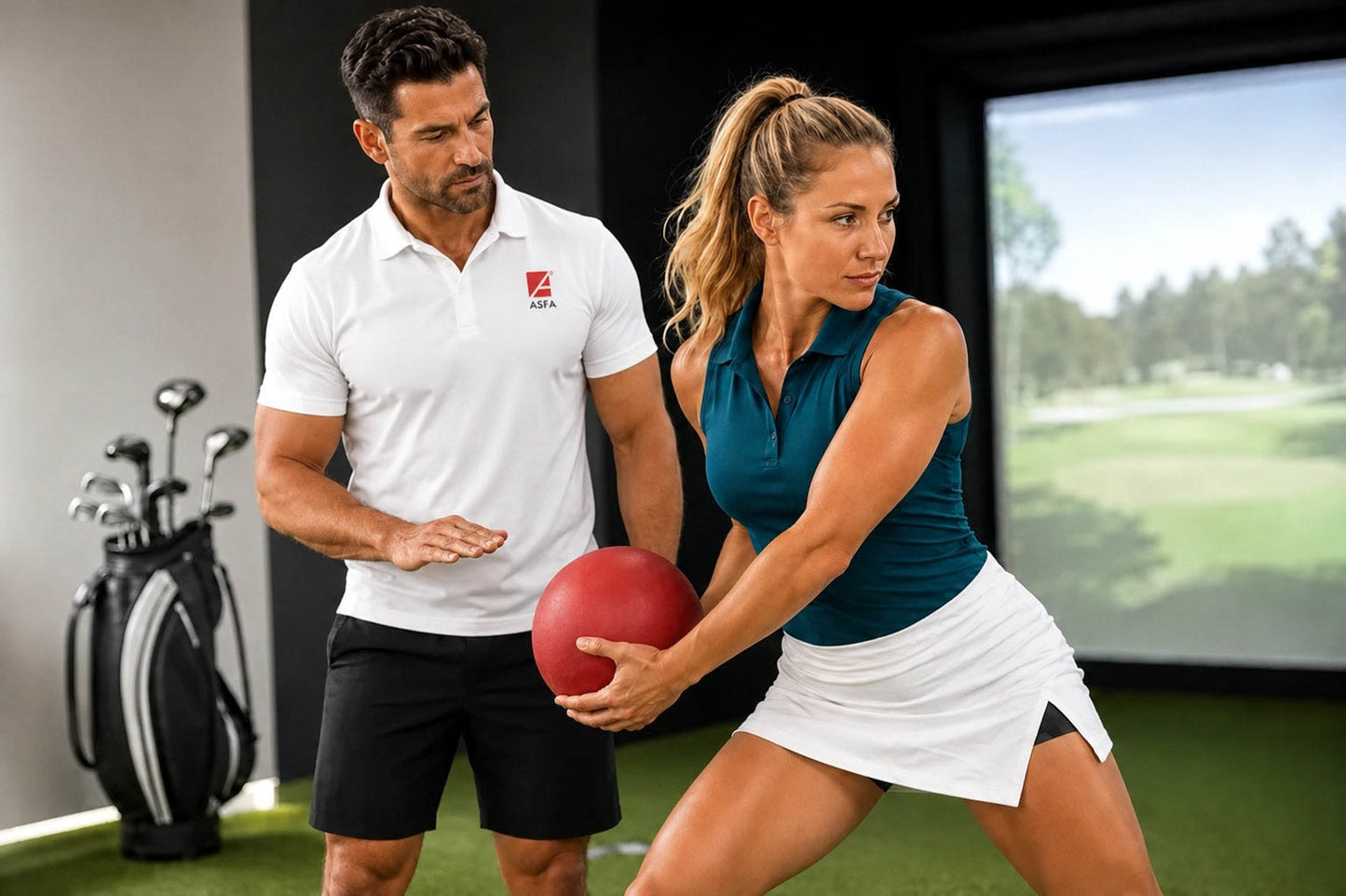
About Our Golf Fitness Coach Certification
The Golf Swing Is Technical. Golf Fitness Supports the Person Making It.
A fitness coach does not need to rebuild a golfer’s swing to improve the physical qualities that support it. Strength, balance, mobility, power, posture, work capacity, and the ability to repeat effort across a round all influence how well a golfer can practice and play.
ASFA’s Golf Fitness Coach Certification recognizes knowledge of physical preparation for golfers. It is intended for personal trainers, strength coaches, golf professionals expanding their fitness understanding, experienced golfers, and knowledgeable enthusiasts who want to connect general training principles with the demands of the sport.
The examination is available before purchase. Pass first, then decide whether the certification belongs in your service offering. If you do not pass, ASFA does not charge you. Study and test again when ready.
What Is Golf Fitness Coaching?
Golf fitness coaching develops physical qualities that can support a golfer’s movement, practice tolerance, and performance. Programs may address rotational power, lower-body force, trunk control, balance, mobility, strength, conditioning, and recovery according to the golfer’s needs.
The role is distinct from swing instruction and rehabilitation. A golf fitness coach should not diagnose a swing fault, treat pain, or make clinical claims outside the coach’s qualifications. Collaboration with golf instructors and licensed healthcare professionals may be appropriate.
Rotation Does Not Begin and End at the Torso
The golf swing uses the ground, lower body, pelvis, trunk, shoulders, and arms in a coordinated sequence. Training only rotation can miss the strength and control that allow the golfer to create and transfer force.
Golfers also differ. A younger competitive player may prioritize speed and power. An older recreational player may care more about maintaining mobility, balance, and enough capacity to complete a round comfortably. The coach should train the golfer—not an abstract model of the swing.
Knowledge Assessed by the Certification
- Sport demands: understanding the repeated swings, walking or riding, practice volume, posture, and concentration involved in golf.
- Movement assessment: observing general mobility, stability, balance, and strength within a fitness scope.
- Rotational power: developing force through the lower body and trunk with appropriate sequencing and progression.
- Strength training: building foundational force capacity rather than relying entirely on golf-shaped exercises.
- Mobility: addressing relevant movement options without forcing range or making clinical diagnoses.
- Balance and control: training stable positions and the ability to manage force through changing stances.
- Conditioning: supporting practice quality and the physical demands of a full round or tournament schedule.
- Program design: coordinating gym work with lessons, practice, play, travel, and competition.
- Communication: working with the golfer and, when appropriate, the swing coach without giving conflicting instructions.
- Scope and referral: recognizing pain, neurological symptoms, or other concerns that require a qualified professional.
Golf-Shaped Exercises Are Not Automatically Golf-Specific
Attaching resistance to a swing pattern can look relevant while changing timing and mechanics in ways that do not help the golfer. The fitness program does not have to imitate the sport to support it.
Squats, hinges, rows, presses, carries, jumps, throws, balance drills, and mobility work can all contribute when they address a real need. The coach should be able to explain which quality is being trained and why that quality matters to the golfer.
Who Can Take the Exam?
Personal trainers may add a golf specialty to reach a defined client population. Strength coaches may use it with competitive golfers. Golf professionals may want a stronger fitness vocabulary. Long-time golfers and fitness enthusiasts may have developed substantial knowledge through study and practice.
You do not have to be a tour player or current fitness professional to access the examination. You do need enough understanding to separate physical preparation from swing instruction and to coach within your role.
Test Before You Purchase
ASFA does not require an expensive seminar or textbook package before you can see the exam. Take it online when ready. After you pass and complete checkout, your digital certificate is normally emailed within minutes.
If you do not pass, no payment is due. Review the areas that need work, study through optional resources or another program, and return later. The process recognizes prior learning while preserving a clear test of preparation.
Accreditation and Professional Acceptance
ASFA is fully accredited by the International Council for Online Educational Standards (ICOES).
Golf clubs, gyms, resorts, teams, employers, and insurers may require additional education, experience, insurance, or a core fitness credential. The certification does not create affiliation with a golf governing body. Confirm the requirements of the setting where you intend to work.
Golf Fitness FAQs
Does this certification qualify me to teach the golf swing?
No. It focuses on fitness and physical preparation. Swing instruction requires separate expertise, and many coaches collaborate with golf professionals rather than crossing roles.
Can golf fitness help older recreational players?
Fitness programs can be adapted to support mobility, balance, strength, and general capacity for golfers of different ages. Exercise selection and intensity should match the individual’s preparation and any professional guidance.
Do I need to be a low-handicap golfer?
No. Playing ability is not the same as fitness-coaching knowledge. Familiarity with the sport is valuable, but the exam focuses on physical preparation.
Will employers accept the certification?
Acceptance depends on the employer and role. Ask the club, gym, resort, or insurer which credentials and experience it requires.
What happens if I do not pass?
You are not charged. Continue studying and take the exam again when prepared.
How is certification maintained?
The one-year option requires retesting and repurchasing before expiration. The lifetime option requires continued activity in the certified field and one relevant continuing-education class, course, or seminar each year.
Build a Golf-Focused Training Service
Useful companion credentials include the Sport Specific Trainer Certification, Core Fitness Trainer Certification, Balance & Stability Instructor Certification, Stretching Coach Certification, and Strength & Conditioning Coach Certification.
The goal is not to make every session look like golf. It is to build the physical qualities that allow the golfer to practice, play, and express skill with fewer limitations.