
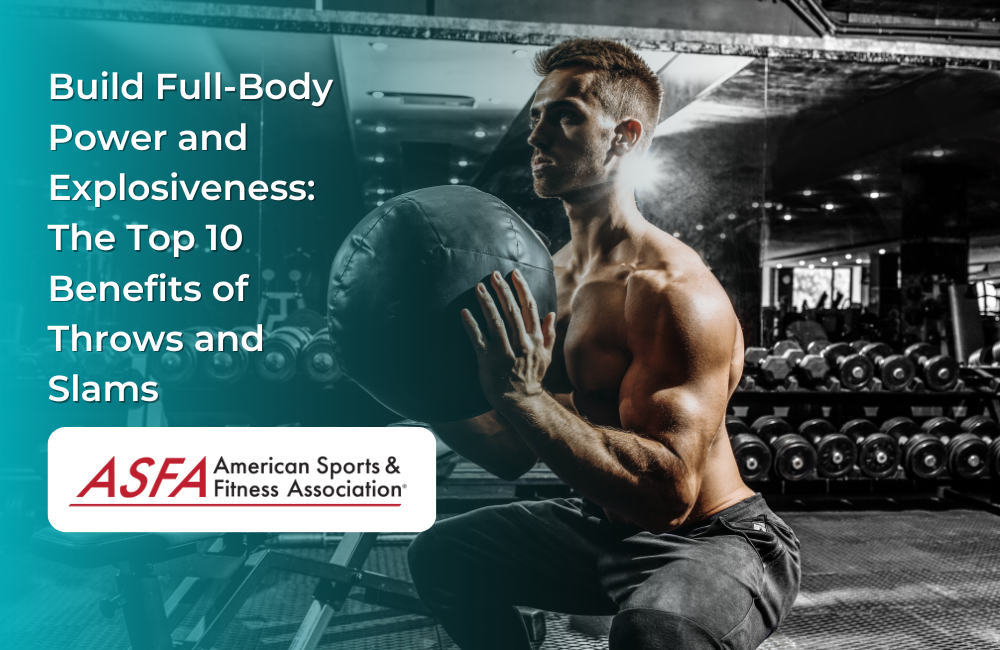
The Top 10 Benefits of Throws and Slams
The points in The Top 10 Benefits of Throws and Slams are organized around practical application rather than exaggerated promises.
Technique is not a single perfect shape. It is a repeatable way to complete the movement while controlling the load, range, and positions that matter for the goal. A simple rule helps: keep the goal visible and adjust the method.
Practical Guidance
Practical point: Choose the variation that permits a stable setup and repeatable range. Add repetitions or resistance only while the same control is maintained; stop when pain or compensation changes the movement.
Enhance Athletic Performance
Throws and slams are used extensively in sports training programs to develop power, speed, and explosiveness. Athletes in sports like basketball, soccer, American football, and track and field can benefit from these exercises, as they help improve overall athleticism and translate to better on-field performance.
Develop Full-Body Coordination
These exercises require the coordination of multiple muscle groups and body parts, improving overall body awareness and control. As you progress with throws and slams, you will notice increased coordination, which can contribute to improved athletic performance and reduced risk of injury.
Improve Core Strength
Throws and slams engage the core muscles, including the abdominals, obliques, and lower back. A strong core is essential for maintaining proper posture, balance, and stability during dynamic movements, making these exercises an excellent choice for developing core strength.
Increase Power Output
Power output is a critical component of athletic performance, as it determines your ability to generate force quickly. Throws and slams train your body to produce explosive movements, resulting in increased power output that translates to various sports and activities.
Build Functional Strength
Functional strength refers to the ability to perform everyday tasks and movements efficiently and effectively. Throws and slams mimic natural movement patterns, making them an excellent choice for building functional strength that carries over to daily life.
Enhance Cardiovascular Endurance
When performed at a high intensity, throws and slams can provide an effective cardiovascular workout. These exercises challenge your heart and lungs, improving your overall endurance and cardiovascular fitness.
can increase short-term energy expenditure and Burn Calories
Throws and slams are high-intensity exercises that can help boost your metabolism and increase calorie burn. Incorporating these exercises into your routine can contribute to weight management and overall fitness.
Improve Mobility and Flexibility
These exercises require a full range of motion and can help improve mobility and flexibility in various joints, including the hips, shoulders, and spine. By incorporating throws and slams into your workout regimen, you can promote better joint health and reduce the risk of injury.
Reduce the Risk of Injury
When performed with proper form and technique, throws and slams can help strengthen the muscles, tendons, and ligaments surrounding your joints. This added support can reduce the risk of injury during sports and everyday activities.
Increase Workout Variety and Enjoyment
Incorporating throws and slams into your fitness routine can help break up the monotony of traditional exercises and keep you engaged and motivated. These exercises are not only challenging but also fun, making them an enjoyable way to improve your fitness and reach your goals.
The Useful Conclusion
The best application is specific enough to guide action and flexible enough to change when the person or circumstances change.
Safety and Scope
Exercise should be adjusted for the participant's experience, symptoms, environment, and available supervision. Stop for sharp pain, dizziness, chest discomfort, sudden weakness, or loss of control, and seek appropriate professional guidance when symptoms are persistent or concerning.
Use Context, Not Assumptions
With The Top 10 Benefits of Throws and Slams, the same recommendation can produce different results for two people. Experience, recent workload, movement skill, available equipment, schedule, preferences, and recovery all change what is reasonable.
Review the result over several exposures rather than judging one unusually good or difficult session. Useful progress is usually visible as better control, a more appropriate workload, improved consistency, or clearer decision-making.

Connect the Topic to a Real Objective
Applying the ideas in The Top 10 Benefits of Throws and Slams starts with a clear training objective rather than copying a movement, drill, or weekly schedule without context.
For strength, the plan may emphasize load and long rest periods. For muscular endurance, the same movement may use lighter resistance, more repetitions, and shorter recovery. Technique practice may call for low fatigue and frequent high-quality repetitions. Conditioning may use a different structure again. Those approaches are not interchangeable simply because the exercise name is the same.
Use the Smallest Effective Adjustment
Small programming changes can make the same movement serve a different purpose. Slower repetitions increase time under tension; longer rest may preserve force; shorter rest changes the conditioning demand; additional range can increase difficulty even without more weight.
- Choose the variable that best matches the current goal.
- Record enough detail to repeat the session accurately.
- Do not treat fatigue as proof that the exercise was well selected.
- Progress only while the intended movement pattern remains recognizable.
Progress Without Losing the Original Goal
Start with a version that allows a stable setup and repeatable range. Establish a baseline for repetitions, load, tempo, and perceived effort. Progress one element—such as another repetition, a small resistance increase, more range, or a more demanding variation—only when the prior version remains controlled. If technique changes early, recovery declines, or the target area is no longer doing the intended work, reduce the demand and rebuild from a clearer baseline.
What to Review After Several Sessions
Before changing the plan again, compare:
- load, range, tempo, and rest used
- perceived effort and how close the set came to technical failure
- recovery, soreness, and performance in the next session
- repetitions completed with the intended technique
When the response differs from the expectation, revisit the setup and assumptions before adding more volume, restriction, or complexity.
Individual Context Still Matters
Exercise selection should fit the participant rather than require the participant to fit a preferred variation. A different stance, grip, range, resistance, or tool may preserve the goal more effectively. Use the version that allows a controlled and repeatable pattern, then progress from the response rather than from an arbitrary timetable.
Keep the Application From Drifting
- Using fatigue or soreness as the only evidence of an effective session.
- Forcing a standardized range or stance when another controlled setup better fits the participant.
- Choosing the hardest variation before the base movement is controlled.
- Increasing load, repetitions, range, and frequency at the same time.
The correction is straightforward: return to the objective, simplify the setup, and change only what the available feedback supports.


