

Senior Fitness Instructor Certification
Senior Fitness Instructor Certification
Earn your Senior Fitness Instructor Certification and build the specialized knowledge to lead appropriate, mobility-focused programs for older adults.
Pay Only If You Pass
Fully Accredited
100% Online & Self-Paced
No Required Coursework
Instant Digital Certificate
100,000+ Certifications Issued Worldwide
Couldn't load pickup availability
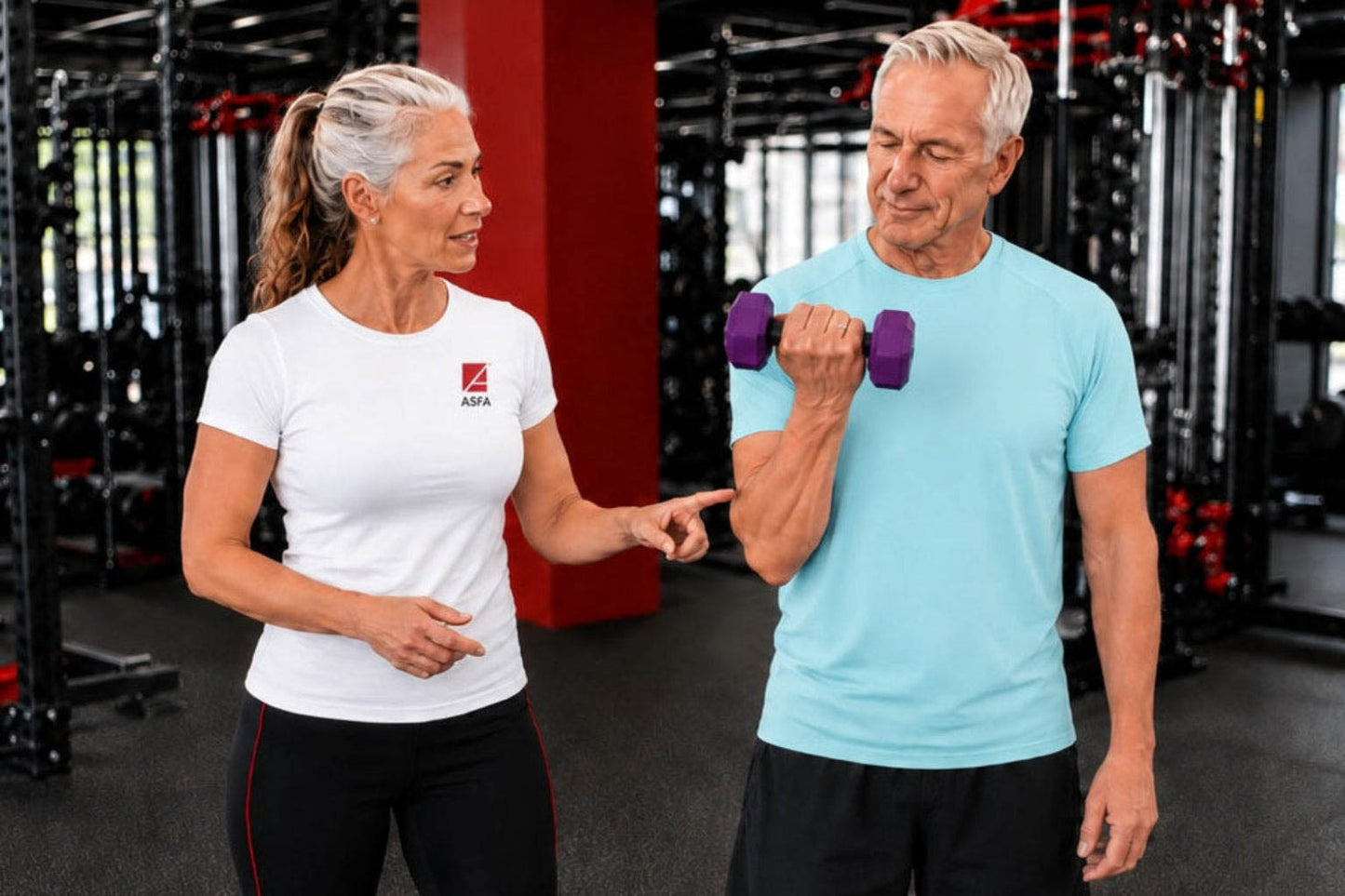
About Our Senior Fitness Instructor Certification
Aging Changes the Way We Workout. It Does Not End It.
Older adults are not one type of client. One person may be returning to structured exercise after years away. Another may hike, travel, lift weights, play recreational sports, or simply want to keep doing daily tasks with confidence. Effective senior fitness instruction begins by seeing the person in front of you rather than making assumptions from a birth year.
ASFA's Senior Fitness Instructor Certification gives prepared candidates a direct way to demonstrate knowledge of age-aware exercise programming, strength, mobility, balance, aerobic conditioning, communication, and professional scope. That knowledge may come from personal training, group instruction, academic study, years of independent learning, or serious personal experience with active aging.
You can take the examination before buying the certification. If you pass, you may purchase the credential. If you do not pass, you are not charged. Use the result as a practical review, study the areas that need work, and return when you are better prepared.
What Is a Senior Fitness Instructor Certification?
A Senior Fitness Instructor Certification is a specialty fitness credential that recognizes knowledge of exercise principles for older adults. It addresses age-aware program design, strength, balance, mobility, cardiovascular activity, exercise modification, communication, and safety within a fitness professional's scope of practice.
The credential is not based on the idea that every older adult needs the same gentle routine. It recognizes that aging populations are diverse. Programming should reflect current ability, training history, goals, movement confidence, recovery, and the environment in which the person exercises.
Train the Person, Not the Age Category
Chronological age provides context, but it does not write the program. Two clients of the same age can have completely different capabilities and priorities. One may want more strength for stairs and household tasks. Another may be preparing for a vacation, returning to golf, improving class participation, or maintaining the independence to keep living on their own terms.
A knowledgeable senior fitness instructor starts with what the client can do now and builds from there. The goal is not to make exercise look easier because a participant is older. The goal is to make it appropriate, progressive, understandable, and useful.
That approach requires judgment. An exercise may need less range, more support, a different position, a slower transition, or additional practice before intensity increases. At other times, an older adult may be ready for more challenge than the instructor initially expected. Respect works in both directions: do not ignore limitations, and do not underestimate capability.
What the Examination Calls on You to Understand
The Senior Fitness Instructor examination focuses on practical principles that support thoughtful programming for active aging populations. Candidates should be comfortable with areas such as:
- Strength and muscular function: selecting exercises and progressions that support daily activity, confidence, and continued physical capacity.
- Balance and stability: using stance, support, movement, and progression appropriately rather than treating balance as one isolated drill.
- Mobility and range of motion: recognizing how movement options influence exercise selection and class participation.
- Aerobic conditioning: organizing frequency, duration, intensity, and modality for varied fitness levels.
- Exercise modification: adjusting setup, range, tempo, support, load, or complexity while preserving the purpose of the movement.
- Communication: giving clear instructions, allowing enough time for transitions, and creating an environment that is respectful rather than patronizing.
- Program progression: increasing challenge when the participant is ready instead of leaving every session permanently at an introductory level.
- Professional boundaries: recognizing when a question or concern belongs with an appropriately licensed professional rather than the fitness instructor.
These areas work together. Strength can support balance. Mobility affects exercise options. Confidence influences participation. A useful program is not a list of senior exercises; it is a set of decisions connected to the participant's goals and current abilities.
Who May Be Ready to Test?
Some candidates are already personal trainers or group fitness instructors who want to serve more older adults. Others work in community wellness, recreation, or active-aging programs. A knowledgeable fitness enthusiast may also be prepared after years of study and practical experience, even without a current professional title.
ASFA does not require you to purchase a course simply to discover whether you know the material. If you believe you are prepared, take the examination. If the result shows gaps, you can review recommended resources, continue studying, and try again. The process recognizes readiness rather than insisting that everyone learn through the same path.
Why This Specialty Can Matter Professionally
Senior fitness is not a narrow corner of the industry. Older adults participate in personal training, group exercise, aquatic programs, community recreation, wellness initiatives, and independent fitness programs. A specialty credential can make it easier for clients, families, facilities, and referral partners to understand the population you are prepared to serve.
Additional specialization may also help a fitness professional build a broader service mix. A trainer who understands active aging can offer age-aware one-on-one sessions, small-group programs, balance-focused classes, or complementary services alongside general fitness instruction. No certification guarantees employment, clients, or higher rates, but clear specialization can improve how you position and explain your work.
How ASFA's Certification Process Works
Begin with the online examination when you believe your knowledge is ready. There are no required classes and no scheduled test date. Optional study resources are available for candidates who want to prepare before testing or review a topic afterward.
After completing the examination, you receive your result. After you pass, complete checkout only if the certification is worthwhile to you; your digital certificate is normally emailed within minutes. If you do not pass, there is no charge. Study further and return when you are ready.
ASFA is fully accredited by the International Council for Online Educational Standards (ICOES).
Frequently Asked Questions
Do I need to be a personal trainer before taking the examination?
No prior job title is required by ASFA. The examination evaluates your knowledge of senior fitness principles. A general personal training or group fitness credential may still be useful or required by a particular employer, facility, insurer, or role.
Can a knowledgeable fitness enthusiast take the test?
Yes. Professional experience is one way to build knowledge, but it is not the only way. Candidates may also prepare through formal study, independent learning, athletic experience, or years of serious involvement in fitness. You still need to demonstrate the required understanding on the examination.
Will employers accept this certification?
Acceptance varies by employer, facility, job description, and local requirements. Confirm the required credentials with the organization where you plan to work. A specialty certification can demonstrate senior-fitness knowledge, but it cannot override an employer's hiring standards.
Does this certification qualify me to diagnose or treat health conditions?
No. It is a fitness credential, not a clinical license. Senior fitness instructors should remain within their professional scope, use appropriate exercise judgment, and refer questions outside that scope to a qualified professional.
Is ASFA fully accredited?
Yes. ASFA is fully accredited by the International Council for Online Educational Standards (ICOES).
Do I have to buy study materials?
No. You may test based on your current knowledge. Recommended resources are optional and can be used before an attempt or after the examination identifies an area you want to strengthen.
What happens if I do not pass?
You are not charged. You can study, review the material, and take the examination again when you are better prepared.
When is the certificate available?
After you pass and complete checkout, your digital certificate is normally emailed within minutes.
Continue Building an Active-Aging Specialty
Senior fitness often connects naturally with balance, aquatic exercise, functional movement, and low-impact instruction. These certifications may complement the population you serve: