
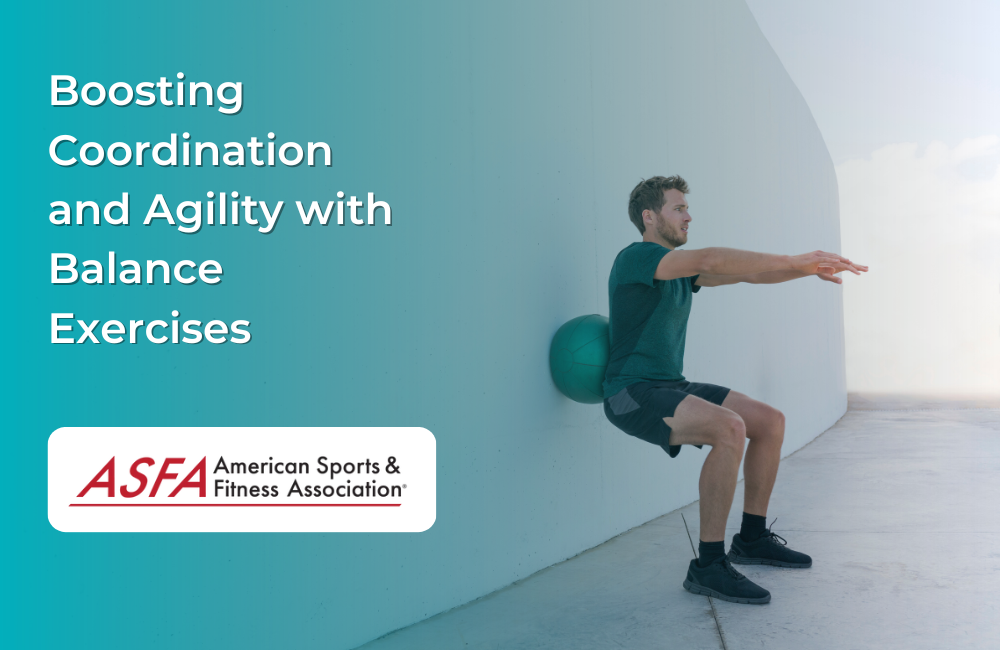
Boosting Coordination and Agility with Balance Exercises
Viewed practically, Boosting Coordination and Agility with Balance Exercises should change a decision in training, coaching, or day-to-day operations.
Balance is a trainable skill influenced by strength, sensory information, attention, and the specific task. Progression should be deliberate, not theatrical. That is where the details become useful.
Introduction: The useful Role of Coordination and Agility in Fitness and Daily Life
Coordination and agility are core aspects of physical fitness that contribute to enhanced athletic performance, injury prevention, and improved daily functioning. These two elements of fitness are not only important for athletes but also for anyone looking to maintain a high quality of life.
1. Coordination: The Art of Harmonious Movement
Coordination involves the precise control of body movements, where different muscle groups work together smoothly and efficiently. It's the ability to move multiple body parts simultaneously in a controlled manner. This is essential for complex tasks that require accuracy and timing.
Neuromuscular coordination refers to the ability of the nervous system to communicate effectively with the muscles, allowing for smooth and efficient movement. This involves the brain sending signals to specific muscles to contract or relax at the right time. This ensures that movements are coordinated and controlled.
Balance Training: The Pillar of Coordination and Agility
Balance exercises form the cornerstone of developing coordination and agility. These exercises improve your body's ability to maintain a stable posture, whether stationary or in motion.
Balance can be divided into two categories: static and dynamic. Static balance refers to maintaining stability while stationary, such as standing on one leg.
The vestibular system, located in the inner ear, plays an important role in balance. It helps detect changes in head position and movement, sending signals to the brain to adjust posture and maintain stability.
3. Proprioception: Body Awareness in Motion
Proprioception is the body's ability to sense its position in space and make adjustments accordingly. It is an essential component of both coordination and balance, as it allows the body to respond to changes in environment and movement.
Proprioceptive training involves exercises that challenge the body's sense of position and movement. These exercises often include balance challenges, such as standing on an unstable surface or performing movements with closed eyes.
1. Single-Leg Balance: The Foundation of Stability
Single-leg balance exercises are core for improving stability and proprioception. These exercises can be performed anywhere, making them accessible and easy to incorporate into any routine.
To further challenge your balance, try performing single-leg balances on an unstable surface, such as a balance pad or BOSU ball. You can also incorporate external elements, such as catching a ball or reaching for objects, to improve coordination and proprioception.
2. Ball Drills: Precision and Reflex Training
Ball drills, such as throwing, catching, and bouncing, are excellent for improving hand-eye coordination, reflexes, and timing. When performing these drills, ensure to drive your arms forward to maintain balance and stability.
Partner drills add an element of unpredictability to ball exercises, enhancing reaction time and coordination. Try passing a ball back and forth with a partner while performing agility drills, or practice catching and throwing while moving laterally to improve multi-directional coordination.
3. Partner Training: Enhancing Coordination Through Collaboration
Training with a partner can add complexity to your coordination exercises and improve your physical abilities. Partner drills, such as mirror drills, passing drills, or synchronized movements, require communication, timing, and cooperation.
Incorporate resistance bands or medicine balls into your partner drills to increase the challenge and engage more muscle groups. One example: practice passing a medicine ball back and forth while performing squats, or use a resistance band to create tension while performing lateral movements.
1. Warm-Up Routine: Preparing Your Body for Movement
Incorporating balance exercises into your physical training warm-up routine helps prepare your muscles, joints, and nervous system for more intense activity. Start with basic balance drills, such as single-leg stands or balance board exercises, to activate your stabilizing muscles and improve proprioception.
Include dynamic warm-up drills, such as leg swings, arm circles, or walking lunges, to improve mobility and activate the muscles needed for balance and coordination. These exercises prepare your body for more demanding movements and help you transition smoothly into your workout.
3. Cross-Training: Keeping Your Workouts Varied and Challenging
Cross-training with different balance exercises and activities keeps your workouts fresh and engaging while preventing overuse injuries. Explore activities like yoga, Pilates, or stand-up paddleboarding to challenge your balance in new ways.
Incorporate cross-training activities into your regular fitness routine to target different muscle groups and movement patterns. One example: alternate between balance-focused workouts, such as yoga or Pilates, and dynamic sports like soccer or basketball, to improve overall coordination and agility.
2. Consistent Practice: The Key to Improvement
Consistency is important when it comes to improving coordination and agility. Regular practice of balance exercises, ensuring proper form, coordination drills, and agility workouts will lead to noticeable improvements in your stability, reflexes, and overall athletic performance.
Develop a consistent workout routine that includes balance exercises, coordination drills, and agility training. For instance, dedicate specific days of the week to balance training, or incorporate short balance drills into your daily routine, such as standing on one leg while brushing your teeth or practicing quick footwork during a lunch break.
Conclusion: Elevate Your Coordination and Agility
Coordination and agility are essential skills that contribute to overall physical fitness, athletic performance, and daily functionality. By integrating balance exercises into your regular fitness routine, you can significantly improve these skills, leading to improved movement efficiency, injury prevention, and better overall physical capability.
A Necessary Safety Note
Exercise should be adjusted for the participant's experience, symptoms, environment, and available supervision. Stop for sharp pain, dizziness, chest discomfort, sudden weakness, or loss of control, and seek appropriate professional guidance when symptoms are persistent or concerning.
Before You Progress
For instructors: Place support within reach, clear the area, and progress one variable at a time. Closing the eyes, narrowing the stance, adding motion, and using an unstable surface should not all be combined at once.
Where This Leaves the Decision
Keep the goal visible, make the smallest change that addresses it, and reassess before adding complexity.


