

Self Defense Instructor Certification
Self Defense Instructor Certification
Earn your Self Defense Instructor Certification and teach practical movement, awareness, and defensive concepts that build client confidence and preparedness.
Pay Only If You Pass
Fully Accredited
100% Online & Self-Paced
No Required Coursework
Instant Digital Certificate
100,000+ Certifications Issued Worldwide
Couldn't load pickup availability
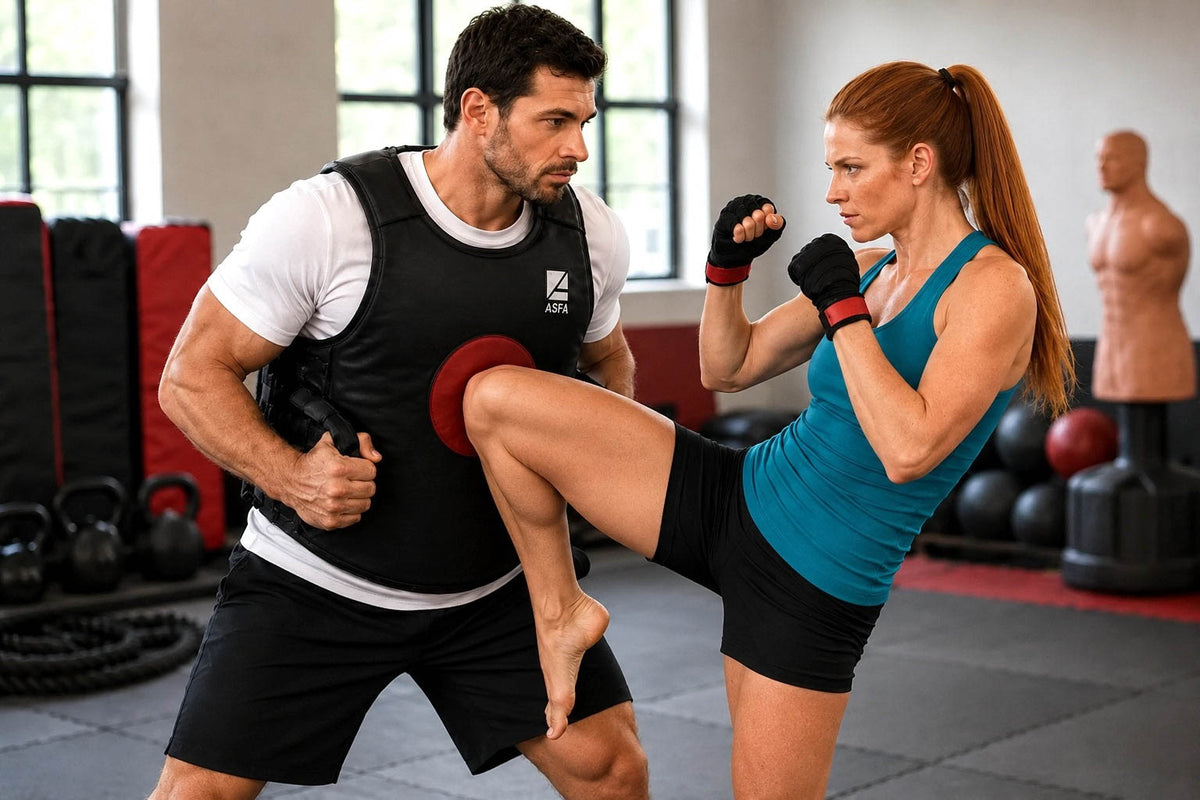
About Our Self Defense Instructor Certification
Preparedness Begins Before Physical Contact
Self-defense is often marketed through dramatic techniques and guaranteed outcomes. Real instruction requires more restraint. Awareness, judgment, distance, communication, movement, physical conditioning, and the decision to leave a situation can matter as much as any physical response.
ASFA's Self Defense Instructor Certification recognizes knowledge of self-defense-informed fitness and personal safety instruction. It is intended for trainers, group instructors, martial arts practitioners, coaches, and knowledgeable enthusiasts who can present the subject responsibly without promising that one class or technique will make anyone invulnerable.
You can take the examination before purchasing. Pass first, then decide whether to add the certification. If you do not pass, you are not charged and can return after further study.
What Is a Self Defense Instructor Certification?
A Self Defense Instructor Certification is a specialty credential that recognizes knowledge of awareness, movement, conditioning, basic defensive concepts, risk reduction, class organization, and responsible instruction. Within a fitness context, it may support classes that develop coordination, confidence, reaction, balance, and general physical preparedness.
The certification does not guarantee personal safety and does not substitute for extensive hands-on martial arts, law-enforcement, security, or weapons training. Instructors must teach only within their actual competence and comply with local laws and facility policies.
The Best Outcome Is Often Avoidance
Responsible self-defense education should not make participants eager to test a technique in a real confrontation. It should improve their ability to notice risk, create distance, communicate boundaries, seek help, and leave when possible.
Physical skills may be part of instruction, but context matters. A movement practiced cooperatively in a class is not a promise of what will happen under stress. Differences in size, strength, environment, surprise, multiple people, and weapons can radically change a situation. Honest instruction acknowledges uncertainty.
That honesty does not weaken the class. It builds credibility and directs attention toward choices that may reduce exposure before physical force becomes necessary.
What the Examination Evaluates
- Situational awareness: attention to surroundings, exits, distance, and changes in behavior or environment.
- Movement and positioning: balance, stance, footwork, coordination, and the ability to move with purpose.
- Conditioning: general strength, mobility, work capacity, and recovery as components of preparedness.
- Class progression: moving from explanation to controlled practice without creating unnecessary intensity or fear.
- Communication: clear boundaries, verbal direction, consent, and respectful partner work.
- Scenario judgment: discussing options without pretending that every situation has one reliable solution.
- Safety: controlling contact, space, equipment, speed, and participant pairing.
- Scope and law: recognizing the limits of the credential and the importance of jurisdiction-specific rules.
Confidence Should Be Grounded in Competence
Participants may seek self-defense classes because they feel vulnerable. That creates a responsibility not to exploit fear. An instructor should never imply that a short program makes someone "street proof" or guarantees success against a determined attacker.
A better goal is informed confidence: understanding options, practicing movement under controlled conditions, improving general fitness, and recognizing that avoidance and escape are valid successes. Confidence built on realistic preparation is more useful than confidence built on certainty that does not exist.
Who May Be Ready for the Examination?
The credential may fit fitness professionals who want to add self-defense-informed conditioning, martial artists who understand group instruction, recreation leaders, and aspiring instructors with large independent study. Beginners are permitted to test, but the open test model does not lower the standard. It simply allows knowledge to be demonstrated without forcing every candidate through the same paid course.
Someone intending to teach hands-on defensive techniques should have practical training appropriate to those techniques. An online examination can validate conceptual knowledge; it cannot create physical competence that has never been practiced.
ASFA's Test-First Model
Take the online examination when you believe you are ready. If you pass, choose the certification option you want and complete payment. If you do not pass, you owe nothing for the attempt. Study, practice, and return when your understanding is stronger.
After you pass and complete checkout, your digital certificate is normally emailed within minutes.
ASFA is fully accredited by the International Council for Online Educational Standards (ICOES). The process is online and self-paced.
Using the Credential Professionally
Self-defense-informed fitness can be offered through gyms, studios, community programs, private training, workshops, or broader preparedness programs. The credential may help communicate a specialty, but facilities can require more qualifications, practical demonstrations, background checks, insurance, or experience.
Instructors should also understand local laws governing self-defense, use of force, weapons, and professional instruction. Laws differ, and general course content should never be presented as legal advice.
Frequently Asked Questions
Does this certification make me a martial arts instructor?
No. It recognizes self-defense instruction knowledge within the scope described by the program. Rank, lineage, combat-sport coaching, weapons instruction, or advanced martial arts teaching requires separate training and competence.
Can I teach physical techniques after passing?
Teach only techniques you are separately competent to show and supervise. Passing an online examination does not replace practical skill development.
Is ASFA fully accredited?
ASFA is fully accredited by the International Council for Online Educational Standards (ICOES).
Will employers accept the certification?
Requirements vary by facility and role. Confirm whether the employer expects more martial arts experience, CPR, insurance, background screening, or another credential.
Can beginners take the exam?
Yes, but they must meet the same passing standard. If they do not pass, they are not charged and may return after more preparation.
Does self-defense training guarantee safety?
No. No technique, class, or credential can guarantee the outcome of a dangerous encounter.
Related Training Paths
Complementary credentials include the MMA & Martial Arts Fitness Instructor Certification, Tactical Fitness Trainer Certification, Strength & Conditioning Coach Certification, HIIT Instructor Certification, and Balance & Stability Instructor Certification.
Responsible self-defense instruction does not sell certainty. It helps people think more clearly, move more deliberately, and understand the limits as well as the possibilities of training.