

MMA & Martial Arts Fitness Instructor Certification
MMA & Martial Arts Fitness Instructor Certification
Earn your MMA & Martial Arts Fitness Instructor Certification and lead combat-inspired conditioning that develops strength, endurance, agility and movement skill.
Pay Only If You Pass
Fully Accredited
100% Online & Self-Paced
No Required Coursework
Instant Digital Certificate
100,000+ Certifications Issued Worldwide
Couldn't load pickup availability
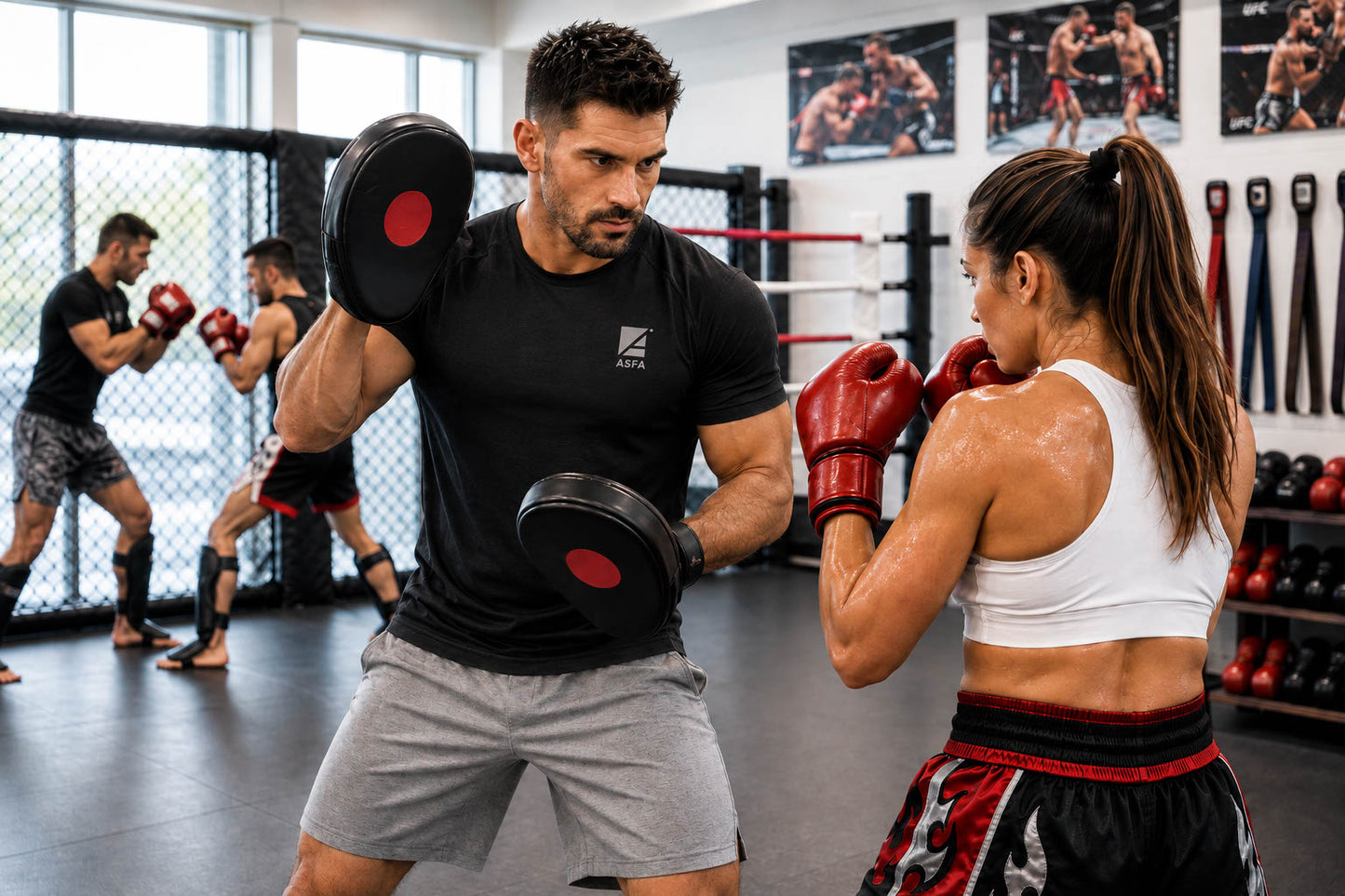
About Our MMA & Martial Arts Fitness Instructor Certification
Combat-Inspired Training Is More Than Throwing Punches at the Air
MMA and martial arts fitness can combine footwork, striking patterns, mobility, strength, balance, power, and demanding conditioning. Done well, the session feels athletic and purposeful. Done poorly, it becomes random fatigue wrapped in combat language.
ASFA's MMA & Martial Arts Fitness Instructor Certification recognizes knowledge of non-contact, combat-inspired fitness programming. It is intended for personal trainers, group instructors, martial arts practitioners, coaches, and serious enthusiasts who understand how to turn movement from combat sports into a structured conditioning experience.
ASFA lets you test before buying. If you demonstrate the required knowledge and pass, select the certification option you want. If you do not pass, you are not charged. You can prepare further and try again.
What Is an MMA & Martial Arts Fitness Certification?
An MMA & Martial Arts Fitness Certification is a specialty fitness credential covering conditioning methods influenced by mixed martial arts and traditional martial arts. It recognizes knowledge of movement patterns, stance, footwork, striking-inspired drills, strength, mobility, balance, work-to-recovery structure, class organization, and safety.
It is not a fight-coaching license, martial arts rank, or substitute for hands-on instruction in grappling, sparring, weapons, or technical combat skills. The credential supports fitness programming. Instructors must stay within their actual practical experience.
Athletic Movement Needs a Training Purpose
Combat sports involve repeated changes of direction, acceleration, rotation, bracing, level changes, and bursts of high effort. Fitness sessions may borrow from those qualities, but every drill should have a reason.
A striking combination can develop coordination and conditioning. Footwork may train agility and rhythm. Bag intervals can challenge work capacity. Strength exercises can support force production and position. Mobility work can improve available movement. The instructor's job is to connect the drill to the objective instead of assembling a highlight reel of exhausting movements.
More complexity is not automatically better. A participant who cannot maintain stance, balance, or control does not benefit from adding speed merely because the music is loud or the interval is short.
Concepts Assessed by the Examination
- Stance and footwork: stable positioning, directional movement, balance, and efficient transitions.
- Striking-inspired conditioning: controlled punches, kicks, knees, and combinations used without contact against another participant.
- Strength and power: selecting exercises that support athletic movement rather than confusing fatigue with power development.
- Energy-system demands: organizing intervals, rounds, recovery, and total workload.
- Mobility and control: using appropriate range and technique for the participant's ability.
- Progression: building from isolated movements to combinations and from lower intensity to higher demand.
- Equipment use: considering spacing, setup, and supervision when bags, pads, or other tools are used.
- Professional scope: distinguishing combat-inspired fitness from technical fight instruction.
Intensity Has to Be Coached
MMA fitness attracts participants who want a hard session. That does not relieve the instructor of the responsibility to manage effort. Round length, exercise selection, impact, repetition, and recovery all affect quality.
When fatigue rises, technique can unravel. A capable instructor recognizes the difference between productive effort and a participant simply surviving the clock. Options should be available before form breaks down, not after.
Good classes can feel aggressive without being reckless. The atmosphere may be energetic, focused, and competitive while the coaching remains controlled and observant.
Who Should Consider This Credential?
The certification may fit martial artists adding fitness instruction, trainers serving combat-sport enthusiasts, group instructors developing a specialty class, and knowledgeable athletes or enthusiasts preparing for professional work. A candidate does not need to be a professional fighter.
Practical background still matters. Someone who has never practiced the movements should not assume that passing a written examination creates the ability to demonstrate them safely. Use the test to validate knowledge, not to claim experience you do not have.
Test First, Then Decide
ASFA does not require an expensive course package before you can see the examination. Test online when ready. If you pass, pay for the certification you choose. If you do not pass, you are not charged and can return after more study or practice.
After you pass and complete checkout, your digital certificate is normally emailed within minutes.
ASFA is fully accredited by the International Council for Online Educational Standards (ICOES). Testing is online and self-paced.
Professional Applications
The credential may support non-contact classes, bag-based conditioning, personal training, athletic circuits, small-group training, or combat-inspired studio programs. Facilities may also require a general fitness credential, CPR qualification, insurance, an audition, or verified martial arts experience.
A specialty can improve how clearly you market your services. It does not guarantee clients or authorize technical coaching beyond your competence. Long-term value comes from delivering sessions that are challenging, organized, and worth repeating.
Frequently Asked Questions
Does this certify me to coach competitive MMA?
No. Competitive fight coaching requires extensive practical expertise and may be regulated by gyms, athletic commissions, or other organizations. This is a martial arts fitness credential.
Is sparring part of the fitness scope?
The certification focuses on non-contact conditioning. Instructors should not supervise sparring unless separately qualified and working under appropriate rules and insurance.
Can a fitness enthusiast take the exam?
Yes. Prepared enthusiasts may test. Passing validates the examined knowledge; it does not create unpracticed physical skill.
Is ASFA fully accredited?
ASFA is fully accredited by the International Council for Online Educational Standards (ICOES).
Will employers, gyms, or martial arts facilities accept this certification?
Acceptance varies by employer, gym, martial arts facility, insurer, role, and location. Confirm requirements for fitness credentials, martial arts background, practical experience, CPR, insurance, or auditions before purchasing when acceptance is essential to a specific opportunity.
What if I fail?
You are not charged. Study and practice, then test again when prepared.
Expand an Athletic Coaching Portfolio
Related certifications include the Self Defense Instructor Certification, Tactical Fitness Trainer Certification, Strength & Conditioning Coach Certification, HIIT Instructor Certification, and Speed & Agility Coach Certification.
The strongest combat-inspired workouts do not merely look intense. They use the movement, timing, and discipline of martial arts to create better conditioning.