
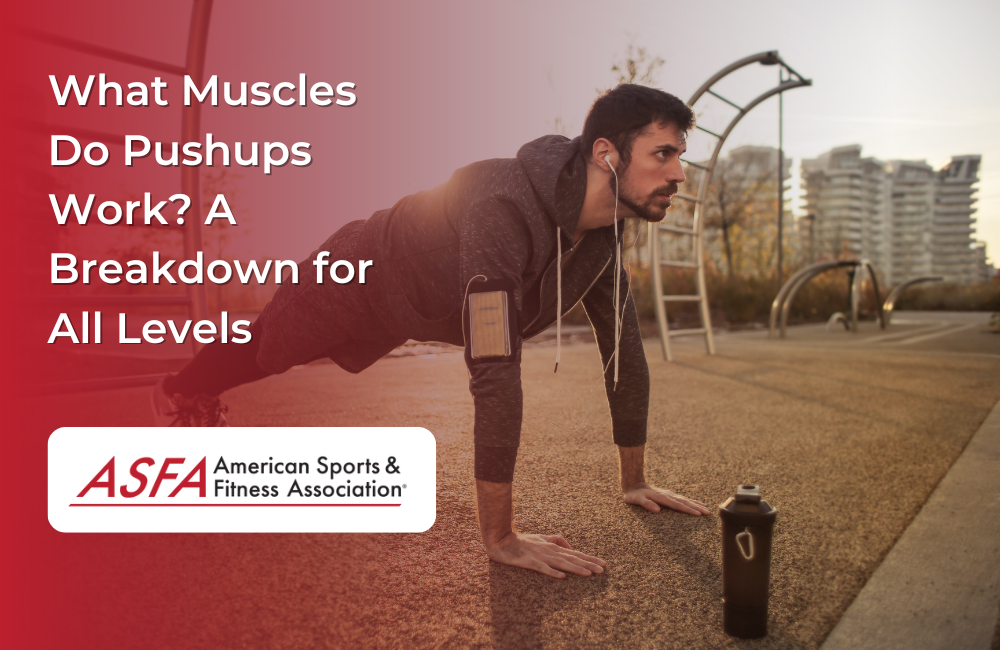
What Muscles Do Pushups Work? A Breakdown for All Levels
A one-line response to What Muscles Do Pushups Work? A Breakdown for All Levels would be misleading. The useful answer separates what is plausible from what is guaranteed.
Technique is not a single perfect shape. It is a repeatable way to complete the movement while controlling the load, range, and positions that matter for the goal. A simple rule helps: keep the goal visible and adjust the method.
Practical Guidance
Practical point: Choose the variation that permits a stable setup and repeatable range. Add repetitions or resistance only while the same control is maintained; stop when pain or compensation changes the movement.
Understanding the Pushup Proper Form
Pushups are one of the most effective bodyweight exercises, engaging multiple muscle groups while requiring no equipment. They can be modified for different fitness levels, making them accessible to beginners and advanced athletes alike.
How to Do a Push-Up
To perform a push-up, follow these steps:
- Start in a High Plank Position: Begin with your hands shoulder-width apart and your feet hip-width apart. Your body should form a straight line from head to heels.
- Engage Your Core Muscles: Draw your belly button towards your spine to engage your core muscles and maintain stability.
- Lower Your Body: Slowly lower your body down until your chest almost touches the ground, keeping your elbows close to your body.
- Push Back Up: Press through your palms and push back up to the starting position, squeezing your chest muscles at the top of the movement.
- Repeat: Continue for the desired number of repetitions, maintaining proper form throughout.
Proper Push-Up Form
Proper form is essential when performing push-ups to avoid injury and get the most out of the exercise. Here are some tips for maintaining proper form:
- Keep Your Body in a Straight Line: Ensure your body forms a straight line from head to heels, with your core muscles engaged.
- Hand Placement: Keep your hands shoulder-width apart and your fingers facing forward.
- Controlled Movement: Lower your body down slowly and control the movement as you push back up.
- Avoid Sagging Hips or Arched Back: Keep your hips from sagging or your back from arching during the exercise.
- Elbow Position: Keep your elbows close to your body and avoid letting them flare out to the sides.
Secondary Muscles Engaged
While the primary focus of pushups is the chest, shoulders, and triceps, several other muscle groups are also activated to provide stability and support:
- Upper Back (Trapezius and Rhomboids) – These muscles assist in stabilizing the shoulder blades during the movement. The rhomboids and other muscles connecting the spine and shoulder blades play an important role in controlling the movement and stabilization of the body during push-ups.
- Biceps – Though not a primary mover, the biceps assist in controlling the descent and stabilizing the arms.
- Leg Muscles – The quadriceps help keep the legs straight, while the glutes provide additional core stability.
Pushup Variations and Muscle Activation
Different pushup variations can shift the emphasis to different muscles, allowing for a well-rounded upper-body workout.
Wide-Grip Pushup
- Places more emphasis on the chest muscles
- Reduces strain on the triceps compared to the standard pushup
Close-Grip (Diamond) Pushup
- Focuses on the triceps and inner chest
- Increases the range of motion, making it more challenging
Decline Pushup
- Places more emphasis on the upper chest and shoulders
- Increases difficulty by shifting more body weight onto the upper body. The traditional push-up is a foundational exercise for strength training and is important for building upper body strength.
Plyometric Pushup
- Engages fast-twitch muscle fibers, improving power and explosiveness
- Increases activation of the chest, shoulders, and triceps
Spiderman Pushup
- Involves bringing one knee toward the elbow during the descent
- Increases core engagement and hip mobility. For beginners or those with injuries, knee push-ups are a suitable modification to build strength safely.
Tips for Progressing Your Push-Ups
If you’re looking to progress your push-ups and challenge yourself, here are some tips:
- Increase the Number of Repetitions: Gradually increase the number of push-ups you do in a row, or add more sets to your workout.
- Change Your Hand Position: Try placing your hands closer together or farther apart to target different muscle groups.
- Elevate Your Feet: Place your feet on a surface higher than your hands to increase the difficulty of the exercise.
- Try Decline Push-Ups: Place your hands on a surface lower than your feet to target the upper chest muscles.
- Incorporate Plyometric Push-Ups: Add an explosive movement to your push-ups by pushing up quickly and landing softly on the balls of your feet.
How to Maximize Pushup Effectiveness for Upper Body Strength
Pushups are only effective when performed with proper form and controlled movement. Some key tips for maximizing results include:
- Keeping the body in a straight line from head to heels
- Engaging the core to prevent the lower back from sagging
- Lowering the chest close to the ground while keeping elbows at a natural angle
- Pressing through the palms and fully extending the arms at the top
- Considering how many push ups are appropriate based on your fitness level and goals, emphasizing the importance of form over quantity
Conclusion: Benefits of Push Ups
Pushups are a versatile and effective exercise that strengthens the chest, shoulders, triceps, and core while engaging supporting muscles throughout the body. By incorporating different pushup variations, individuals can target specific muscle groups and progress over time.
The push-up exercise is highly versatile and effective in targeting multiple muscle groups, making it an essential component of upper extremity training and cardiovascular health.
The Useful Conclusion
The best application is specific enough to guide action and flexible enough to change when the person or circumstances change.
Safety and Scope
Exercise should be adjusted for the participant's experience, symptoms, environment, and available supervision. Stop for sharp pain, dizziness, chest discomfort, sudden weakness, or loss of control, and seek appropriate professional guidance when symptoms are persistent or concerning.

Use a Goal-First Framework
The structures discussed in What Muscles Do Pushups Work? A Breakdown for All Levels do not work in isolation; their contribution changes with leverage, direction, speed, and the task being performed.
Identify the movement to be trained before deciding which muscle deserves emphasis. Joint position, grip, stance, range, external load, and speed can change the contribution of several structures at once. The same anatomy may therefore be challenged differently across exercises that look similar on paper.
Common Ways the Idea Gets Misapplied
- Increasing resistance before the movement is repeatable.
- Confusing a muscle’s possible action with the best training choice for a specific person.
- Ignoring how joint angle and leverage change the task.
- Forcing an exercise to look identical for every participant.
Avoiding these errors makes the guidance easier to individualize and the result easier to evaluate.


