
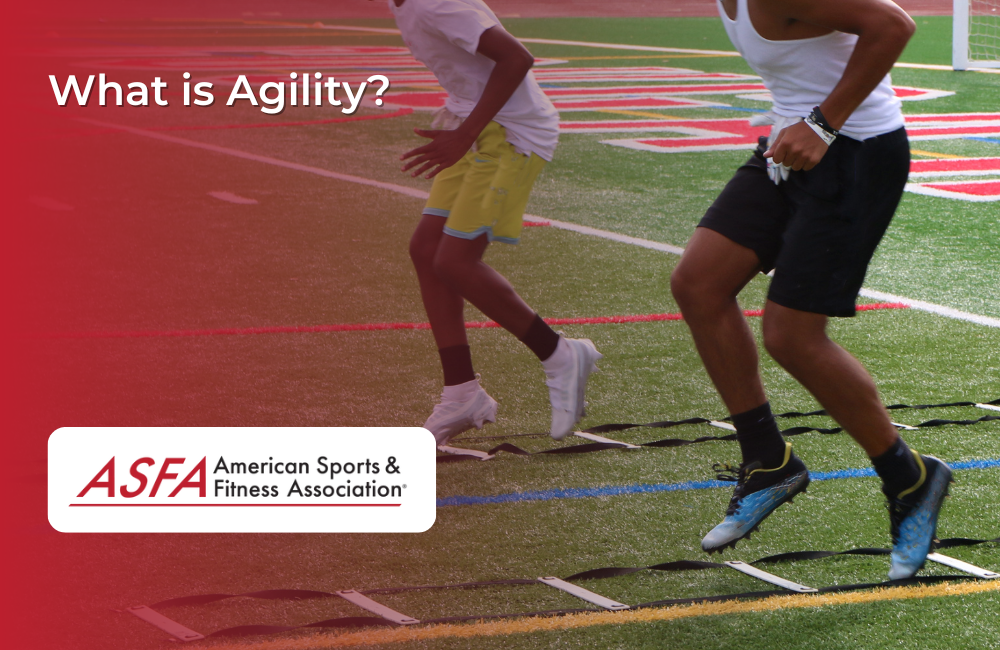
What is Agility?
A one-line response to What is Agility? would be misleading. The useful answer separates what is plausible from what is guaranteed.
Technique is not a single perfect shape. It is a repeatable way to complete the movement while controlling the load, range, and positions that matter for the goal. The practical question is how to use the information without overstating it.
Use It in Practice
Practical point: Choose the variation that permits a stable setup and repeatable range. Add repetitions or resistance only while the same control is maintained; stop when pain or compensation changes the movement.
Defining Agility
Agility is a multifaceted concept that encompasses various aspects of physical fitness and cognitive function. In the realm of physical fitness, agility refers to the ability to move quickly and efficiently, changing direction with ease while maintaining balance and coordination.
In the context of business, agility takes on a different but equally important meaning. Business agility refers to an organization’s ability to adapt rapidly to market changes, customer demands, and emerging opportunities.
What Is Agility in Physical Performance?
Agility in fitness refers to the ability to move and change direction quickly while maintaining control of the body. According to sports sci research, agility training enhances coordination, balance, speed, and reaction time, making it a key component of athletic and functional fitness.
Measuring Agility with Agility Tests
Agility is a complex and multifaceted concept that encompasses various aspects of physical fitness, including speed, strength, power, and coordination. In the context of sports sciences, agility refers to the ability to rapidly change direction, speed, and movement in response to a stimulus.
Measuring agility is a challenging task, as it requires a comprehensive assessment of an individual’s physical abilities, including their muscle group strength, power, and coordination. Traditional agility tests, such as the t-test and pro-agility test, have been widely used to evaluate an athlete’s agility.
Benefits of Agility in Fitness
- Improves Reaction Time – Helps athletes and individuals respond quickly to external stimuli, such as dodging obstacles or reacting to an opponent’s movement.
- Enhances Coordination and Balance – Strengthens neuromuscular connections to promote smoother, more efficient movements.
- Reduces Risk of Injury – Prepares the body for sudden direction changes, reducing strain on joints and muscles.
- Boosts Athletic Performance – Supports speed, power, and flexibility in activities like sprinting, basketball, soccer, and tennis.
- Supports Everyday Movements – Enhances daily mobility, making tasks like climbing stairs or navigating uneven surfaces easier.
Agility Training Techniques
Agility training involves exercises that improve movement efficiency, speed, and body control. Common agility drills include:
- Ladder Drills – Enhances foot speed, coordination, and reaction time.
- Cone Drills – Develops quick direction changes and balance.
- Shuttle Runs – Improves acceleration, deceleration, and responsiveness.
- Plyometric Drills – Strengthens muscles for explosive movement and stability.
- Reaction-Based Drills – Encourages fast decision-making and reflexive movements.
By incorporating agility-focused workouts, individuals can improve their athletic performance and overall movement efficiency.
What Is Agility in a Business Context?
Agility in business refers to an organization's ability to adapt quickly to changes, seize opportunities, and respond effectively to challenges. Agile companies embrace flexibility, innovation, and rapid decision-making to stay competitive in dynamic markets.
Benefits of Agility in Business
- Enhances Adaptability – Enables businesses to pivot strategies quickly in response to market trends and disruptions.
- Improves Efficiency – Encourages streamlined processes, reducing wasted time and resources.
- Drives Innovation – Fosters a culture of experimentation and continuous improvement.
- Strengthens Customer Responsiveness – Helps businesses meet changing consumer needs and expectations.
- Builds Competitive Advantage – Allows companies to stay ahead of competitors by making informed, fast-paced decisions.
How to Build an Agile Business
- Encourage Flexible Thinking – Embrace change and adapt strategies as needed.
- Empower Teams – Foster a collaborative environment where employees can take initiative.
- Leverage Technology – Use digital tools to streamline processes and enhance communication.
- Prioritize Continuous Learning – Stay informed on industry trends and emerging opportunities.
- Maintain Customer Focus – Adjust services and products based on customer feedback and evolving needs.
Agility in business is not just about reacting to change but anticipating it and positioning the company for long-term success.
How Agility in Fitness and Business Are Connected
Both physical and business agility require adaptability, strategic thinking, and quick response times. Whether navigating a fast-paced sports environment or managing a shifting business landscape, agility provides the ability to adjust, recover, and excel under dynamic conditions.
- Decision-Making Under Pressure – In fitness, athletes must react instantly to opponents. In business, leaders must make timely strategic decisions.
- Continuous Improvement – Both fitness and business require ongoing learning, training, and adaptation to stay competitive.
- Resilience and Recovery – The ability to recover quickly from setbacks is critical in both physical training and business operations.
A Clear Bottom Line
The best application is specific enough to guide action and flexible enough to change when the person or circumstances change.
Use a Goal-First Framework
A strong plan for What is Agility connects technique with programming, recovery, and the participant’s current level of control.
Decide whether the priority is skill, strength, muscle development, mobility, work capacity, or general activity. That choice affects exercise order, range of motion, resistance, repetitions, rest, and frequency. A program becomes harder to evaluate when several goals are pursued in the same set without a clear priority.
Individual Context Still Matters
Exercise selection should fit the participant rather than require the participant to fit a preferred variation. A different stance, grip, range, resistance, or tool may preserve the goal more effectively. Use the version that allows a controlled and repeatable pattern, then progress from the response rather than from an arbitrary timetable.
Common Ways the Idea Gets Misapplied
- Copying an advanced athlete’s program without matching training history or recovery.
- Changing exercises every session before a pattern can be evaluated.
- Letting speed hide a loss of position or control.
- Treating discomfort as a cue to push through rather than a reason to adjust and seek appropriate guidance when needed.
A clear plan does not remove uncertainty, but it makes the next adjustment more responsible and easier to explain.
The Final Planning Questions
- What sign will indicate that the set or session should stop?
- Which single variable may progress next?
- How will this work fit with the rest of the week?
- What is the primary training objective?
- Which variation allows the intended technique today?
This review keeps the next step tied to the topic while leaving room for individual judgment and feedback.
The Details That Alter the Outcome
Small programming changes can make the same movement serve a different purpose. Slower repetitions increase time under tension; longer rest may preserve force; shorter rest changes the conditioning demand; additional range can increase difficulty even without more weight.
- Record enough detail to repeat the session accurately.
- Do not treat fatigue as proof that the exercise was well selected.
- Progress only while the intended movement pattern remains recognizable.
- Choose the variable that best matches the current goal.


