
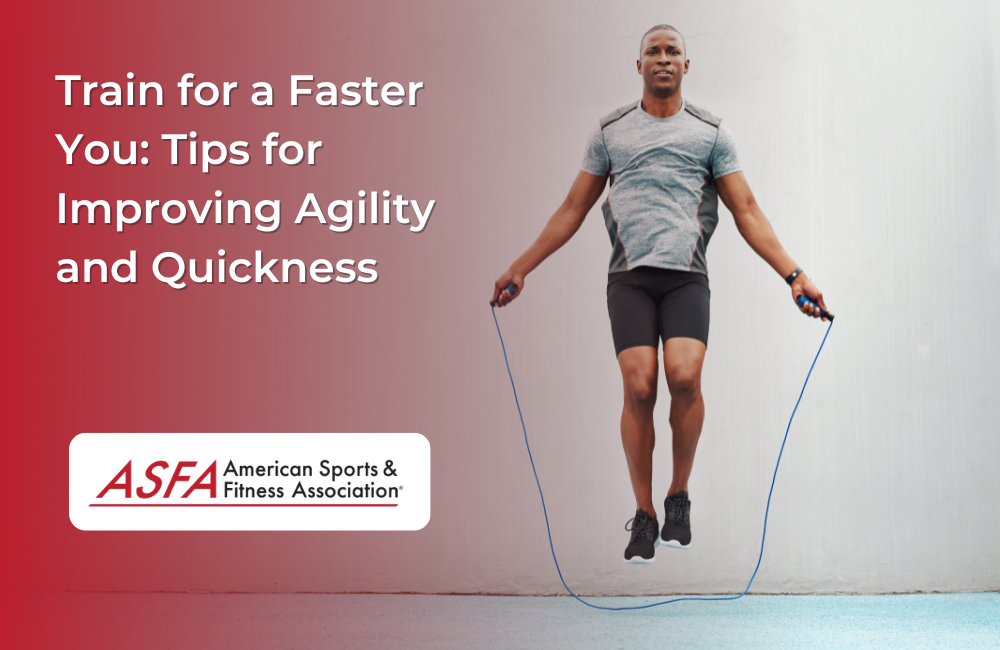
Tips for Improving Agility and Quickness
There is more to Tips for Improving Agility and Quickness than one rule. Context determines which details deserve attention.
Technique is not a single perfect shape. It is a repeatable way to complete the movement while controlling the load, range, and positions that matter for the goal. The practical question is how to use the information without overstating it.
Use It in Practice
Practical point: Choose the variation that permits a stable setup and repeatable range. Add repetitions or resistance only while the same control is maintained; stop when pain or compensation changes the movement.
What is Agility?
Agility is a combination of quickness and balance, allowing you to move quickly and change direction rapidly. Martial arts, along with sports like boxing and gymnastics, require a high level of agility, emphasizing its importance for athletes in enhancing performance and reducing the risk of injuries.
The Most Beneficial Muscle to Work for Agility: Plyometric Exercises
When it comes to improving agility, the most important muscle group to focus on is the lower body, particularly the quadriceps, hamstrings, and glutes. These muscles are responsible for powerful leg movements, quick direction changes, and explosive speed—all key components of agility.
How to Improve Your Agility
Start by improving your balance. This can be done through various drills and exercises that involve holding static positions while using different parts of your body.
Increase your speed and reaction time. This can be accomplished by doing interval sprints or agility ladder drills.
Strengthen your core and lower body muscles. These are essential for better agility.
Do agility drills that involve changing directions quickly and staying on your toes. Practice quick cuts, side shuffles, and karaoke steps to hone your agility skills.
Training for Agility
Training for agility includes drills and exercises that focus on speed, quickness, coordination, and balance. Plyometric exercises, such as box jumps, helps build explosive power.
Similarly, businesses can benefit from agility training principles to become a more agile business, quickly adapting to market changes by improving communication, fostering innovation, and being proactive in addressing industry trends.
Agility and Quickness Workout Plan
Objective: This workout is designed to enhance your agility, speed, and overall quickness through a series of drills and exercises that focus on balance, coordination, and explosive power. Perform this workout 2-3 times per week for optimal results.
The principles of agility training can also be applied to create agile businesses that are flexible and responsive to market changes.
Warm-Up (5-10 minutes)
- Dynamic Stretching: Leg swings, arm circles, and hip rotations to loosen up the joints and increase blood flow.
- Light Jogging or Jump Rope: 5 minutes to elevate your heart rate and prepare your muscles for the workout.
Main Workout: Agility Ladder Drills
- Agility Ladder Drills Sets: 4
- Drills: Perform the following drills: high knees, lateral shuffles, in-and-out, and Ickey shuffle.
- Rest: 30 seconds between drills
- Instructions: Focus on quick foot movements and maintaining proper form. Keep your core engaged and stay light on your feet.
- Cone Drills Sets: 4
- Drills: Perform drills such as the T-drill, 5-10-5 shuttle, and zig-zag drill.
Cool-Down (5-10 minutes)
- Static Stretching: Focus on stretching the hamstrings, quads, calves, and hip flexors to enhance flexibility and aid in recovery.
- Foam Rolling: Spend a few minutes on your lower body, especially the calves and thighs, to reduce muscle tightness and improve circulation.
The Importance of Rest and Recovery
Rest and recovery are essential for improving agility. Training can be intense and taxing on the body, so it's important to schedule times of rest and recovery into your routine.
Remember to get plenty of quality sleep each night and eat a balanced diet to fuel your workouts and maximize your results. When combined with a comprehensive training program, rest and recovery will help you reach your goals faster.
It's also beneficial to implement stretching exercises into your workout plan to keep your muscles loose and limber. Stretching can prevent muscle soreness after a hard workout, as well as improve mobility, circulation, flexibility, and reduce the risk of injury.
A Clear Bottom Line
The best application is specific enough to guide action and flexible enough to change when the person or circumstances change.
Safety and Scope
Exercise should be adjusted for the participant's experience, symptoms, environment, and available supervision. Stop for sharp pain, dizziness, chest discomfort, sudden weakness, or loss of control, and seek appropriate professional guidance when symptoms are persistent or concerning.

Connect the Topic to a Real Objective
A strong plan for Tips for Improving Agility and Quickness connects technique with programming, recovery, and the participant’s current level of control.
Decide whether the priority is skill, strength, muscle development, mobility, work capacity, or general activity. That choice affects exercise order, range of motion, resistance, repetitions, rest, and frequency. A program becomes harder to evaluate when several goals are pursued in the same set without a clear priority.
A Simple Implementation Check
- What is the primary training objective?
- Which variation allows the intended technique today?
- What load, range, tempo, and rest will be recorded?
- What sign will indicate that the set or session should stop?
- Which single variable may progress next?
- How will this work fit with the rest of the week?
The checklist is intentionally practical: each answer should change how the plan is designed, delivered, or reviewed.
Use the Smallest Effective Adjustment
Small programming changes can make the same movement serve a different purpose. Slower repetitions increase time under tension; longer rest may preserve force; shorter rest changes the conditioning demand; additional range can increase difficulty even without more weight.
- Do not treat fatigue as proof that the exercise was well selected.
- Progress only while the intended movement pattern remains recognizable.
- Choose the variable that best matches the current goal.
- Record enough detail to repeat the session accurately.
Build a Progression You Can Defend
Start with a version that allows a stable setup and repeatable range. Establish a baseline for repetitions, load, tempo, and perceived effort. Progress one element—such as another repetition, a small resistance increase, more range, or a more demanding variation—only when the prior version remains controlled. If technique changes early, recovery declines, or the target area is no longer doing the intended work, reduce the demand and rebuild from a clearer baseline.
Track Enough to Make the Next Decision
Before changing the plan again, compare:
- whether the target goal improved across several sessions
- whether fatigue interfered with other training
- the variation and setup used
- where technique first changed
When the response differs from the expectation, revisit the setup and assumptions before adding more volume, restriction, or complexity.


