
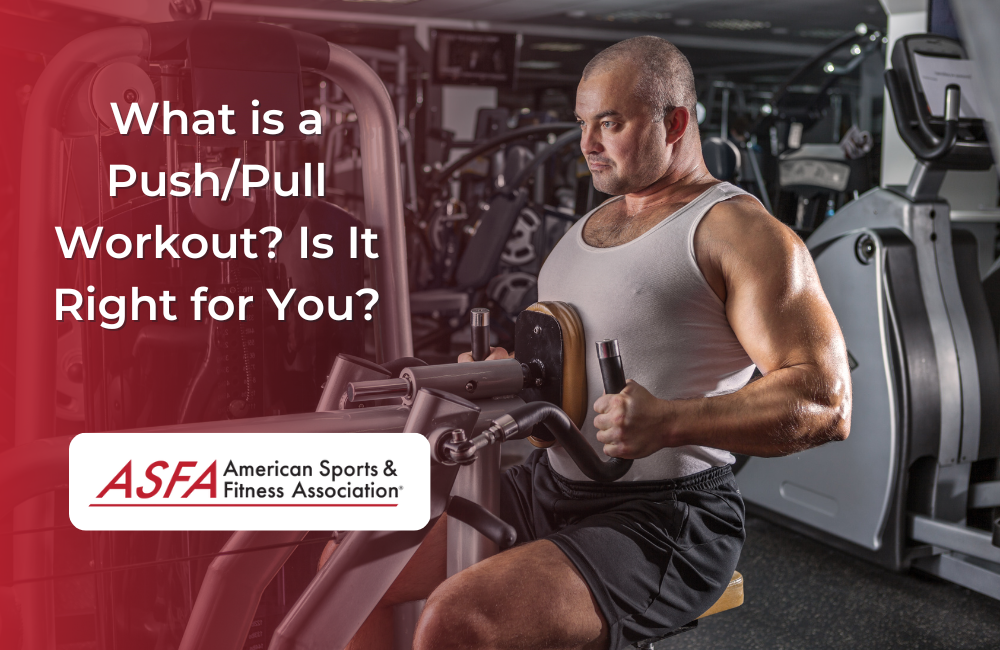
What is a Push/Pull Workout? Is It Right for You?
With What is a Push/Pull Workout? Is It Right for You?, an all-or-nothing answer misses the point. The practical answer is more specific.
Technique is not a single perfect shape. It is a repeatable way to complete the movement while controlling the load, range, and positions that matter for the goal. The practical question is how to use the information without overstating it.
In recent years, interest in push-pull workouts has surged among powerlifters who want to improve their performance on both lifts (squatting, deadlifting). During heavy lifting sessions, these movements require a strong core to support muscles like the biceps, triceps, and shoulders.
Push/pull workouts are a training program that alternates between pushing and pulling movements.
Push/pull workouts are a training program that alternates between pushing and pulling movements. Push/pull workouts have their roots in the bodybuilding community, but they're also popular among powerlifters, who typically use them to prepare for competitions involving both lifts.
These programs often involve three sets of eight repetitions on each exercise (8 x 8). In others, you might find four or five sets instead.
Bodybuilders and strength athletes popularized the push/pull workout in the 1940s and '50s.
Bodybuilders and strength athletes popularized the push/pull workout in the 1940s and '50s. Bodybuilders were interested in building muscle mass, while weightlifters wanted to build strength.
The upper body includes arms, chest, shoulders, and back; these areas are worked during a push workout. Push movements include bench presses and lat pull-downs (a seated row exercise).
Push/pull workouts focus on building muscle endurance, but they can also help you build muscle mass and strength if you include high-weight, low-repetition sets as part of your routine.
Push/pull workouts are designed to focus on one muscle group at a time. One example: if you're doing a push workout with dumbbells or barbells, the exercise selection will be limited to mostly upper-body exercises.
While push/pull workouts were popularized by bodybuilders who wanted to develop their upper bodies without sacrificing lower body development, they aren't just for weightlifters; other types of cross-training may also incorporate them as part of a bigger fitness plan.
Push/pull workouts are best for people who want to develop their upper body (arms, chest, shoulders, and back) without worrying about adding bulk to other body parts.
Push/pull workouts are best for people who want to develop their upper body (arms, chest, shoulders, and back) without worrying about adding bulk to other body parts. This training can help you build muscle endurance and strength without adding extra pounds.
Push/pull workouts have their roots in the bodybuilding community, but they're also popular among powerlifters, who typically use them to prepare for competitions involving both lifts.
Push/pull workouts have their roots in the bodybuilding community, but they're also popular among powerlifters, who typically use them to prepare for competitions involving both lifts. Bodybuilders use push/pull workouts to build muscle mass and strength, while powerlifters use them to build muscle strength and endurance.
Push/pull workouts are useful for weightlifting (and other cross-training), but you can also use them if you're not interested in competing or getting super jacked. If you're looking for a new way to boost your fitness routine without getting bored by the same old routine every time, this might be it!
Push-pull workouts aren't just for weightlifting; other types of cross-training may also incorporate them as part of a bigger fitness plan.
Push/pull workouts are not just for weightlifters; other types of cross-training may also incorporate them as part of a bigger fitness plan.
For instance, you could use push/pull workouts in combination with running or cycling to improve your body composition and overall health by building muscle mass while improving cardiovascular endurance. Or you could use it as part of an interval training program (One example: sprinting on the treadmill) that focuses on increasing speed and power output over time.
Push/pull workouts can be useful for people who want to strengthen specific areas of their upper body while avoiding bulking up elsewhere.
Push/pull workouts are a training program that alternates between pushing and pulling movements. They're best for people who want to develop their upper body (arms, chest, shoulders, and back) without worrying about adding bulk to other parts of the body.
Safety and Scope
Exercise should be adjusted for the participant's experience, symptoms, environment, and available supervision. Stop for sharp pain, dizziness, chest discomfort, sudden weakness, or loss of control, and seek appropriate professional guidance when symptoms are persistent or concerning.
A Clear Bottom Line
Use the information to make one clear adjustment, then judge the result from repeatable performance rather than novelty.
Use It in Practice
A useful checkpoint: Choose the variation that permits a stable setup and repeatable range. Add repetitions or resistance only while the same control is maintained; stop when pain or compensation changes the movement.

Define the Purpose Before Adding More
What is a Push/Pull Workout? Is It Right for You becomes more practical when the exercise choice, training dose, and progression method all point toward the same outcome.
Decide whether the priority is skill, strength, muscle development, mobility, work capacity, or general activity. That choice affects exercise order, range of motion, resistance, repetitions, rest, and frequency. A program becomes harder to evaluate when several goals are pursued in the same set without a clear priority.
A Simple Implementation Check
- What sign will indicate that the set or session should stop?
- Which single variable may progress next?
- How will this work fit with the rest of the week?
- What is the primary training objective?
- Which variation allows the intended technique today?
- What load, range, tempo, and rest will be recorded?
If those questions have clear answers, the guidance is more likely to produce a plan that can be followed and evaluated.
Adjust One Variable at a Time
Small programming changes can make the same movement serve a different purpose. Slower repetitions increase time under tension; longer rest may preserve force; shorter rest changes the conditioning demand; additional range can increase difficulty even without more weight.
- Do not treat fatigue as proof that the exercise was well selected.
- Progress only while the intended movement pattern remains recognizable.
- Choose the variable that best matches the current goal.
- Record enough detail to repeat the session accurately.
Use Feedback to Choose the Next Step
Progression is not limited to adding weight. Better control, a smoother range of motion, a longer pause, improved balance, or the same work at a lower perceived effort can all represent progress. Choose the next step that fits the goal. An advanced variation is not an upgrade when it changes the exercise so much that the original objective is lost.


