

Sport Specific Trainer Certification
Sport Specific Trainer Certification
Earn your Sport Specific Trainer Certification and tailor strength, conditioning, speed, and movement programs to the demands of individual sports.
Pay Only If You Pass
Fully Accredited
100% Online & Self-Paced
No Required Coursework
Instant Digital Certificate
100,000+ Certifications Issued Worldwide
Couldn't load pickup availability
About Our Sport Specific Trainer Certification
Train the Demands of the Sport—Not the Highlight Reel
Sport-specific training is often reduced to exercises that look like the sport. A baseball player swings a weighted implement. A basketball player dribbles while balancing on an unstable surface. A golfer copies a rotation pattern with a cable. The resemblance may be obvious, but resemblance alone does not prove that the drill improves performance.
ASFA’s Sport Specific Trainer Certification recognizes a more disciplined approach. It is built around analyzing what a sport requires, identifying the physical qualities that can be trained, and choosing methods that support those demands without pretending the weight room can duplicate competition.
Coaches, personal trainers, athletes, and serious fitness enthusiasts may take the online examination before purchasing. Pass first, then decide whether the certification belongs in your professional portfolio. If you do not pass, you are not charged and can return after further preparation.
What Is Sport-Specific Training?
Sport-specific training is the process of developing physical qualities that contribute to performance in a particular sport, position, or competitive setting. It may address strength, power, speed, agility, conditioning, mobility, work capacity, and recovery according to the demands of the activity.
The goal is not to imitate every sport skill in the gym. Technical skills are usually best practiced in their real sporting context. The trainer’s job is to build physical capacity that allows the athlete to express those skills more effectively and tolerate the demands of training and competition.
Specificity Begins With Analysis
Before choosing exercises, a coach should understand the sport. How long does a typical effort last? How much rest occurs between efforts? Which movement directions appear repeatedly? Does the athlete accelerate from a static start, react to an opponent, sustain output, absorb contact, or repeat high-intensity actions? Does the position demand the same qualities as other positions on the team?
The athlete matters just as much as the sport. Two soccer players may compete in the same league but need different training because of age, role, training history, schedule, and current strengths. A generic “soccer workout” cannot answer those questions. A needs analysis can.
Sport-specific programming is therefore a decision process—not a collection of themed drills.
What the Examination Covers
- Needs analysis: identifying the movement, energy, strength, speed, and scheduling demands of a sport.
- Athlete assessment: comparing those demands with the athlete’s current abilities, history, and training age.
- Program priorities: deciding which physical qualities deserve emphasis and which should be maintained.
- Strength and power: selecting foundational methods that support force production and athletic movement.
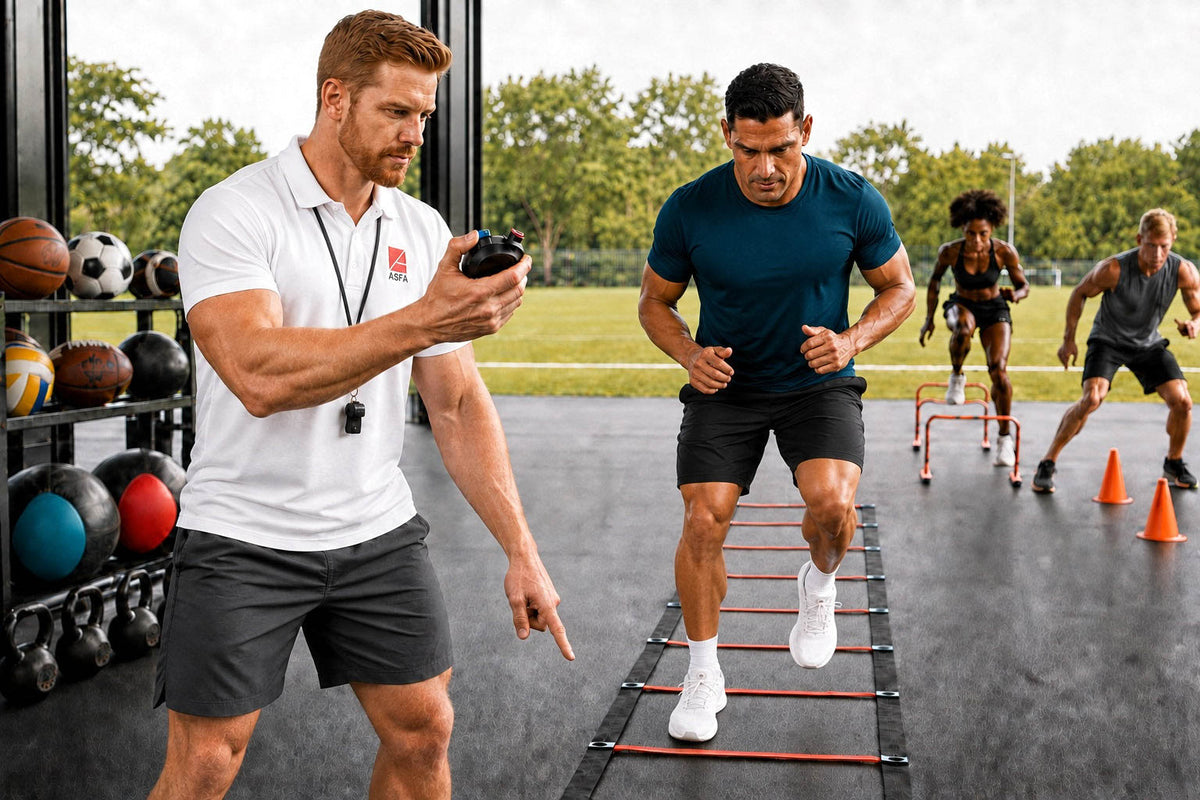
- Speed and agility: addressing acceleration, deceleration, change of direction, and reactive movement where appropriate.
- Conditioning: matching intervals and work capacity to the pattern of effort rather than using fatigue as the only objective.
- Training progression: moving from general preparation toward more demanding and specific work over time.
- Season planning: adjusting volume and intensity around practices, competition, travel, and recovery.
- Communication: coordinating expectations with athletes, sport coaches, and other qualified professionals.
- Professional judgment: recognizing scope, avoiding unsupported promises, and referring concerns outside the trainer’s role.
Transfer Matters More Than Novelty
A drill can be difficult, creative, and entertaining without transferring to the sport. The better question is what adaptation the exercise is intended to create. Does it improve force, speed, coordination, repeat-effort ability, or another quality the athlete needs? Can it be progressed? Does the benefit justify the fatigue and technical cost?
Good sport-specific programs often contain familiar exercises. Squats, jumps, sprints, throws, carries, rows, presses, and basic conditioning methods remain useful because they can be loaded, measured, and developed. Their value comes from how they are selected and placed—not from making them look like a game.
Who Is Prepared to Test?
The certification is relevant to personal trainers moving into athletic development, sport coaches expanding their conditioning knowledge, former athletes formalizing what they have studied, and knowledgeable fitness enthusiasts preparing for professional work.
ASFA does not require every candidate to buy the same course before testing. Your knowledge may come from coaching, competition, academic study, mentorship, or independent learning. The exam gives you a direct way to see whether that knowledge meets the certification standard.
A Purchase Comes After a Passing Result
Take the examination online and on your schedule. After you pass and complete checkout, your digital certificate is normally emailed within minutes. If you do not pass, no payment is due. You can study the missed areas and attempt the exam again when you are better prepared.
Optional resources are available, but ASFA does not force prepared candidates to repurchase information before they can demonstrate it. That is the purpose of Pay Only if You Pass.
Accreditation and Professional Expectations
ASFA is fully accredited by the International Council for Online Educational Standards (ICOES).
Organizations may consider experience, education, background checks, insurance, other certifications, or sport-specific qualifications. Verify the standards of the setting where you plan to work.
Sport-Specific Training FAQs
Does sport-specific training replace practice with a sport coach?
No. Physical preparation supports sport skill, but it does not replace technical and tactical practice. The strongest programs coordinate both rather than confusing one for the other.
Do I need to specialize in one sport?
No. The examination focuses on principles that can be applied across sports. Effective application still requires you to study the particular sport, position, athlete, and competitive schedule.
Can a fitness enthusiast take the exam?
Yes. A professional title is not required. You should test only when you understand training principles well enough to make responsible programming decisions.
Will employers accept this certification?
Acceptance varies by employer and role. Ask the organization directly about required credentials and experience before purchasing for a particular job.
What if I do not pass?
You are not charged. Continue studying and retake the examination when ready.
How is certification maintained?
The one-year option requires retesting and repurchasing before expiration. The lifetime option requires continued activity in the certified field and one relevant continuing-education class, course, or seminar each year.
Develop the Qualities Your Athletes Need
Sport-specific coaching often draws from several complementary specialties. Relevant options include the Speed & Agility Coach Certification, Strength & Conditioning Coach Certification, Sport Psychology Coach Certification, Sports Nutrition Coach Certification, and HIIT Instructor Certification.
The best credential path follows the athletes you serve. Specialize where deeper knowledge will improve the program, not simply where another title is available.