
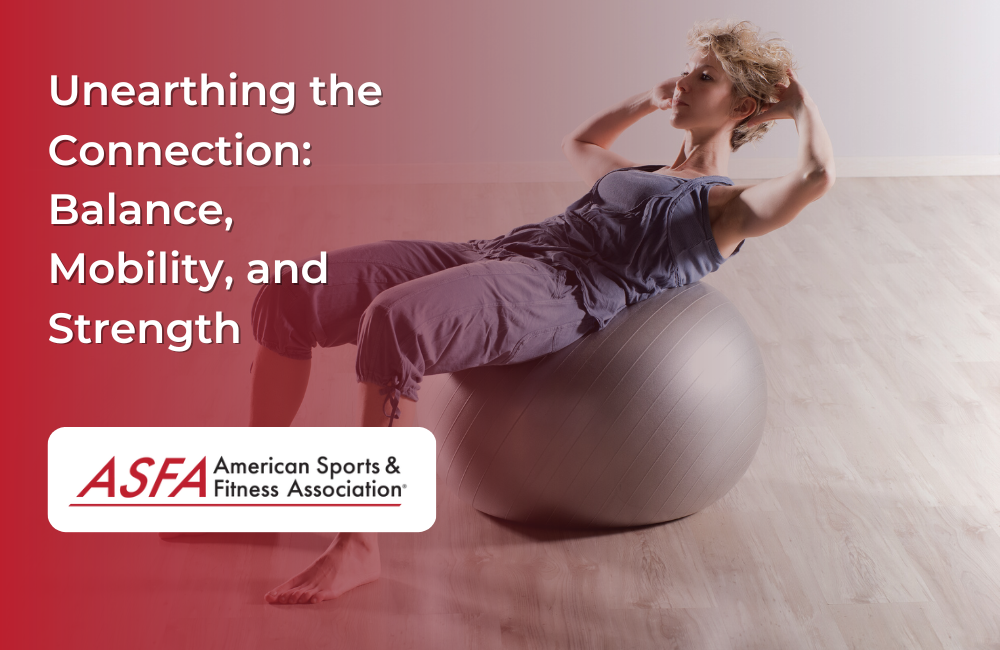
Unearthing the Connection: Balance, Mobility, and Strength
The clearest way to discuss Unearthing the Connection: Balance, Mobility, and Strength is to narrow the claims and state the practical limits plainly.
Mobility changes slowly and responds to regular practice. Sensation alone is not proof that a drill is helping. That is where the details become useful.
A Necessary Safety Note
Exercise should be adjusted for the participant's experience, symptoms, environment, and available supervision. Stop for sharp pain, dizziness, chest discomfort, sudden weakness, or loss of control, and seek appropriate professional guidance when symptoms are persistent or concerning.
2. The Functional Fitness Philosophy
Explore the philosophy of functional fitness, which emphasizes real-life movements and improved quality of life.
2. Posture and Alignment
Balance is integral to maintaining good posture and proper body alignment.
2. Joint Health
Mobility exercises promote joint health and prevent stiffness and pain.
3. Daily Functionality
Improved strength translates into easier and more efficient completion of daily tasks.
1. The Interconnectedness
Discover how balance, mobility, and strength complement each other, forming a holistic fitness foundation.
3. Ageless Fitness
Embracing this synergy can help individuals of all ages maintain an active lifestyle.
1. Comprehensive Workouts
Create balanced workout routines that include exercises to improve all three aspects of fitness.
2. Aging Gracefully
These three pillars can support graceful aging, maintaining independence and quality of life.
Embrace the Harmony of Fitness
Balance, mobility, and strength are not isolated components of fitness but intertwined elements that, when cultivated together, lead to a healthier, more agile, and stronger you. Embrace the harmony of these three pillars in your fitness plan, and you'll find yourself reaping the holistic benefits of improved well-being, increased functionality, and enhanced overall quality of life.
Before You Progress
Coach's note: Use a range that creates tension without sharp pain, numbness, or loss of control. Longer or deeper is not automatically better; progress should be based on repeatable motion and the demands of the activity.
Where This Leaves the Decision
A sound plan does not need to look dramatic. It needs to be understandable, repeatable, and appropriate for the person using it.
A Simple Evaluation Framework
Before applying Unearthing the Connection: Balance, Mobility, and Strength, define the outcome in terms that can be observed. That may be steadier technique, a tolerable training dose, better consistency, clearer client communication, or a decision between two reasonable options.
- Goal: State what should improve and why it matters.
- Starting point: Use the person's current ability, experience, equipment, and constraints.
- Dose: Decide how much work or change is appropriate before adding more.
- Feedback: Track technique, tolerance, consistency, and the response after the session.
Review the Response
Keep the first adjustment modest. If the response is useful and repeatable, progress one variable—such as range, load, duration, complexity, or frequency. If the result is poor, change the limiting variable instead of assuming that more effort will solve it.
Keep the Method Connected to the Goal
With Unearthing the Connection: Balance, Mobility, and Strength, the same recommendation can produce different results for two people. Experience, recent workload, movement skill, available equipment, schedule, preferences, and recovery all change what is reasonable.
Review the result over several exposures rather than judging one unusually good or difficult session. Useful progress is usually visible as better control, a more appropriate workload, improved consistency, or clearer decision-making.
Start With the Decision That Matters
The useful question is not whether Unearthing the Connection: Balance, Mobility, and Strength belongs in every routine, but what job it should perform in a specific program.
Decide whether the priority is skill, strength, muscle development, mobility, work capacity, or general activity. That choice affects exercise order, range of motion, resistance, repetitions, rest, and frequency. A program becomes harder to evaluate when several goals are pursued in the same set without a clear priority.
The Final Planning Questions
- Which variation allows the intended technique today?
- What load, range, tempo, and rest will be recorded?
- What sign will indicate that the set or session should stop?
- Which single variable may progress next?
- How will this work fit with the rest of the week?
- What is the primary training objective?
Use the answers as the baseline for the next decision rather than relying on a vague impression of progress.
Use the Smallest Effective Adjustment
The main programming variables are exercise selection, setup, range of motion, resistance, repetitions, sets, tempo, rest, frequency, and proximity to fatigue.
- Reduce range, resistance, speed, or complexity when quality begins to change.
- Change one major variable at a time so the response can be interpreted.
- Keep technique standards consistent when load or repetitions increase.
- Use a version that fits the available equipment and the participant’s current control.
Build a Progression You Can Defend
Progression is not limited to adding weight. Better control, a smoother range of motion, a longer pause, improved balance, or the same work at a lower perceived effort can all represent progress. Choose the next step that fits the goal. An advanced variation is not an upgrade when it changes the exercise so much that the original objective is lost.
Measure the Response That Matters
A practical review includes:
- recovery, soreness, and performance in the next session
- repetitions completed with the intended technique
- load, range, tempo, and rest used
- perceived effort and how close the set came to technical failure
Use the record to make a decision: continue, progress, simplify, or replace the current approach. Data that never changes a decision is unnecessary.
Context Changes the Best Choice
Exercise selection should fit the participant rather than require the participant to fit a preferred variation. A different stance, grip, range, resistance, or tool may preserve the goal more effectively. Use the version that allows a controlled and repeatable pattern, then progress from the response rather than from an arbitrary timetable.
What Not to Assume
- Increasing load, repetitions, range, and frequency at the same time.
- Using fatigue or soreness as the only evidence of an effective session.
- Forcing a standardized range or stance when another controlled setup better fits the participant.
- Choosing the hardest variation before the base movement is controlled.
The correction is straightforward: return to the objective, simplify the setup, and change only what the available feedback supports.
A Practical Review Checklist
- What is the primary training objective?
- Which variation allows the intended technique today?
- What load, range, tempo, and rest will be recorded?
- What sign will indicate that the set or session should stop?
- Which single variable may progress next?
- How will this work fit with the rest of the week?
The checklist is intentionally practical: each answer should change how the plan is designed, delivered, or reviewed.
A Simple Implementation Check
- How will this work fit with the rest of the week?
- What is the primary training objective?
- Which variation allows the intended technique today?
- What load, range, tempo, and rest will be recorded?
- What sign will indicate that the set or session should stop?
- Which single variable may progress next?
This review keeps the next step tied to the topic while leaving room for individual judgment and feedback.


