
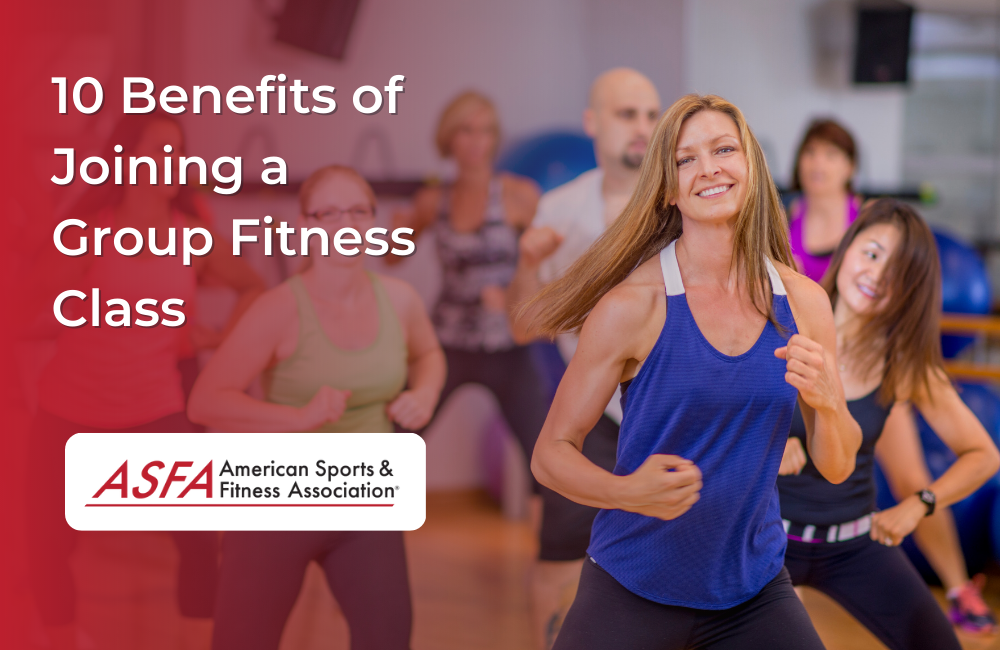
Top 10 Benefits of Joining a Group Fitness Class
The points in Top 10 Benefits of Joining a Group Fitness Class are organized around practical application rather than exaggerated promises.
A strong group session looks energetic from the outside and organized underneath. Coaching, spacing, scaling, and transitions determine whether the class works. That is where the details become useful.
Before You Progress
Keep in mind: Plan regressions, progressions, traffic flow, equipment spacing, and transition time before class. The coach should be able to see participants and change the session when technique or fatigue warrants it.
1) Social Interaction
One of the key benefits of joining a group fitness class is the opportunity for social interaction. Working out can be an isolating experience, but when you are part of a group, you are surrounded by other people who share your same interests and goals.
2) Expert Knowledge
Group fitness classes provide an excellent opportunity to learn from the expertise of a professional instructor. The instructor is responsible for developing an effective workout that meets the needs of the participants, and can help guide each person in their exercise technique to ensure they are working out safely and effectively.
3) Improved Motivation
One of the key benefits of joining a group fitness class is the improved motivation you will experience. Exercising in a group setting can be much more enjoyable than working out alone, and it provides a great opportunity to socialize with other like-minded individuals who are all striving for the same goal.
4) Variety
One of the key benefits of joining a group fitness class is the variety of workouts offered. When working out on your own, it can be easy to get stuck in a rut doing the same exercises day after day.
5) Goal Setting
One of the major benefits of joining a group fitness class is the opportunity to set goals. Working out in a group provides a strong motivation for you to push yourself and achieve greater heights.
having an instructor around can be immensely beneficial when it comes to goal setting. The instructor can help provide feedback and guidance on your progress, which allows you to make more informed decisions about where to go next with your fitness plan.
6) Structured Environment
Group fitness classes provide a structured environment for working out. The class has a beginning and an end, and usually follows the same format or routine each session.
7) Increased Efficiency
Group fitness classes provide an efficient way to work out because they are designed to help you get the most out of your time in the gym. When working out in a group setting, you can get more reps in and make progress much faster.
8) Cost-Effective
Group fitness classes offer a cost-effective way to get the most out of your working out. Whether it's a one-time drop-in fee or an ongoing membership, joining a group class can help save you money in the long run.
9) Fun
One of the main benefits of joining a group fitness class is that it can be an enjoyable and entertaining way to work out. Working out with a group of people who are there for the same purpose as you can be motivating and inspiring.
10) Accountability
Being part of a group fitness class can help you stay accountable with your workout routine. Group classes provide an environment where it is easy to check in with yourself and stay motivated.
A Necessary Safety Note
Exercise should be adjusted for the participant's experience, symptoms, environment, and available supervision. Stop for sharp pain, dizziness, chest discomfort, sudden weakness, or loss of control, and seek appropriate professional guidance when symptoms are persistent or concerning.
Where This Leaves the Decision
Good coaching leaves room for feedback. If the response does not match the goal, adjust the dose, range, exercise, or expectation.

A More Useful Standard
With Top 10 Benefits of Joining a Group Fitness Class, the same recommendation can produce different results for two people. Experience, recent workload, movement skill, available equipment, schedule, preferences, and recovery all change what is reasonable.
Review the result over several exposures rather than judging one unusually good or difficult session. Useful progress is usually visible as better control, a more appropriate workload, improved consistency, or clearer decision-making.
Define the Purpose Before Adding More
The class-design decisions in Top 10 Benefits of Joining a Group Fitness Class are strongest when every block has a clear objective and an accessible alternative.
State the class objective in one sentence. Then make each block support it. A conditioning class, technique session, mobility format, and strength-endurance workout should not use identical timing or cueing. Clear intent also makes it easier to offer options without turning the class into several unrelated workouts.
Where Good Information Can Go Wrong
- Treating every participant as if the same range, load, or pace is appropriate.
- Allowing equipment changes to create rushed, unsupervised transitions.
- Introducing a complex movement only after the room is already fatigued.
- Using long explanations while participants are moving quickly.
A clear plan does not remove uncertainty, but it makes the next adjustment more responsible and easier to explain.
Use This Before the Next Session
- Can the class objective be stated in one sentence?
- Is the base option clear before progressions are introduced?
- Are transitions and equipment organized?
- Can the instructor observe the room during the hardest block?
- Does intensity match the class description?
- What will be repeated next time to build competence?
Use the answers as the baseline for the next decision rather than relying on a vague impression of progress.
The Details That Alter the Outcome
Music, timing, exercise complexity, room layout, equipment, cueing, transition length, work-to-rest ratio, and participant mix all affect the class.
- Offer an alternative that participants can choose without stopping the class.
- Demonstrate the base option before adding complexity.
- Use concise cues that describe the action and the objective.
- Plan transitions so intensity does not rise accidentally.
A Better Way to Increase Difficulty
Progress a class by developing familiarity before adding speed or complexity. Repeat core patterns across sessions, then vary one element such as range, resistance, duration, or coordination. Mixed-level groups benefit when the base option remains visible and the progression is presented as a choice rather than a test of status.
Use Simple Evidence, Not Guesswork
Useful tracking can remain simple. Record:
- how equipment and timing affected supervision
- which cues produced an immediate improvement
- where participants needed another option
- whether intensity matched the class description
Look for a pattern across several comparable attempts. One unusually good or difficult day should not determine the entire plan.
Keep the Recommendation Proportional
A class contains different bodies, backgrounds, and reasons for attending. The instructor cannot individualize every repetition, but can design a clear base option, explain the intended effort, and provide a limited number of meaningful alternatives. Participants should be able to choose an option without feeling separated from the group.


