
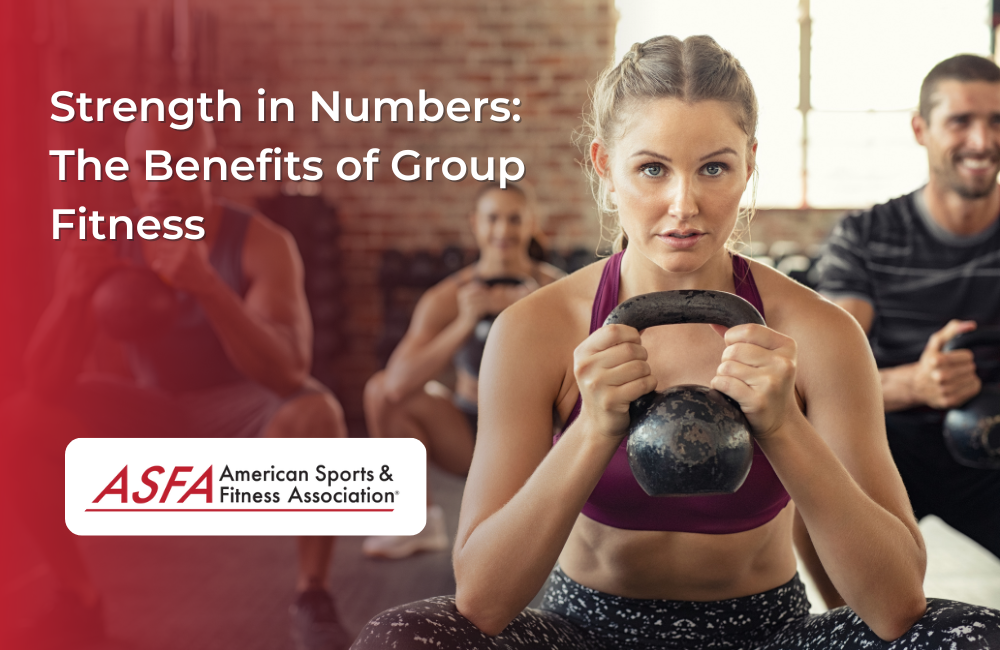
Strength in Numbers: The Benefits of Group Fitness
The clearest way to discuss Strength in Numbers: The Benefits of Group Fitness is to narrow the claims and state the practical limits plainly.
A strong group session looks energetic from the outside and organized underneath. Coaching, spacing, scaling, and transitions determine whether the class works. The next sections turn that principle into specific decisions.
Limits and Safety
Exercise should be adjusted for the participant's experience, symptoms, environment, and available supervision. Stop for sharp pain, dizziness, chest discomfort, sudden weakness, or loss of control, and seek appropriate professional guidance when symptoms are persistent or concerning.
Programming Considerations
A useful checkpoint: Plan regressions, progressions, traffic flow, equipment spacing, and transition time before class. The coach should be able to see participants and change the session when technique or fatigue warrants it.
Improves Your Confidence
Exercise is a great way to improve your confidence. It can help you build self-esteem, feel more confident in social situations, and even be more confident with your body.
Increases Your Motivation
Group fitness classes are a great way to motivate yourself to get out of bed. If you're going to work out, why not do it with other people?
Strengthens Your Immune System
The benefits of group fitness don't stop at the physical. Group exercise can also improve your mental health and emotional well-being.
Promotes a Sense of Community
Group fitness classes are a great way to meet people and build a sense of community. The benefits of being part of a community can include:
- Increased happiness, health, and well-being
- A sense of belonging and connection with others
- Greater opportunities for learning and growth through mutual support
- Fosters Healthy Competition and Accountability
The Practical Takeaway
Use the information to make one clear adjustment, then judge the result from repeatable performance rather than novelty.
What Good Application Looks Like
Before applying Strength in Numbers: The Benefits of Group Fitness, define the outcome in terms that can be observed. That may be steadier technique, a tolerable training dose, better consistency, clearer client communication, or a decision between two reasonable options.
- Goal: State what should improve and why it matters.
- Starting point: Use the person's current ability, experience, equipment, and constraints.
- Dose: Decide how much work or change is appropriate before adding more.
- Feedback: Track technique, tolerance, consistency, and the response after the session.
Know When to Change Course
Keep the first adjustment modest. If the response is useful and repeatable, progress one variable—such as range, load, duration, complexity, or frequency. If the result is poor, change the limiting variable instead of assuming that more effort will solve it.
Look Beyond a Single Session
With Strength in Numbers: The Benefits of Group Fitness, the same recommendation can produce different results for two people. Experience, recent workload, movement skill, available equipment, schedule, preferences, and recovery all change what is reasonable.
Review the result over several exposures rather than judging one unusually good or difficult session. Useful progress is usually visible as better control, a more appropriate workload, improved consistency, or clearer decision-making.
Define the Purpose Before Adding More
The class-design decisions in Strength in Numbers: The Benefits of Group Fitness are strongest when every block has a clear objective and an accessible alternative.
Plan the experience from the participant’s point of view: what they see, what they hear, where equipment is placed, how long transitions take, and how intensity is adjusted. A class can feel energetic without being confusing, and it can be accessible without removing the training objective.
Use the Smallest Effective Adjustment
Class intensity should come from deliberate programming rather than rushed transitions or unclear technique. The instructor needs enough structure to observe the room and respond when participants need another option.
- Avoid introducing several new skills under high fatigue.
- Use repeatable work blocks when the group includes mixed experience levels.
- End with enough time to bring the session to a controlled close.
- Sequence equipment changes before class begins.
Progress From Repeatable Success
Progress a class by developing familiarity before adding speed or complexity. Repeat core patterns across sessions, then vary one element such as range, resistance, duration, or coordination. Mixed-level groups benefit when the base option remains visible and the progression is presented as a choice rather than a test of status.
What to Review After Several Sessions
A short record is usually enough. Review:
- whether participants understood the base option
- transition time and room flow
- technique as fatigue increased
- attendance, feedback, and the ability to repeat the format
When the response differs from the expectation, revisit the setup and assumptions before adding more volume, restriction, or complexity.
Adapt the Guidance to the Person
The room itself changes the plan. Class size, equipment, temperature, acoustics, floor space, and sight lines affect what can be coached well. A format that works in a small studio may need a different structure in a crowded facility or outdoor setting.
Common Ways the Idea Gets Misapplied
- Offering options without first teaching the common base pattern.
- Increasing intensity by removing recovery rather than improving programming.
- Changing the format so often that participants cannot develop competence.
- Confusing entertainment with the class objective.
A clear plan does not remove uncertainty, but it makes the next adjustment more responsible and easier to explain.
Put the Guidance Through This Test
- Is the base option clear before progressions are introduced?
- Are transitions and equipment organized?
- Can the instructor observe the room during the hardest block?
- Does intensity match the class description?
- What will be repeated next time to build competence?
- Can the class objective be stated in one sentence?
The checklist is intentionally practical: each answer should change how the plan is designed, delivered, or reviewed.
A Practical Review Checklist
- Is the base option clear before progressions are introduced?
- Are transitions and equipment organized?
- Can the instructor observe the room during the hardest block?
- Does intensity match the class description?
- What will be repeated next time to build competence?
This review keeps the next step tied to the topic while leaving room for individual judgment and feedback.
Questions to Answer Before You Proceed
- What will be repeated next time to build competence?
- Can the class objective be stated in one sentence?
- Is the base option clear before progressions are introduced?
- Are transitions and equipment organized?
- Can the instructor observe the room during the hardest block?
The checklist is intentionally practical: each answer should change how the plan is designed, delivered, or reviewed.
Questions to Answer Before You Proceed
- Can the class objective be stated in one sentence?
- Is the base option clear before progressions are introduced?
- Are transitions and equipment organized?
- Can the instructor observe the room during the hardest block?
- Does intensity match the class description?
- What will be repeated next time to build competence?
This review keeps the next step tied to the topic while leaving room for individual judgment and feedback.


