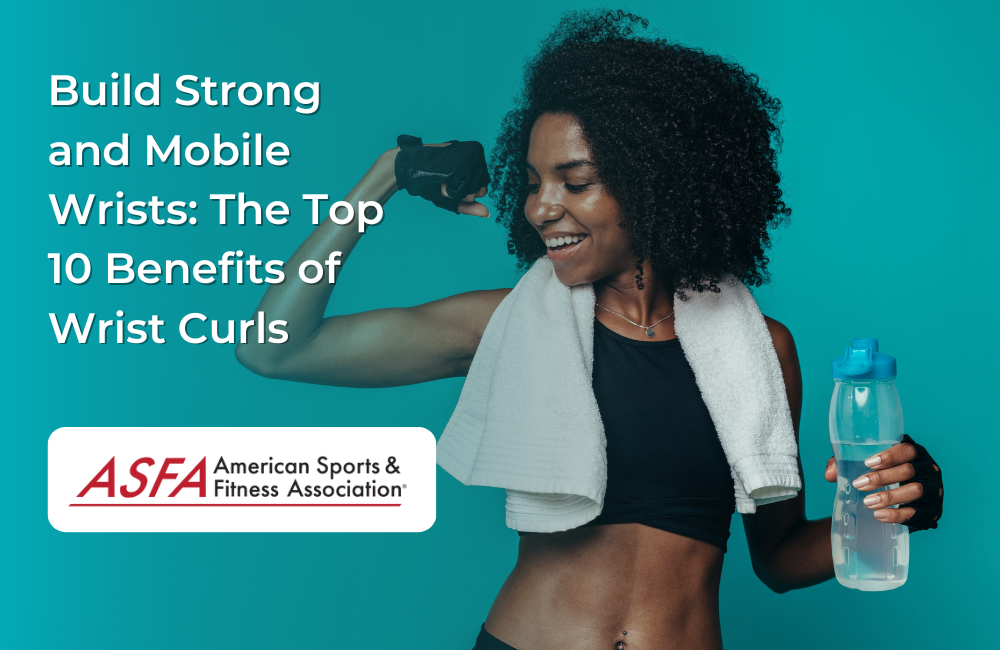
The Top 10 Benefits of Wrist Curls
The Top 10 Benefits of Wrist Curls is most useful when each item connects to a real training or coaching decision. A longer list is not automatically a better one.
Technique is not a single perfect shape. It is a repeatable way to complete the movement while controlling the load, range, and positions that matter for the goal. There is room for individual preference, provided the basic constraints are respected.
How to Apply It
For instructors: Choose the variation that permits a stable setup and repeatable range. Add repetitions or resistance only while the same control is maintained; stop when pain or compensation changes the movement.
Increased Strength and Endurance
Wrist curls target the muscles in your forearms, including the flexors and extensors. These muscles are responsible for wrist and hand movement and play a useful role in gripping and lifting objects.
Improved Grip Strength
Strong wrists are essential for a strong grip, which is necessary for many activities, including weightlifting, rock climbing, and sports like tennis and golf. Wrist curls can help increase your grip strength by strengthening the muscles in your hands and forearms.
Reduced Risk of Injuries
Weak wrists can increase the risk of injuries, particularly in activities that involve repetitive movements or heavy lifting. Wrist curls can help build the muscles around the wrist joint, making it more stable and less susceptible to injuries.
Improved Flexibility and Range of Motion
Wrist curls involve a full range of motion, which can help improve flexibility and range of motion in the wrists. Improved flexibility can also prevent wrist stiffness and pain, which can occur due to prolonged sitting or repetitive movements.
Improved Blood Flow
Wrist curls can help increase blood flow to the muscles in the forearms and hands, promoting faster recovery and reducing the risk of muscle soreness. Improved blood flow can also help prevent conditions like carpal tunnel syndrome, which is caused by compression of the median nerve in the wrist.
Better Posture
Strong and mobile wrists can also improve your posture, as they help maintain proper alignment of the wrist, hand, and forearm. Good posture can help reduce tension in the upper body and may help manage injury risk, such as shoulder impingement syndrome.
Increased Muscle Tone
Wrist curls can also help increase muscle tone in the forearms, giving them a more defined appearance. Increased muscle tone can also improve your overall aesthetics and confidence.
Improved Coordination and Dexterity
Wrist curls can help improve your coordination and dexterity, which are important for activities that require fine motor skills, such as playing a musical instrument or typing on a keyboard. Improved coordination and dexterity can also may help manage injury risk, such as strains and sprains.
Enhanced Sports Performance
Strong and mobile wrists can enhance your sports performance by improving your grip strength, stability, and control. This can help you perform better in sports like tennis, golf, and basketball, where a strong grip and wrist control are essential for success.
Versatility
Wrist curls can be performed in a variety of ways, including with dumbbells, barbells, or resistance bands. They can also be performed seated or standing, making them a versatile exercise that can be added to any fitness routine.
When to Modify or Stop
Exercise should be adjusted for the participant's experience, symptoms, environment, and available supervision. Stop for sharp pain, dizziness, chest discomfort, sudden weakness, or loss of control, and seek appropriate professional guidance when symptoms are persistent or concerning.
Next-Step Perspective
Keep the goal visible, make the smallest change that addresses it, and reassess before adding complexity.
Apply the Idea With Restraint
With The Top 10 Benefits of Wrist Curls, the same recommendation can produce different results for two people. Experience, recent workload, movement skill, available equipment, schedule, preferences, and recovery all change what is reasonable.
Review the result over several exposures rather than judging one unusually good or difficult session. Useful progress is usually visible as better control, a more appropriate workload, improved consistency, or clearer decision-making.
Start With the Decision That Matters
The Top 10 Benefits of Wrist Curls is easier to apply when anatomy is connected to movement, load, and the position of the surrounding joints.
Identify the movement to be trained before deciding which muscle deserves emphasis. Joint position, grip, stance, range, external load, and speed can change the contribution of several structures at once. The same anatomy may therefore be challenged differently across exercises that look similar on paper.
Individual Context Still Matters
Anatomy describes possible functions, not a single mandatory technique. A controlled movement can look somewhat different across individuals while still meeting the same objective. The useful standard is whether the setup is stable, the range is appropriate, and the intended task can be repeated without compensation that changes the exercise.
Common Ways the Idea Gets Misapplied
- Increasing resistance before the movement is repeatable.
- Confusing a muscle’s possible action with the best training choice for a specific person.
- Ignoring how joint angle and leverage change the task.
- Forcing an exercise to look identical for every participant.
Avoiding these errors makes the guidance easier to individualize and the result easier to evaluate.
A Simple Implementation Check
- Can the movement be performed with repeatable control?
- What variable will be progressed?
- Do persistent symptoms require appropriate evaluation?
- What movement or task is being examined?
- How do joint position and leverage change the demand?
- Which other structures share the work?
If those questions have clear answers, the guidance is more likely to produce a plan that can be followed and evaluated.
What to Change—and What to Keep Stable
A muscle may act as a prime mover in one task, assist in another, and stabilize in a third. That is why one exercise cannot fully represent everything a structure does.
- Match resistance direction to the intended action.
- Use anatomy to improve cueing without promising a particular sensation.
- Train movement patterns across appropriate ranges.
- Balance local muscle work with compound movement practice.
Progress Without Losing the Original Goal
Use anatomy to select a reasonable starting point, then let performance guide progression. The objective is not to isolate every structure perfectly; it is to create an appropriate movement demand that can be repeated and recovered from. Record the variation and setup so future changes are based on comparable work.
What to Review After Several Sessions
A practical review includes:
- range, resistance, tempo, and technique consistency
- whether the intended task improves across comparable sessions
- symptoms that persist or change in a concerning way
- the movement variation and joint position
Look for a pattern across several comparable attempts. One unusually good or difficult day should not determine the entire plan.