
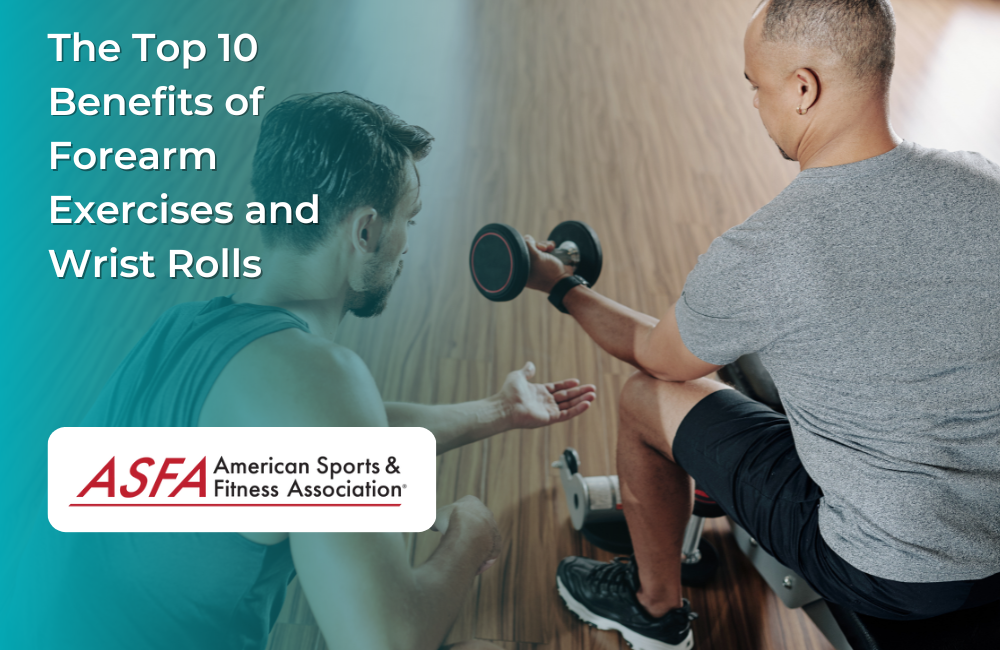
The Top 10 Benefits of Forearm Exercises and Wrist Rolls
The points in The Top 10 Benefits of Forearm Exercises and Wrist Rolls are organized around practical application rather than exaggerated promises.
Technique is not a single perfect shape. It is a repeatable way to complete the movement while controlling the load, range, and positions that matter for the goal. A simple rule helps: keep the goal visible and adjust the method.
Practical Guidance
Practical point: Choose the variation that permits a stable setup and repeatable range. Add repetitions or resistance only while the same control is maintained; stop when pain or compensation changes the movement.
1) Enhance Grip Strength and Forearm Muscles
A firm grip is foundational to many physical activities, from lifting weights to playing sports. Grip strength exercises, such as squeezing hand grippers or holding heavy dumbbells, target the muscles in your hands and forearms, while wrist rolls, which involve circular wrist movements, further bolster this strength by engaging the forearm flexors.
2) Improve Forearm and Wrist Flexibility and Stability
Flexibility in your forearms and wrists, including the wrist joint, is essential for maintaining a healthy range of motion, preventing injuries, and enhancing blood circulation. Exercises like wrist rolls, forearm curls, and reverse curls are excellent for increasing this flexibility.
3) Reduce the Risk of Carpal Tunnel Syndrome
Carpal tunnel syndrome (CTS) is a common condition characterized by pain, tingling, and numbness in the hands and wrists due to nerve compression. Regularly performing grip exercises and wrist rolls can help mitigate the risk of CTS by strengthening the tendons and muscles in your wrists, thus enhancing wrist stability and reducing the pressure on the median nerve.
4) Expand Your Range of Motion
Regularly incorporating grip exercises and wrist rolls into your routine can significantly improve the range of motion in your wrists and forearms. Including exercises for the forearm extensors can further enhance flexibility, allowing for better joint mobility, reducing the likelihood of injuries, and enhancing your ability to perform various physical activities.
5) Lower Injury Risk
Forearm training, including exercises that strengthen the forearms and enhance grip strength, can help protect your muscles and joints from strain and other injuries. Wrist rolls, in particular, increase wrist flexibility and stability, which is essential for activities requiring precise and controlled movements.
6) Boost Blood Circulation
Weight plate exercises and wrist rolls are excellent for stimulating blood circulation in your arms. As you exercise these muscles, you create a pressure differential that encourages increased blood flow, which is especially beneficial for those with circulatory issues or conditions like diabetes.
7) Alleviate Muscle Soreness
After a strenuous workout or physical activity, muscle soreness in the forearms and wrists can set in, particularly affecting the muscle group in these areas. Grip exercises and wrist rolls can help alleviate this soreness by increasing blood flow, reducing tension, and relaxing the muscles.
8) Relieve Tension Headaches
Tension headaches, often caused by muscle strain in the neck, shoulders, and arms, can be debilitating. Forearm exercises and wrist rolls can help relieve these headaches by relaxing the muscles in these areas, thereby reducing the tension that contributes to the pain.
9) Improve Coordination
Strong forearms and wrists contribute significantly to better hand-eye coordination. Exercises that target these muscles can improve your fine motor skills and overall coordination.
10) Elevate Energy Levels
Engaging in forearm exercises and wrist rolls can also have a positive impact on your energy levels. The physical stimulation of these exercises increases blood flow, revitalizes your muscles, and gives you a burst of energy that can help combat fatigue.
The Useful Conclusion
The best application is specific enough to guide action and flexible enough to change when the person or circumstances change.
Safety and Scope
Exercise should be adjusted for the participant's experience, symptoms, environment, and available supervision. Stop for sharp pain, dizziness, chest discomfort, sudden weakness, or loss of control, and seek appropriate professional guidance when symptoms are persistent or concerning.

Connect the Topic to a Real Objective
The structures discussed in The Top 10 Benefits of Forearm Exercises and Wrist Rolls do not work in isolation; their contribution changes with leverage, direction, speed, and the task being performed.
Use anatomy to explain why a movement may feel or perform differently, not to infer a condition from one sensation. Structure is only one part of the decision. Technique, fatigue, training history, workload, and the participant’s response all help determine whether the current exercise is appropriate.
A Better Way to Increase Difficulty
Progress the movement, not merely the local sensation. Begin with a range and resistance that allow the joints to remain organized. Increase demand gradually and observe whether the same movement pattern is maintained. If a change in load creates compensations elsewhere, the next step may be more practice, a different setup, or a less demanding variation rather than additional resistance.
Use Simple Evidence, Not Guesswork
A practical review includes:
- range, resistance, tempo, and technique consistency
- whether the intended task improves across comparable sessions
- symptoms that persist or change in a concerning way
- the movement variation and joint position
When the response differs from the expectation, revisit the setup and assumptions before adding more volume, restriction, or complexity.
Individual Context Still Matters
Anatomy describes possible functions, not a single mandatory technique. A controlled movement can look somewhat different across individuals while still meeting the same objective. The useful standard is whether the setup is stable, the range is appropriate, and the intended task can be repeated without compensation that changes the exercise.
Avoid These Planning Errors
- Ignoring how joint angle and leverage change the task.
- Forcing an exercise to look identical for every participant.
- Increasing resistance before the movement is repeatable.
- Confusing a muscle’s possible action with the best training choice for a specific person.
A clear plan does not remove uncertainty, but it makes the next adjustment more responsible and easier to explain.
Put the Guidance Through This Test
- Do persistent symptoms require appropriate evaluation?
- What movement or task is being examined?
- How do joint position and leverage change the demand?
- Which other structures share the work?
- Can the movement be performed with repeatable control?
- What variable will be progressed?
If those questions have clear answers, the guidance is more likely to produce a plan that can be followed and evaluated.
Adjust One Variable at a Time
Muscle contribution changes with joint angle, body position, leverage, external resistance, speed, range, and the need for stability.
- Remember that several muscles usually share the task.
- Treat persistent symptoms as a reason for appropriate evaluation, not a cue to self-diagnose from anatomy.
- Compare movements by function rather than by appearance alone.
- Use controlled repetitions to observe where technique changes.


