
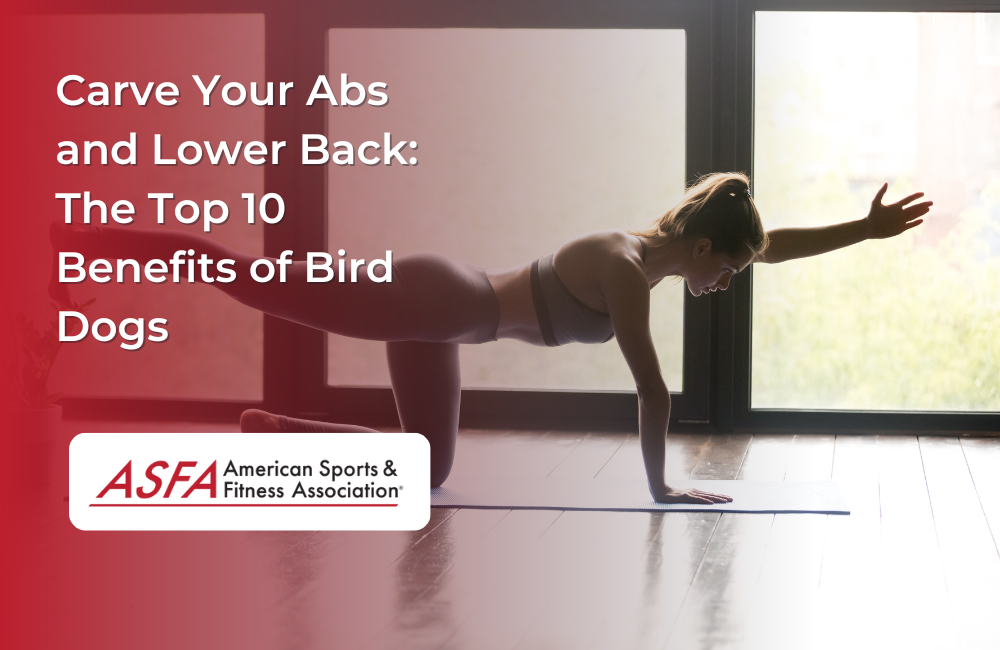
The Top 10 Benefits of Bird Dogs
The Top 10 Benefits of Bird Dogs covers several ideas, but they do not all carry the same weight. Start with the points that affect execution and consistency.
Technique is not a single perfect shape. It is a repeatable way to complete the movement while controlling the load, range, and positions that matter for the goal. Small setup choices can change the experience considerably.
When to Modify or Stop
Exercise should be adjusted for the participant's experience, symptoms, environment, and available supervision. Stop for sharp pain, dizziness, chest discomfort, sudden weakness, or loss of control, and seek appropriate professional guidance when symptoms are persistent or concerning.
Improve Core Strength
Bird dogs are an excellent way to improve core strength and stability. The exercise targets the rectus abdominis, transverse abdominis, and oblique muscles, which are essential for maintaining proper posture and performing physical activities.
Reduce Lower Back Pain
Bird dogs can also helps reduce lower back pain by strengthening the muscles in the lower back and improving overall spinal stability.
Improve Balance and Coordination
Bird dogs require balance and coordination, making them an excellent exercise for improving these skills. Performing bird dogs regularly can improve balance and coordination, making it easier to perform physical activities and reduce the risk of injury.
Enhance Flexibility
Bird dogs require a significant amount of flexibility, particularly in the hips and shoulders. Incorporating bird dogs into your workout routine can helps improve flexibility in these areas, reducing the risk of injury and improving overall physical performance.
Increase Range of Motion
Bird dogs can also helps increase range of motion in the spine and hips, improving overall mobility and reducing stiffness.
Strengthen the Glutes
Bird dogs also target the glutes, helping to strengthen and tone these muscles. Strong glutes are essential for proper alignment and balance, and can also improve athletic performance.
Improve Posture
Bird dogs can also improve posture by strengthening the muscles that support the spine and pelvis. By improving posture, individuals can reduce the risk of injury and improve overall physical appearance.
Increase Cardiovascular Endurance
Performing bird dogs as part of a cardiovascular workout routine can also helps increase cardiovascular endurance, improving overall physical fitness and health.
Reduce Stress
Bird dogs, like many other physical activities, can also helps reduce stress by releasing endorphins and promoting feelings of relaxation and well-being.
Easy to Modify
Bird dogs are easy to modify to suit individual fitness levels and goals. By adjusting the number of repetitions or adding resistance, individuals can increase the intensity of the exercise and achieve greater benefits.
Performing Bird Dogs Correctly
To perform bird dogs correctly, start in a kneeling position with your hands and knees on the ground. Extend your right arm out in front of you while simultaneously extending your left leg behind you, keeping both limbs straight.
Put It Into Practice
A sound plan does not need to look dramatic. It needs to be understandable, repeatable, and appropriate for the person using it.
Important Boundaries
Coach's note: Choose the variation that permits a stable setup and repeatable range. Add repetitions or resistance only while the same control is maintained; stop when pain or compensation changes the movement.
Keep the Method Connected to the Goal
With The Top 10 Benefits of Bird Dogs, the same recommendation can produce different results for two people. Experience, recent workload, movement skill, available equipment, schedule, preferences, and recovery all change what is reasonable.
Review the result over several exposures rather than judging one unusually good or difficult session. Useful progress is usually visible as better control, a more appropriate workload, improved consistency, or clearer decision-making.
Start With the Decision That Matters
Applying the ideas in The Top 10 Benefits of Bird Dogs starts with a clear training objective rather than copying a movement, drill, or weekly schedule without context.
For strength, the plan may emphasize load and long rest periods. For muscular endurance, the same movement may use lighter resistance, more repetitions, and shorter recovery. Technique practice may call for low fatigue and frequent high-quality repetitions. Conditioning may use a different structure again. Those approaches are not interchangeable simply because the exercise name is the same.
Use This Before the Next Session
- What is the primary training objective?
- Which variation allows the intended technique today?
- What load, range, tempo, and rest will be recorded?
- What sign will indicate that the set or session should stop?
- Which single variable may progress next?
Use the answers as the baseline for the next decision rather than relying on a vague impression of progress.
Adjust One Variable at a Time
Small programming changes can make the same movement serve a different purpose. Slower repetitions increase time under tension; longer rest may preserve force; shorter rest changes the conditioning demand; additional range can increase difficulty even without more weight.
- Choose the variable that best matches the current goal.
- Record enough detail to repeat the session accurately.
- Do not treat fatigue as proof that the exercise was well selected.
- Progress only while the intended movement pattern remains recognizable.
Progress From Repeatable Success
Progression is not limited to adding weight. Better control, a smoother range of motion, a longer pause, improved balance, or the same work at a lower perceived effort can all represent progress. Choose the next step that fits the goal. An advanced variation is not an upgrade when it changes the exercise so much that the original objective is lost.
Create a Useful Feedback Loop
Before changing the plan again, compare:
- whether the target goal improved across several sessions
- whether fatigue interfered with other training
- the variation and setup used
- where technique first changed
Keep the review connected to the original goal. More information is not automatically better when the important result remains unclear.
Use Principles Without Forcing Uniformity
Exercise selection should fit the participant rather than require the participant to fit a preferred variation. A different stance, grip, range, resistance, or tool may preserve the goal more effectively. Use the version that allows a controlled and repeatable pattern, then progress from the response rather than from an arbitrary timetable.
Where Good Information Can Go Wrong
- Treating discomfort as a cue to push through rather than a reason to adjust and seek appropriate guidance when needed.
- Copying an advanced athlete’s program without matching training history or recovery.
- Changing exercises every session before a pattern can be evaluated.
- Letting speed hide a loss of position or control.
The correction is straightforward: return to the objective, simplify the setup, and change only what the available feedback supports.
Put the Guidance Through This Test
- What load, range, tempo, and rest will be recorded?
- What sign will indicate that the set or session should stop?
- Which single variable may progress next?
- How will this work fit with the rest of the week?
- What is the primary training objective?
- Which variation allows the intended technique today?
This review keeps the next step tied to the topic while leaving room for individual judgment and feedback.


