
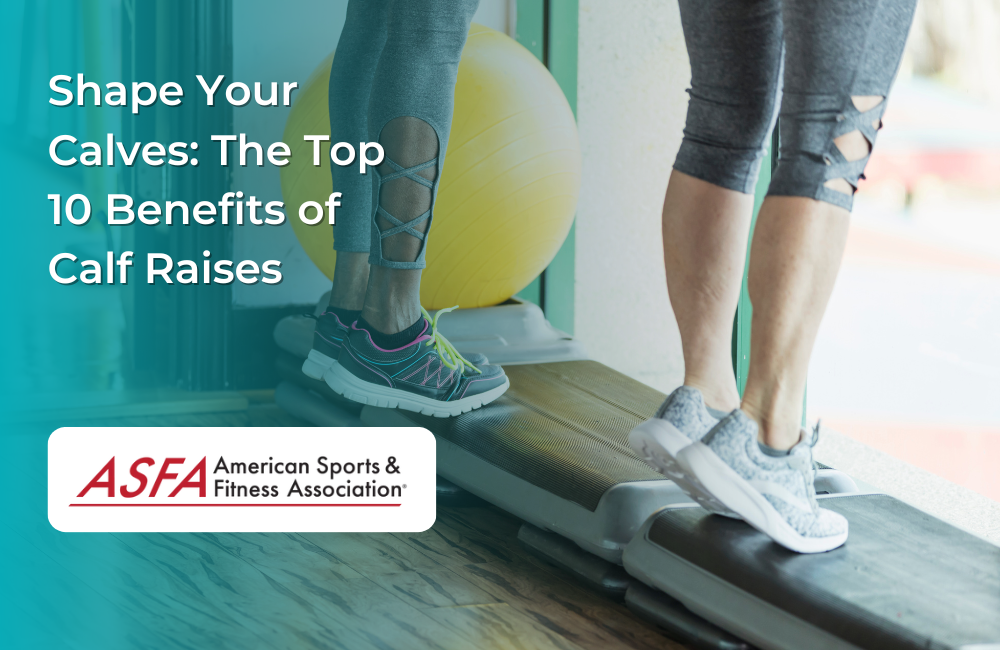
Shape Your Calves: The Top 10 Benefits of Calf Raises
Shape Your Calves: The Top 10 Benefits of Calf Raises covers several ideas, but they do not all carry the same weight. Start with the points that affect execution and consistency.
Biomechanics offers a way to describe movement; it does not turn one technique into a universal rule. What follows is less about chasing novelty and more about applying the idea well.
A Necessary Safety Note
Exercise should be adjusted for the participant's experience, symptoms, environment, and available supervision. Stop for sharp pain, dizziness, chest discomfort, sudden weakness, or loss of control, and seek appropriate professional guidance when symptoms are persistent or concerning.
Calf Exercises are Essential
Calf raises are one of the best exercises to strengthen your calf muscles. Changing foot position can impact the muscles targeted during calf raises.
If you want to improve your posture, calf raises are an effective way to do so–as long as they’re done correctly! When performed incorrectly, this exercise can cause back pain by placing too much strain on the lower back muscles (erector spinae ), which are responsible for keeping us upright when we stand up straight or walk.
Standing calf raises Are a Great Way to Build Strength and Define Your Calves
Calf raises are a great way to build strength and define muscles in your lower legs. Pressing down on the balls of your feet is essential for effectively engaging the calf muscles, whether you use machines at the gym, do them at home with dumbbells, or even just your body weight if you don’t have any equipment available.
They're Also a Great Way to Burn Calories
Calf raises are also a great way to burn calories and shed excess weight. The calves are comprised of 2 muscles, the gastrocnemius, and soleus, which make up the entire calf muscle group.
Calves should be worked at least twice weekly for best results; three times per week is optimal if you’re trying to lose weight or build muscle mass on your lower body specifically (which you should). For best results with this exercise routine, aim for 15-20 reps per set with 1-2 sets per session maximum depending on your fitness level.
Strong Calves Are Useful
Strong calves are a benefit in and of themselves. You'll be able to do more things, feel better about yourself and have better control over your body.
Strong calves will help you:
- Do more activities with your kids, like playing sports or walking through the park together
- Feel confident that your legs will support you if needed (like when running away from a bear)
- Walk up stairs without worrying about falling down them because of weak ankles or knees (or both)
Calf Raises Improve Ankle Mobility
Calf raises are an effective way to improve your ankle mobility, which can help may help manage injury risk such as Achilles tendinitis and plantar fasciitis, which affects the foot arch. The seated calf raise is another effective exercise for improving ankle and knee mobility, especially for those who struggle with balance in standing calf raises.
Achilles tendonitis occurs when there is inflammation in this tendon at its attachment point on top of your heel bone (calcaneus). Plantar fasciitis is caused by overuse of the calf muscle and tightness in its connective tissue that runs along the bottom surface inside each foot from heel bone down through the sole under toes.
Stronger Calf Muscles Will Help You Jump Higher and Run Faster
Calf raises will help you jump higher and run faster. Standing calf raises can help build strength for jumping higher and running faster by targeting the calf muscles, particularly the gastrocnemius.
The calf muscles are responsible for pushing off the ground, which is why they’re especially important to athletes who rely on explosive power in their sport.
Stronger Calf Muscles Make It Easier for You to Squat Properly
Stronger calf muscles make it easier for you to squat properly and use proper form when doing other lower body exercises like hip thrusts and lunges, which means that you'll be able to get more out of them than if you were using the improper form compensate for weakness in other parts of your lower body with these other exercises as well as with squats as well as with deadlifts as well as with lunges etc.
Strong Calves Can Improve Your Posture
Calf raises are a great exercise for improving your posture. The muscles in your calves, including the soleus muscle and gastrocnemius, directly affect how well you stand up straight.
When you perform calf raises correctly, they’ll strengthen these supporting muscles to support better their part of the body’s weight and other movements like walking or running. When combined with other exercises like squats and lunges (which also require strong leg muscles), calf raises can help improve overall health by reducing stress on joints like knees and hips–and increasing endurance during everyday tasks such as walking up stairs!
Increase Strength and Flexibility
- Calf raises to build strength
- Calf raises help you improve flexibility
- Calf raises help you with balance, coordination, and body awareness
Strengthen Your Gastrocnemius Muscle & Soleus Muscles
The calf muscle group is made up of the gastrocnemius and soleus muscles. These two muscles are located along the back of your lower leg, running from just below your knee to just above your ankle bone.
Calf raises are an effective way to build strength and define muscles in your lower legs, which can help you burn calories and shed excess weight, as well as improve overall performance when it comes to jumping higher or running faster. The stronger these muscles become, the less likely they’ll get injured or cause pain due to overuse (or underuse).
You Can Do Calf Raises at Home
You can do calf raises at home to help improve your health! Standing calf raises are an excellent example of an exercise that can be done at home.
Calf raises are a great exercise for improving the shape of your calves, but they’re also beneficial for other parts of the body. Calf raises are easy to do, so they do an ideal exercise if you want to start working out but don’t have access to a gym or trainer.
A Coach's Checklist
Coach's note: Anatomical descriptions explain likely roles, not perfect isolation. Muscle contribution changes with joint position, load, speed, fatigue, and individual structure.
What to Remember
A sound plan does not need to look dramatic. It needs to be understandable, repeatable, and appropriate for the person using it.


