

Personal Trainer Certification
Personal Trainer Certification
Earn your Personal Trainer Certification and build the professional foundation to guide clients through structured, goal-focused fitness programs.
Pay Only If You Pass
Fully Accredited
100% Online & Self-Paced
No Required Coursework
Instant Digital Certificate
100,000+ Certifications Issued Worldwide
Couldn't load pickup availability
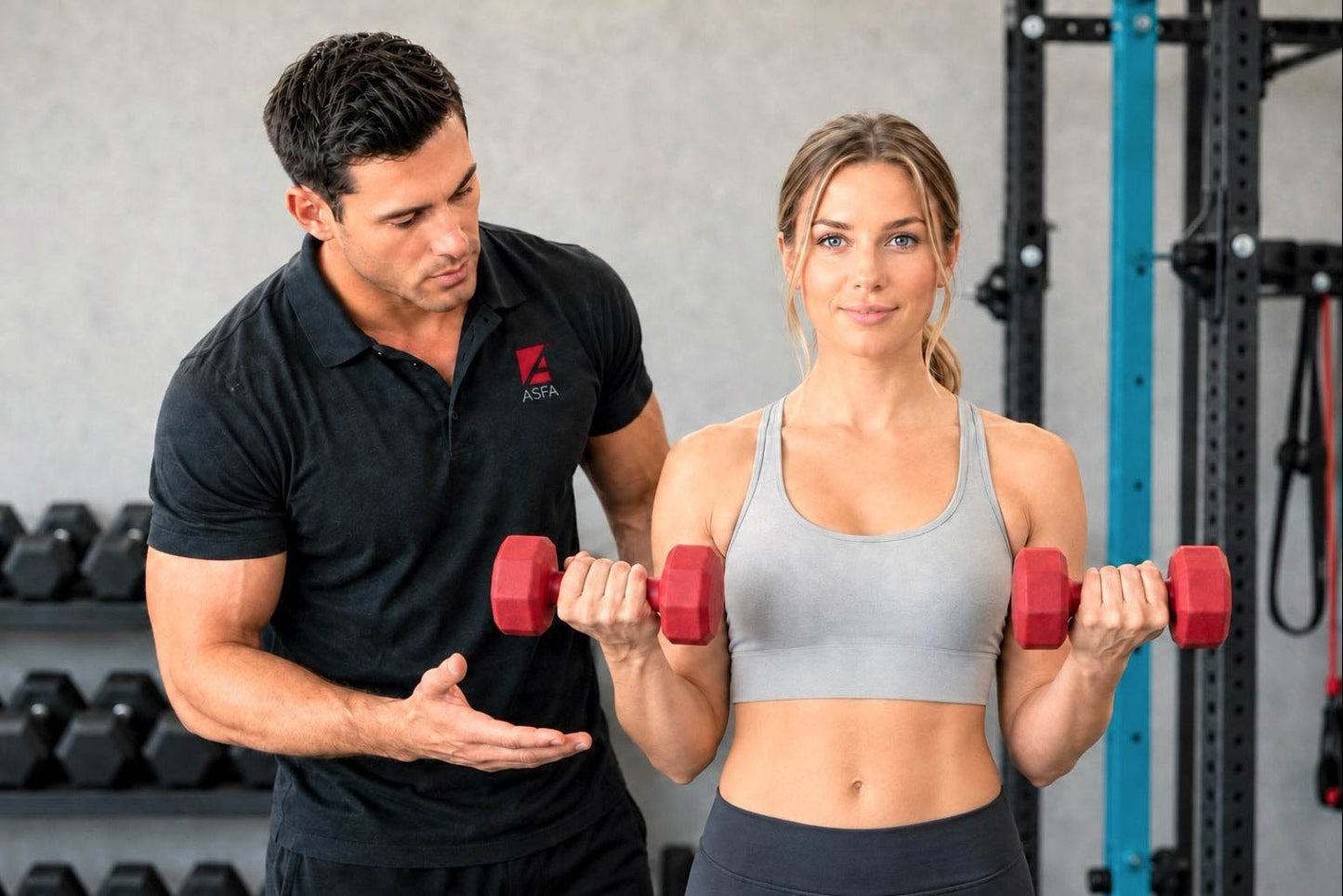
About Our Personal Trainer Certification
Turn Fitness Knowledge Into a Professional Credential
People arrive at personal training from different directions. Some study exercise science in school. Some learn through years of strength training, sport, coaching, group exercise, or independent reading. Others are already the person friends and family ask for help, but they want a credential before taking on clients professionally.
ASFA’s Personal Trainer Certification gives prepared candidates a direct way to demonstrate what they know. You do not have to purchase a large course package before seeing the examination. Take the online test first. If you pass, you can decide to purchase the certification. If you do not pass, you are not charged; you can study, revisit the material, and try again when you are ready.
The standard still matters. Personal trainers make decisions that affect exercise selection, progression, client experience, and safety. Certification is not a substitute for judgment or practical experience, but it is an important way to show that you understand the principles behind responsible fitness coaching.
What Is a Personal Trainer Certification?
A Personal Trainer Certification is a professional fitness credential earned by demonstrating knowledge of exercise principles, client assessment, program design, coaching, and professional practice. It is commonly pursued by fitness enthusiasts entering the industry, career changers, coaches, and existing fitness professionals who want formal recognition of their training knowledge.
The credential tells clients and employers that you have completed an examination covering the fundamentals used to plan and guide exercise. It does not promise a job or replace the requirements of a specific facility. It does provide a clear starting point for building experience, adding specialties, and developing a professional identity in fitness.
Personal Training Is More Than Choosing Exercises
A workout can be difficult without being well designed. Effective personal training begins with understanding the person in front of you: current ability, training history, goals, schedule, preferences, and readiness to change. From there, the trainer has to select an appropriate starting point and organize the work so that it can progress.
That process requires more than a library of exercises. Trainers must explain movement clearly, recognize when a plan needs to be adjusted, keep clients engaged, and stay within an appropriate professional scope. The best program on paper accomplishes little if the client cannot follow it consistently or if the trainer cannot communicate why it matters.
What the Examination Expects You to Understand
The Personal Trainer Certification examination focuses on the connected skills that support entry-level fitness coaching. Candidates should be prepared to apply basic principles rather than rely only on memorized terminology.
- Exercise fundamentals: understanding common training methods, movement patterns, and the purpose of different exercise choices.
- Client assessment: gathering useful background information, identifying goals, and recognizing an appropriate starting point.
- Program design: arranging exercise selection, volume, intensity, frequency, and progression into a workable plan.
- Resistance and cardiorespiratory training: applying foundational principles to strength, muscular endurance, and conditioning.
- Instruction and cueing: communicating technique, expectations, and exercise modifications in language a client can understand.
- Behavior and adherence: setting realistic goals, tracking progress, and supporting consistency without making exaggerated promises.
- Professional practice: respecting boundaries, recognizing scope, and approaching client relationships responsibly.
- General fitness and nutrition principles: understanding foundational concepts while avoiding advice outside a trainer’s qualifications.
These areas work together. A trainer does not assess a client, write a program, coach a session, and review progress as unrelated tasks. Each decision affects the next one.
A Path for Prepared Beginners and Existing Fitness Professionals
You do not need to be employed as a trainer before taking the examination. A knowledgeable fitness enthusiast may be ready after years of serious study and practical training. A coach, athlete, group instructor, or wellness professional may already understand much of the subject. A career changer may have completed relevant coursework but never pursued a fitness credential.
What matters is preparedness—not where the learning occurred.
If the examination confirms that you understand the material, ASFA gives you a way to convert that knowledge into a professional certification. If it shows that you need more preparation, you have learned that before paying. You can use recommended texts, continue independent study, seek hands-on instruction, or choose a structured program elsewhere if that approach better matches how you learn.
Why ASFA Uses a Test-First Model
Traditional certification packages often combine textbooks, lectures, study support, and an examination into one upfront purchase. That can be useful for someone who wants a prescribed course from beginning to end. It can also force candidates to pay for material they already understand—or discover too late that a program is not a good fit.
ASFA separates learning from validation. There are no required courses. Recommended resources are available for candidates who want them, but you may move directly to the examination when you believe you are prepared. You see your result before you are asked to pay.
That is the purpose of Pay Only if You Pass: not to lower the bar, but to remove the financial guesswork. The examination determines whether the credential has been earned. The candidate decides whether it is worth purchasing.
Using the Credential Professionally
A Personal Trainer Certification can support work in commercial gyms, private studios, community programs, independent coaching, small-group training, and online fitness services. The exact opportunity depends on the employer, role, location, insurance requirements, and the trainer’s broader qualifications.
Certification is one part of professional readiness. Practical coaching ability, communication, business habits, continuing education, and the willingness to refer beyond your scope all matter. New trainers should expect to keep learning after they become certified; experienced trainers should expect the same.
Specialization can make that development more visible. A trainer who later adds credentials in strength and conditioning, nutrition, functional fitness, senior fitness, or group instruction can communicate a more focused service offering to prospective clients. Additional certifications do not guarantee higher income, but relevant expertise can make it easier to serve a defined audience and explain the value of your work.
Accreditation and Certification Options
ASFA is fully accredited by the International Council for Online Educational Standards (ICOES). After you pass, complete checkout only if the certification is worthwhile to you; your digital certificate is normally emailed within minutes.
The one-year option requires retesting and repurchasing before expiration. The lifetime option requires continued activity in the certified field and one relevant continuing-education class, course, or seminar each year.
Questions Before You Test
Can I take the Personal Trainer Certification if I have never worked as a trainer?
Yes. Professional experience is not the only way to learn fitness principles. Candidates may prepare through academic study, independent learning, athletic participation, coaching, or years of personal practice. You should take the examination only when you believe you understand the material well enough to apply it responsibly.
Is ASFA fully accredited?
Yes. ASFA is fully accredited by the International Council for Online Educational Standards (ICOES).
Do I have to buy a course or textbook before testing?
No. ASFA does not require coursework before the examination. Recommended texts and manuals are available if you want additional preparation, but their purchase is optional.
What happens if I do not pass?
You are not charged. You may review the topics that challenged you, continue studying, and take the examination again when you are better prepared.
Will an employer accept this certification?
Acceptance depends on the employer, position, facility policy, insurer, and any local requirements. Some organizations accept a range of accredited fitness credentials; others name specific certifications or prerequisites. Confirm the requirements of a current or prospective employer before purchasing when acceptance is essential to your plans.
How long does the certification take?
There is no required course schedule. Candidates who already know the material may move directly to the examination, while others may choose to study first. The timeline depends on your starting knowledge and preparation.
When will I receive my certificate?
After you pass and complete checkout, your digital certificate is normally emailed within minutes.
Is a certification the same as hands-on experience?
No. Certification validates tested knowledge. Coaching experience develops judgment, communication, and the ability to work with different clients. Strong professionals continue building both.
Build From a Strong Foundation
Personal training can be the starting point for a broad fitness career or the central service around which you build a specialty. Candidates who want to deepen or widen their credentials may also consider ASFA’s Advanced Personal Trainer Certification, Master Personal Trainer Certification, Group Fitness & Bootcamp Instructor Certification, Strength & Conditioning Coach Certification, or Sports Nutrition Coach Certification.
Choose the next credential because it reflects what you know and the people you want to serve—not because every trainer needs the same collection of certifications.