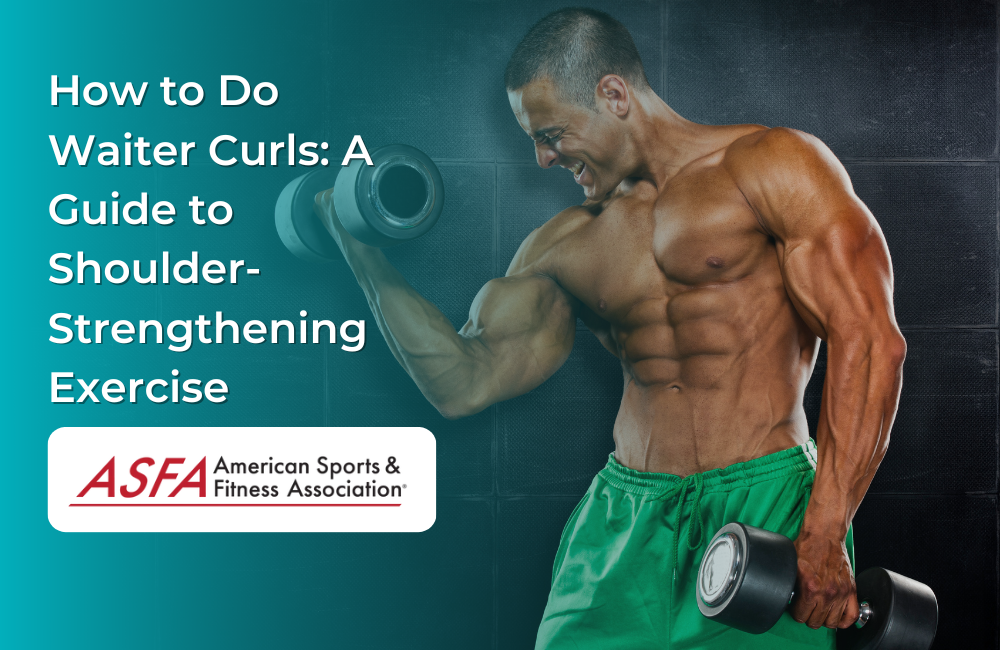
How to Do Waiter Curls
A useful way to approach How to Do Waiter Curls is to separate purpose, setup, execution, and progression.
Technique is not a single perfect shape. It is a repeatable way to complete the movement while controlling the load, range, and positions that matter for the goal. The practical question is how to use the information without overstating it.
Benefits of Waiter Curls
Before we dive into the technique, Functional Fitness: This exercise mimics real-life movements that require overhead arm strength, making it valuable for everyday activities like reaching for objects on high shelves or lifting items overhead. Core Engagement: Balancing a weight overhead engages the core muscles to stabilize your spine and maintain proper posture.
1. Equipment and Setup
- You will need a dumbbell or kettlebell for this exercise. Choose a weight that is challenging but manageable for your fitness level.
- Stand with your feet shoulder-width apart, maintaining a neutral spine and engaging your core.
2. Grip and Starting Position
- Hold the dumbbell or kettlebell in one hand with an overhand grip (palm facing forward).
- Start with your arm fully extended, holding the weight by your side.
3. Lifting Phase
- Begin by bending your elbow and lifting the weight toward your shoulder.
- Keep your elbow close to your body as you lift the weight.
- Continue the movement until your forearm is perpendicular to the ground, and the weight is at shoulder height.
4. Hold and Stabilize
- Once the weight is at shoulder height, pause for a moment to stabilize and engage the shoulder muscles.
5. Lowering Phase
- Slowly lower the weight back to the starting position by straightening your arm.
6. Repeat and Switch Sides
- Complete the desired number of repetitions with one arm before switching to the other.
Tips for Proper Form
To ensure you're performing waiter curls correctly and safely, consider these additional tips:
- Keep your core engaged throughout the exercise to maintain stability and prevent arching your lower back.
- Focus on controlled movements. Avoid using momentum to lift the weight.
- Your wrist, elbow, and shoulder should all be in a straight line when the weight is at shoulder height.
- If you're new to this exercise, start with a lighter weight and gradually increase as you build strength and confidence.
- Perform waiter curls in front of a mirror, if possible, to monitor your form and ensure your shoulder stays stable.
Incorporating Waiter Curls into Your Routine
Waiter curls can be included in your upper body or shoulder-focused workout routine. You can perform them as part of a circuit or incorporate them into your strength training program.
Remember that proper form is essential to help manage injury risk and get the most out of this exercise. If you experience any discomfort or pain while performing waiter curls, consult a fitness professional or healthcare provider for guidance and potential modifications.
A Clear Bottom Line
Treat the method as a tool, not an identity. Keep what improves the plan and remove what does not.
Use It in Practice
Programming note: Choose the variation that permits a stable setup and repeatable range. Add repetitions or resistance only while the same control is maintained; stop when pain or compensation changes the movement.
Safety and Scope
Exercise should be adjusted for the participant's experience, symptoms, environment, and available supervision. Stop for sharp pain, dizziness, chest discomfort, sudden weakness, or loss of control, and seek appropriate professional guidance when symptoms are persistent or concerning.
What Changes the Answer
With How to Do Waiter Curls, the same recommendation can produce different results for two people. Experience, recent workload, movement skill, available equipment, schedule, preferences, and recovery all change what is reasonable.
Review the result over several exposures rather than judging one unusually good or difficult session. Useful progress is usually visible as better control, a more appropriate workload, improved consistency, or clearer decision-making.
Define the Purpose Before Adding More
How to Do Waiter Curls becomes more practical when the exercise choice, training dose, and progression method all point toward the same outcome.
For strength, the plan may emphasize load and long rest periods. For muscular endurance, the same movement may use lighter resistance, more repetitions, and shorter recovery. Technique practice may call for low fatigue and frequent high-quality repetitions. Conditioning may use a different structure again. Those approaches are not interchangeable simply because the exercise name is the same.
Control the Variables That Change the Result
Small programming changes can make the same movement serve a different purpose. Slower repetitions increase time under tension; longer rest may preserve force; shorter rest changes the conditioning demand; additional range can increase difficulty even without more weight.
- Record enough detail to repeat the session accurately.
- Do not treat fatigue as proof that the exercise was well selected.
- Progress only while the intended movement pattern remains recognizable.
- Choose the variable that best matches the current goal.
Build a Progression You Can Defend
Start with a version that allows a stable setup and repeatable range. Establish a baseline for repetitions, load, tempo, and perceived effort. Progress one element—such as another repetition, a small resistance increase, more range, or a more demanding variation—only when the prior version remains controlled. If technique changes early, recovery declines, or the target area is no longer doing the intended work, reduce the demand and rebuild from a clearer baseline.
Create a Useful Feedback Loop
Useful tracking can remain simple. Record:
- whether fatigue interfered with other training
- the variation and setup used
- where technique first changed
- whether the target goal improved across several sessions
Look for a pattern across several comparable attempts. One unusually good or difficult day should not determine the entire plan.
Adapt the Guidance to the Person
Two people can use the same exercise for different reasons and need different versions. Training history, limb proportions, mobility, confidence, equipment, schedule, symptoms, and the rest of the program all affect the decision. Standardize the objective and the tracking method; individualize the setup and dose. That balance makes comparisons more useful without forcing every repetition to look identical.
Keep the Application From Drifting
- Changing exercises every session before a pattern can be evaluated.
- Letting speed hide a loss of position or control.
- Treating discomfort as a cue to push through rather than a reason to adjust and seek appropriate guidance when needed.
- Copying an advanced athlete’s program without matching training history or recovery.
The correction is straightforward: return to the objective, simplify the setup, and change only what the available feedback supports.
A Simple Implementation Check
- Which variation allows the intended technique today?
- What load, range, tempo, and rest will be recorded?
- What sign will indicate that the set or session should stop?
- Which single variable may progress next?
- How will this work fit with the rest of the week?
- What is the primary training objective?
Use the answers as the baseline for the next decision rather than relying on a vague impression of progress.