

Barre Instructor Certification
Barre Instructor Certification
Earn your Barre Instructor Certification and lead structured, low-impact classes that develop strength, posture, balance and controlled movement.
Pay Only If You Pass
Fully Accredited
100% Online & Self-Paced
No Required Coursework
Instant Digital Certificate
100,000+ Certifications Issued Worldwide
Couldn't load pickup availability
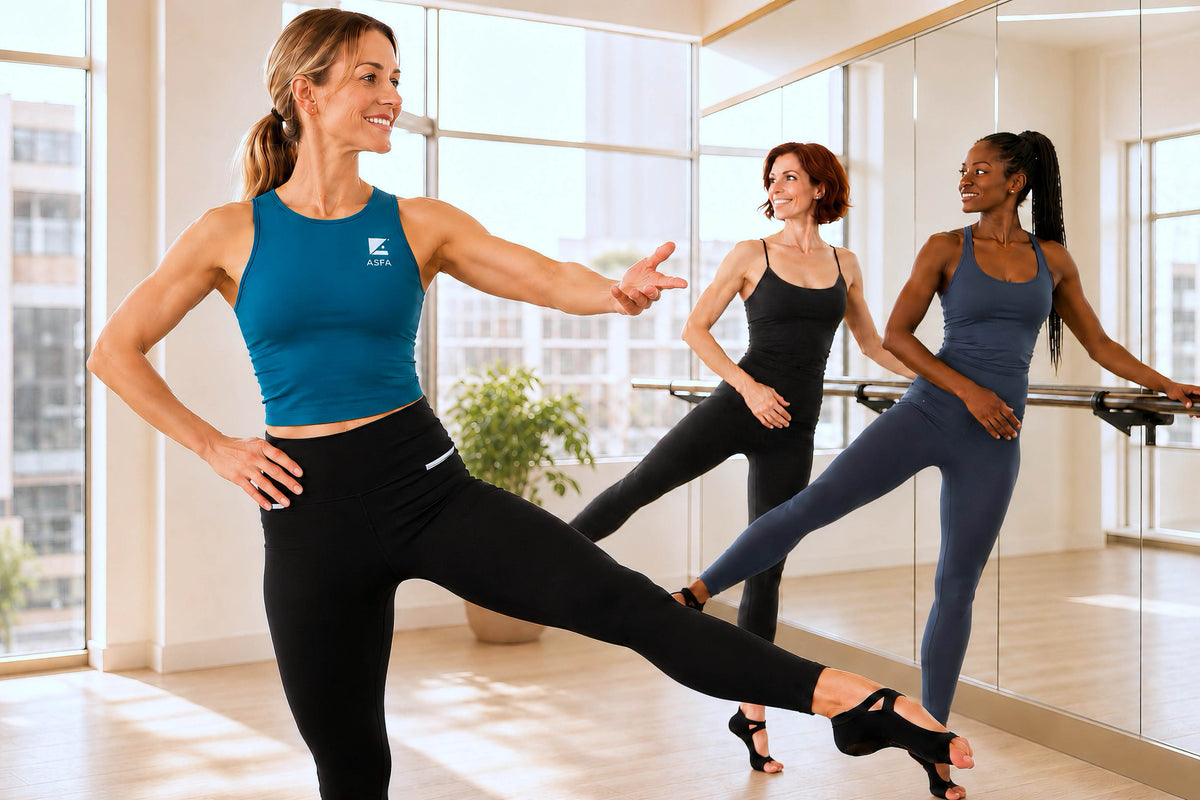
About Our Barre Instructor Certification
Small Ranges Leave Little Room for Vague Coaching
Barre classes often use compact movements, sustained positions, repetition, and carefully controlled changes in tempo. Because the range may be small, the instructor's directions have to be precise. A few unclear cues can turn focused muscular-endurance work into a room full of different exercises.
ASFA's Barre Instructor Certification gives prepared candidates a way to demonstrate knowledge of barre-based class structure, posture, movement control, cueing, choreography, balance, and participant options. The certification is open to fitness professionals and knowledgeable enthusiasts; prior employment as an instructor is not required.
Take the online examination before purchasing. If you pass, you decide whether to buy the credential. If you do not pass, you are not charged and may prepare further before trying again.
What Is a Barre Instructor Certification?
A Barre Instructor Certification is a professional fitness credential that recognizes knowledge of leading low-impact, music-friendly classes built around posture, controlled movement, muscular endurance, balance, core engagement, and organized sequencing. It may support instruction in boutique studios, gyms, group fitness programs, private sessions, and online classes.
Barre fitness borrows elements associated with ballet, Pilates, and group exercise, but the credential is not a ballet teaching license or a claim of formal dance rank. It validates fitness-instruction knowledge for barre-style programming.
Rhythm and Structure Do the Heavy Lifting
A successful class needs more than a collection of pulses and holds. The order of the work affects fatigue, posture, participant confidence, and the ability to follow the next transition. The instructor should know when to repeat a pattern, when to change position, and when the class needs a reset rather than another layer of choreography.
Music can support tempo and energy, but it should not dictate movement faster than participants can control. The best classes feel fluid because the instructor has already made clear decisions about timing, setup, and the purpose of each block.
Barre is demanding precisely because it asks participants to maintain attention while fatigue builds. Clear coaching keeps that demand productive.
What You Should Understand Before Testing
- Barre class design: organizing warm-up, lower-body work, upper-body work, core training, balance, and closing sequences coherently.
- Posture and alignment: setting positions that support the exercise without forcing a single aesthetic standard.
- Movement control: managing range, tempo, repetition, and isometric holds with purpose.
- Muscular endurance: understanding how repeated, low-load work affects fatigue and technique.
- Cueing: giving short, timely instructions that make sense while music and movement continue.
- Choreography: creating patterns participants can learn without sacrificing control or excluding less experienced members.
- Balance and support: using the barre or another stable surface appropriately and offering alternatives when needed.
- Class observation: recognizing when range, pace, or complexity should change.
- Professional scope: teaching fitness responsibly without presenting the class as treatment or making unsupported outcome claims.
The exam focuses on the instructor's ability to turn those components into a safe, understandable class—not on performing ballet technique at a professional-dancer level.
You Do Not Need a Dance Résumé to Be Prepared
A dance background can help with musicality, posture, and movement memory. It is not the only route to barre knowledge. Group fitness instructors, Pilates professionals, personal trainers, serious barre participants, and independently educated fitness enthusiasts may also be ready to test.
Preparedness means understanding the format well enough to explain it, organize it, and adjust it. If you can do that, ASFA gives you a direct opportunity to demonstrate the knowledge. If the examination shows that you are not ready, you have not paid to find out.
Continue taking classes, study class design, practice cueing, use optional materials, or seek hands-on instruction. Then return to the test when the subject feels less like imitation and more like something you can teach.
How the ASFA Process Works
There are no required ASFA classes and no scheduled test date. Take the online examination when you believe you are prepared. Optional resources are available if you want a review.
You see the result before payment. After you pass, complete checkout only if the certification is worthwhile to you; your digital certificate is normally emailed within minutes. Do not pass, and you are not charged.
Pay Only if You Pass gives experienced professionals and well-prepared newcomers the same chance to validate what they know without buying an education package they may not need.
Where Barre Instruction Fits
Barre can be offered as a dedicated group format or used to broaden an instructor's existing schedule. It pairs naturally with Pilates, yoga, core training, dance fitness, and general group exercise. For a studio or independent instructor, the specialty can make a service menu more specific and easier for clients to understand.
Requirements differ across employers. A boutique studio may ask for a live audition, in-house format training, a group fitness credential, teaching experience, or another prerequisite. Certification does not promise a position, and it does not replace the practical skill of managing a real class.
Accreditation and Credential Options
ASFA is fully accredited by the International Council for Online Educational Standards (ICOES). After you pass, complete checkout only if the certification is worthwhile to you; your digital certificate is normally emailed within minutes.
The one-year option requires retesting and repurchasing before expiration. The lifetime option requires continued activity in the certified field and one relevant continuing-education class, course, or seminar each year.
Barre Certification Questions
Do I need a ballet or dance background?
No specific dance history is required by ASFA. You do need sufficient understanding of barre-style fitness, class structure, movement control, and cueing to pass the examination.
Does this make me a certified ballet teacher?
No. This is a barre fitness instructor credential. It does not grant ballet pedagogy credentials, conservatory standing, or professional dance rank.
Can a fitness enthusiast take the test?
Yes. A well-prepared enthusiast may test even without professional experience. The examination—not the job title—determines whether the knowledge has been demonstrated.
Is ASFA fully accredited?
Yes. ASFA is fully accredited by the International Council for Online Educational Standards (ICOES).
Will studios accept it?
Studio requirements vary. Some accept accredited fitness certifications, while others require proprietary format training, auditions, experience, or a general group-fitness credential. Check with the studio where you intend to teach.
What happens if I do not pass?
You are not charged. Study or practice further and take the examination again when you are ready.
When is the digital certificate issued?
After you pass and complete checkout, your digital certificate is normally emailed within minutes.