
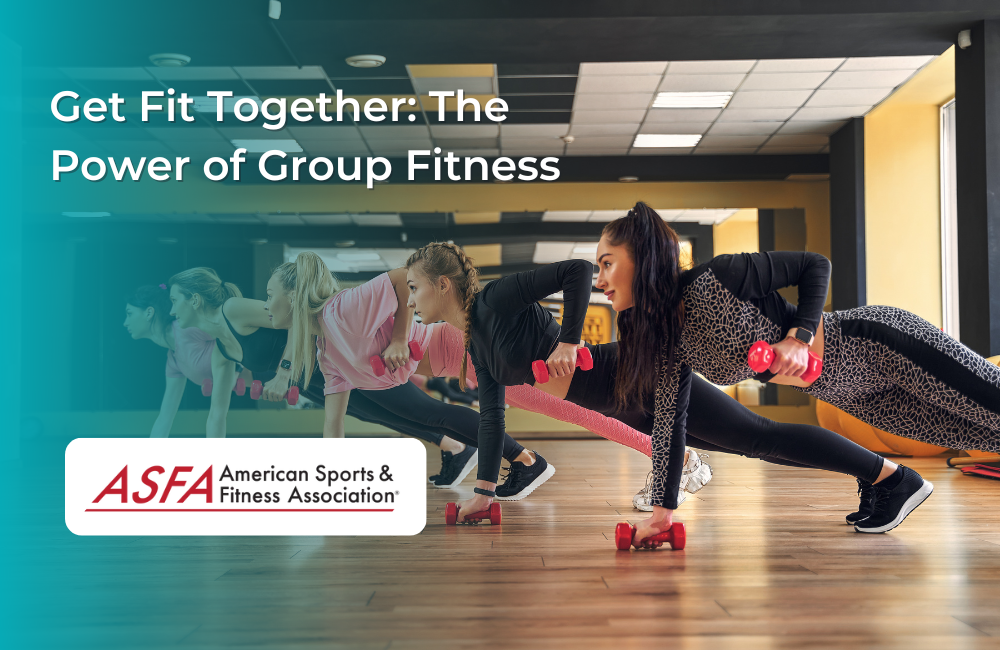
Get Fit Together: The Power of Group Fitness
The clearest way to discuss Get Fit Together: The Power of Group Fitness is to narrow the claims and state the practical limits plainly.
A strong group session looks energetic from the outside and organized underneath. Coaching, spacing, scaling, and transitions determine whether the class works. The distinction matters in practice.
Limits and Safety
Exercise should be adjusted for the participant's experience, symptoms, environment, and available supervision. Stop for sharp pain, dizziness, chest discomfort, sudden weakness, or loss of control, and seek appropriate professional guidance when symptoms are persistent or concerning.
Decision Points
A useful checkpoint: Plan regressions, progressions, traffic flow, equipment spacing, and transition time before class. The coach should be able to see participants and change the session when technique or fatigue warrants it.
Group fitness classes are still the most popular method of exercise in America.
Group fitness classes are still the most popular method of exercise in America, with more than 60% of people who exercise regularly doing so in a group setting. And it's not just because they're convenient: people who work out with others have better results than those who don't.
Group fitness classes can be anything and everything in between. They're also called "fitness studios," but they're often just rooms full of fitness equipment where instructors lead classes that you'll sign up for online or at the gym's front desk (although some studios offer walk-in spots).
Group fitness brings people together in an environment that supports a healthy lifestyle.
Group fitness classes are social gatherings where participants can connect with each other and find support in their plan toward health and wellness. The more you go, the more likely you are to stay consistent with your workout routine--and that means greater results!
Group fitness builds camaraderie, which helps people stay motivated long-term.
Group fitness can be a great way to build camaraderie and support. When you're working out with others, you have someone to encourage you when the going gets tough.
This is especially true of group classes like dance or yoga--it's easy for everyone to cheer each other on as they get into their moves! And if one person needs a break?
Group fitness also helps people stay motivated long-term by providing support and encouragement to others: shared goals and shared experiences can help keep your motivation levels up even when things become difficult (or boring).
When you're surrounded by like-minded people, it's easier to find community and support.
Group fitness classes are a great place to find community and support. When you're surrounded by like-minded people, it's easier to find community and support.
Shared goals and shared experiences can help you feel more motivated.
Working out with a group can help you stay motivated because you'll be sharing your experiences with other people. You'll feel more comfortable doing the workout, and you'll meet new people in a safe environment.
You can learn tips and tricks from others who have been doing the same workout for longer or who grew up with similar interests.
You can learn tips and tricks from others who have been doing the same workout for longer or who grew up with similar interests. For instance, if you're taking barre classes, one of your classmates might be able to show you how to get a better stretch in your hamstrings.
You get to meet new people and make friends in a safe environment where everyone is committed to living well and looking their best.
You get to meet new people, make friends and build relationships in a safe environment where everyone is committed to living well and looking their best. You'll be surrounded by like-minded individuals who share your interests and goals, as well as similar values.
Working out together helps keep your motivation high over time
Working out with a group can be a great way to keep your motivation high over time. You have a support network, you can learn from others and share your experiences, help each other, and motivate each other.
Final Coaching Note
Use the information to make one clear adjustment, then judge the result from repeatable performance rather than novelty.
Use a Goal-First Framework
Get Fit Together: The Power of Group Fitness becomes easier to coach when intensity, transitions, equipment, and modification choices are planned before class begins.
Plan the experience from the participant’s point of view: what they see, what they hear, where equipment is placed, how long transitions take, and how intensity is adjusted. A class can feel energetic without being confusing, and it can be accessible without removing the training objective.
Put the Guidance Through This Test
- Can the class objective be stated in one sentence?
- Is the base option clear before progressions are introduced?
- Are transitions and equipment organized?
- Can the instructor observe the room during the hardest block?
- Does intensity match the class description?
Use the answers as the baseline for the next decision rather than relying on a vague impression of progress.
Control the Variables That Change the Result
Class intensity should come from deliberate programming rather than rushed transitions or unclear technique. The instructor needs enough structure to observe the room and respond when participants need another option.
- End with enough time to bring the session to a controlled close.
- Sequence equipment changes before class begins.
- Avoid introducing several new skills under high fatigue.
- Use repeatable work blocks when the group includes mixed experience levels.
Progress Without Losing the Original Goal
Progress a class by developing familiarity before adding speed or complexity. Repeat core patterns across sessions, then vary one element such as range, resistance, duration, or coordination. Mixed-level groups benefit when the base option remains visible and the progression is presented as a choice rather than a test of status.
Use Simple Evidence, Not Guesswork
A practical review includes:
- whether participants understood the base option
- transition time and room flow
- technique as fatigue increased
- attendance, feedback, and the ability to repeat the format
When the response differs from the expectation, revisit the setup and assumptions before adding more volume, restriction, or complexity.
Individual Context Still Matters
A class contains different bodies, backgrounds, and reasons for attending. The instructor cannot individualize every repetition, but can design a clear base option, explain the intended effort, and provide a limited number of meaningful alternatives. Participants should be able to choose an option without feeling separated from the group.
Keep the Application From Drifting
- Treating every participant as if the same range, load, or pace is appropriate.
- Allowing equipment changes to create rushed, unsupervised transitions.
- Introducing a complex movement only after the room is already fatigued.
- Using long explanations while participants are moving quickly.
Avoiding these errors makes the guidance easier to individualize and the result easier to evaluate.


