
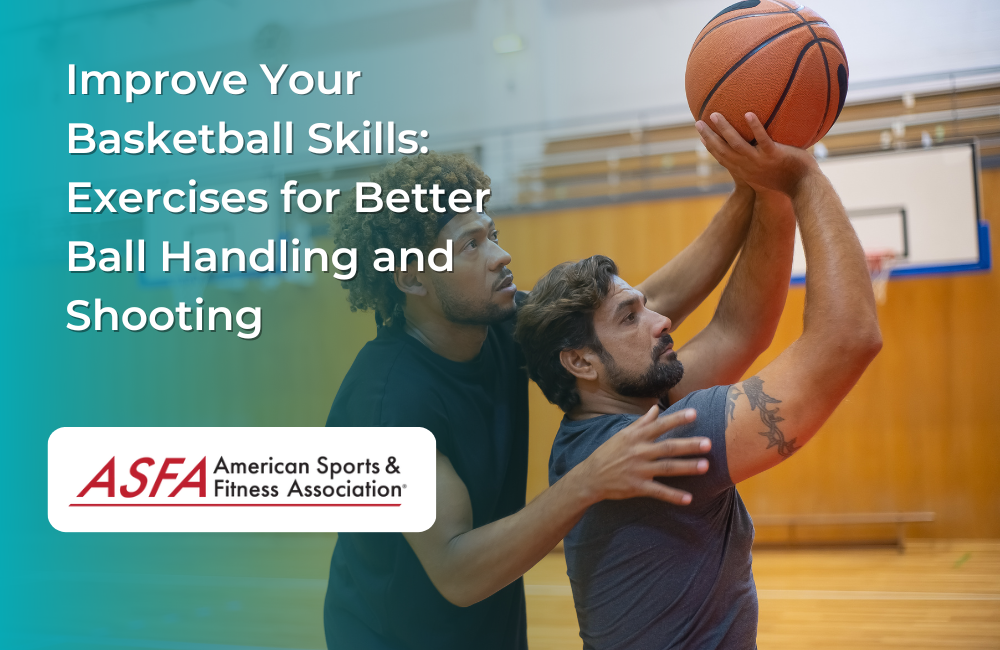
Exercises for Basketball Handling and Shooting
There is more to Exercises for Basketball Handling and Shooting than one rule. Context determines which details deserve attention.
Technique is not a single perfect shape. It is a repeatable way to complete the movement while controlling the load, range, and positions that matter for the goal. There is room for individual preference, provided the basic constraints are respected.
How to Apply It
Keep in mind: Choose the variation that permits a stable setup and repeatable range. Add repetitions or resistance only while the same control is maintained; stop when pain or compensation changes the movement.
Ball Handling
Ball handling is one of the most fundamental basketball skills. It's important for dribbling, passing, shooting, and rebounding.
- Dribbling: Ball handling is used to dribble the ball from one hand to another and to keep control of it while running down the court.
- Passing: The ability to pass accurately requires good ball-handling skills because it requires maintaining possession of the ball until you're ready to pass it off or shoot it yourself.
- Shooting: Being able to shoot effectively depends on having excellent control over where your hands are positioned when taking a shot (called "hand placement") so that they can catch passes without fumbling them away before they reach their intended target--you!
Dodging and Dribbling
To improve your ball-handling skills, it's important that you practice dribbling and dodging. These drills will help you develop a strong foundation in these two areas:
- Dribble Around A Pole - In this drill, players must dribble around a pole while staying balanced and maintaining proper form. The goal is to improve their ability always to control the ball.
- Dribble Around A Partner - Players will stand next to each other to pass back and forth without losing control over their movements (or their teammate) for this drill.
3-on-2 Games
The purpose of this drill is to work on ball handling and shooting. You need a basketball, two cones, and four players (including yourself).
Shooting Drills
- Practice shooting in different ways.
- Practice shooting at different angles.
- Practice shooting from different spots on the floor.
- Practice shooting with different shots (e. G.
- You may want to consider practicing under pressure by having people watch you or cheering for you when you shoot, or even recording yourself so that later on when things aren't quite going well during practice sessions or games, it will help remind yourself how far along your.
Footwork
Footwork is an important part of basketball. It can help you get to the basket, keep your balance and make a shot, or defend against someone else's.
Footwork involves moving your feet in various ways depending on what you are trying to do on the court:
- Move quickly from one place on the court to another (One example: going from defense to offense).
- Please make yourself available for passes by making it difficult for defenders to close in on you because they don't know where exactly you'll be next.
- Stay balanced while dribbling or shooting so that if someone bumps into them, they won't lose control of their ball or fall over.
Passing
Passing is a fundamental skill of basketball and a key to good ball movement. It's also important for scoring, as well as winning.
Here are some exercises that will help improve your passing game:
-Passing on the move: The goal is to have one player start with a ball at center court and pass it to another player moving upcourt. Start with two players, then add more as you get better.
Shooting and Jumping
- Practice shooting from different distances.
- Practice shooting with a variety of different shots.
- Practice shooting with various angles, such as the bank shot or fadeaway jumpers.
- Practice shooting with various speeds and spins, including layups and hook shots that require finesse more than strength (or vice versa).
Practice these skills to improve your basketball skills and become a better player.
- Practice these skills to improve your basketball skills and become a better player.
- Ball handling is the act of dribbling, passing, and shooting with the ball while on the court.
- Shooting is another important skill that can help you become a better player; it allows you to score points for your team by making baskets from long-range or close-range shots off rebounds off missed shots by other players on either side of the court (the offensive team).
Next-Step Perspective
Good coaching leaves room for feedback. If the response does not match the goal, adjust the dose, range, exercise, or expectation.
Connect the Topic to a Real Objective
The useful question is not whether Exercises for Basketball Handling and Shooting belongs in every routine, but what job it should perform in a specific program.
For strength, the plan may emphasize load and long rest periods. For muscular endurance, the same movement may use lighter resistance, more repetitions, and shorter recovery. Technique practice may call for low fatigue and frequent high-quality repetitions. Conditioning may use a different structure again. Those approaches are not interchangeable simply because the exercise name is the same.
What Not to Assume
- Using fatigue or soreness as the only evidence of an effective session.
- Forcing a standardized range or stance when another controlled setup better fits the participant.
- Choosing the hardest variation before the base movement is controlled.
- Increasing load, repetitions, range, and frequency at the same time.
The correction is straightforward: return to the objective, simplify the setup, and change only what the available feedback supports.
Put the Guidance Through This Test
- What sign will indicate that the set or session should stop?
- Which single variable may progress next?
- How will this work fit with the rest of the week?
- What is the primary training objective?
- Which variation allows the intended technique today?
- What load, range, tempo, and rest will be recorded?
The checklist is intentionally practical: each answer should change how the plan is designed, delivered, or reviewed.
The Details That Alter the Outcome
The main programming variables are exercise selection, setup, range of motion, resistance, repetitions, sets, tempo, rest, frequency, and proximity to fatigue.
- Reduce range, resistance, speed, or complexity when quality begins to change.
- Change one major variable at a time so the response can be interpreted.
- Keep technique standards consistent when load or repetitions increase.
- Use a version that fits the available equipment and the participant’s current control.
Review Before You Add More
Start with a version that allows a stable setup and repeatable range. Establish a baseline for repetitions, load, tempo, and perceived effort. Progress one element—such as another repetition, a small resistance increase, more range, or a more demanding variation—only when the prior version remains controlled. If technique changes early, recovery declines, or the target area is no longer doing the intended work, reduce the demand and rebuild from a clearer baseline.


