
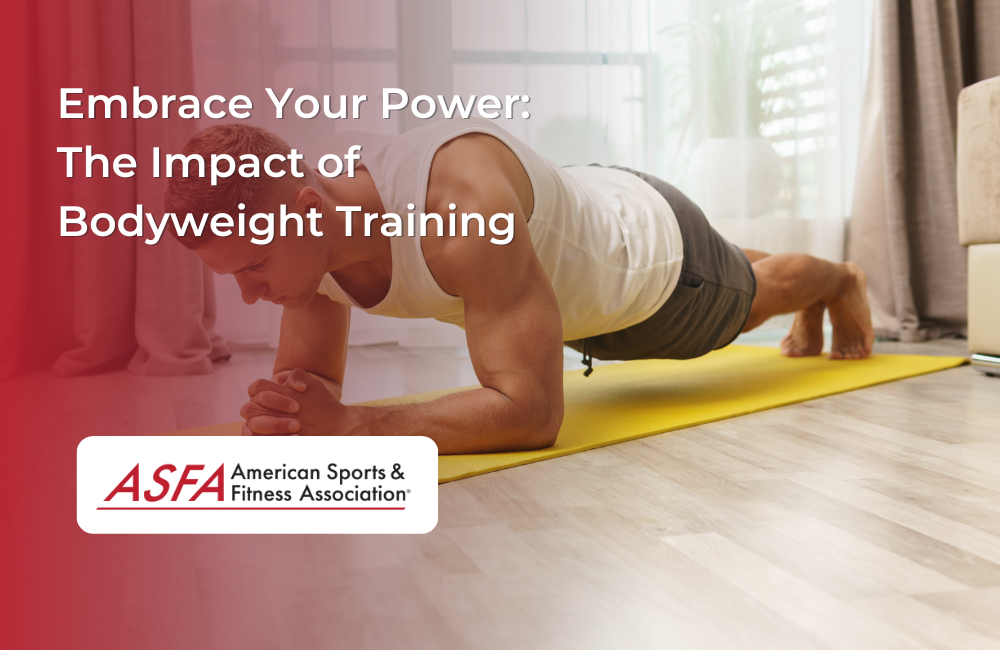
Embrace Your Power: The Impact of Bodyweight Training
The clearest way to discuss Embrace Your Power: The Impact of Bodyweight Training is to narrow the claims and state the practical limits plainly.
Bodyweight training can be simple without being easy. Leverage, range, tempo, and exercise choice provide ample room for progression. The next sections turn that principle into specific decisions.
Limits and Safety
Exercise should be adjusted for the participant's experience, symptoms, environment, and available supervision. Stop for sharp pain, dizziness, chest discomfort, sudden weakness, or loss of control, and seek appropriate professional guidance when symptoms are persistent or concerning.
Programming Considerations
A useful checkpoint: Adjust leverage, range, tempo, or assistance before chasing high repetition counts. A clean regression is often more productive than an advanced variation performed without control.
The Power of Bodyweight Training
Bodyweight training is a great way to get fit. It can be done anywhere, anytime, and with anyone.
There are many benefits associated with bodyweight training:
- Improves strength, endurance, and flexibility
- Can be done at home or in the gym
- Perfect for beginners or advanced exercisers alike
You'll also find that these workouts will help improve your posture as well as balance which helps help manage injury risk during other activities such as running or biking (if you're into those things).
Why Bodyweight Training is so Effective
Bodyweight training is a great way to get in shape. It's easy to do, you can do it anywhere, and there are no equipment requirements.
- Bodyweight training builds strength by strengthening the muscles in your body.
- Bodyweight training improves flexibility by stretching out tight muscles and improving their length and range of motion so they're more flexible than before you started doing these exercises regularly (or at all).
- Muscle endurance refers specifically to "the ability of skeletal muscles during sustained activity against moderate levels of resistance... And fatigues with repeated contractions over time.
- Aerobic fitness refers specifically to "the ability of an individual's cardiovascular system during sustained physical activity at moderate intensity levels. " In other words: being able to breathe normally while performing an exercise like jumping jacks or pushups without getting winded too quickly!
The 3 Benefits of Bodyweight Training
Bodyweight training is a great way to get fit and build muscle. Bodyweight exercises are easy to do at home, or anywhere else you might be traveling.
There are many classes that teach bodyweight workouts that can help you learn new moves, skills, and exercise styles. Bodyweight workouts are for people of all fitness levels, so if you're just starting out or have been working out for years--it doesn't matter!
Increasing Strength and Endurance
Bodyweight training is a great way to build muscle, endurance, strength, and flexibility. It can also improve balance and coordination.
Bodyweight exercises include push-ups, squats, planks, and lunges. There are many resources online that provide detailed instructions on how to perform these exercises as well as other bodyweight training tips.
Improving Your Core Strength
Your core is the center of your body, and it's responsible for many important functions. Your core muscles include all parts of your midsection: the abdominals, lower back muscles, diaphragm (the muscle that controls breathing), pelvic floor muscles, and hip flexors.
The importance of having strong core strength can't be overstated--it helps you perform everyday activities like lifting heavy objects or walking up stairs without feeling fatigued or strained. A strong core also helps may help manage injury risk by stabilizing your spine during movement; having poor posture can put extra pressure on joints throughout the body if they're not supported by strong muscles in the backside of the body (like those supporting our spines).
Increasing Flexibility and Endurance
The first thing you should know about bodyweight training is that it can be done anywhere. You don't need a gym membership or any equipment beyond a few basic pieces of equipment (we'll get into those later).
Finally, because there's nothing holding you back from cranking out as many reps as possible in each set, bodyweight exercises allow for increased endurance development over time--which makes them great for fitness enthusiasts looking to increase their cardiovascular endurance while simultaneously building strength and flexibility.
Bodyweight training gives you a great way to work on your fitness in a variety of ways.
Bodyweight training is a great way to get fit, build strength and endurance, increase flexibility and endurance, and improve your core strength. It's an effective way to get fit that can be done anywhere at any time.
Bodyweight exercises are also known as "gymnastics. " This type of exercise involves using only your own body weight for resistance instead of free weights or machines in the gym.
The Practical Takeaway
Use the information to make one clear adjustment, then judge the result from repeatable performance rather than novelty.

Use a Goal-First Framework
Applying the ideas in Embrace Your Power: The Impact of Bodyweight Training starts with a clear training objective rather than copying a movement, drill, or weekly schedule without context.
For strength, the plan may emphasize load and long rest periods. For muscular endurance, the same movement may use lighter resistance, more repetitions, and shorter recovery. Technique practice may call for low fatigue and frequent high-quality repetitions. Conditioning may use a different structure again. Those approaches are not interchangeable simply because the exercise name is the same.
Where Good Information Can Go Wrong
- Letting speed hide a loss of position or control.
- Treating discomfort as a cue to push through rather than a reason to adjust and seek appropriate guidance when needed.
- Copying an advanced athlete’s program without matching training history or recovery.
- Changing exercises every session before a pattern can be evaluated.
The goal is not perfect control of every variable. It is enough consistency to make an informed next decision.
The Final Planning Questions
- How will this work fit with the rest of the week?
- What is the primary training objective?
- Which variation allows the intended technique today?
- What load, range, tempo, and rest will be recorded?
- What sign will indicate that the set or session should stop?
- Which single variable may progress next?
Use the answers as the baseline for the next decision rather than relying on a vague impression of progress.
Adjust One Variable at a Time
The main programming variables are exercise selection, setup, range of motion, resistance, repetitions, sets, tempo, rest, frequency, and proximity to fatigue.
- Reduce range, resistance, speed, or complexity when quality begins to change.
- Change one major variable at a time so the response can be interpreted.
- Keep technique standards consistent when load or repetitions increase.
- Use a version that fits the available equipment and the participant’s current control.


