
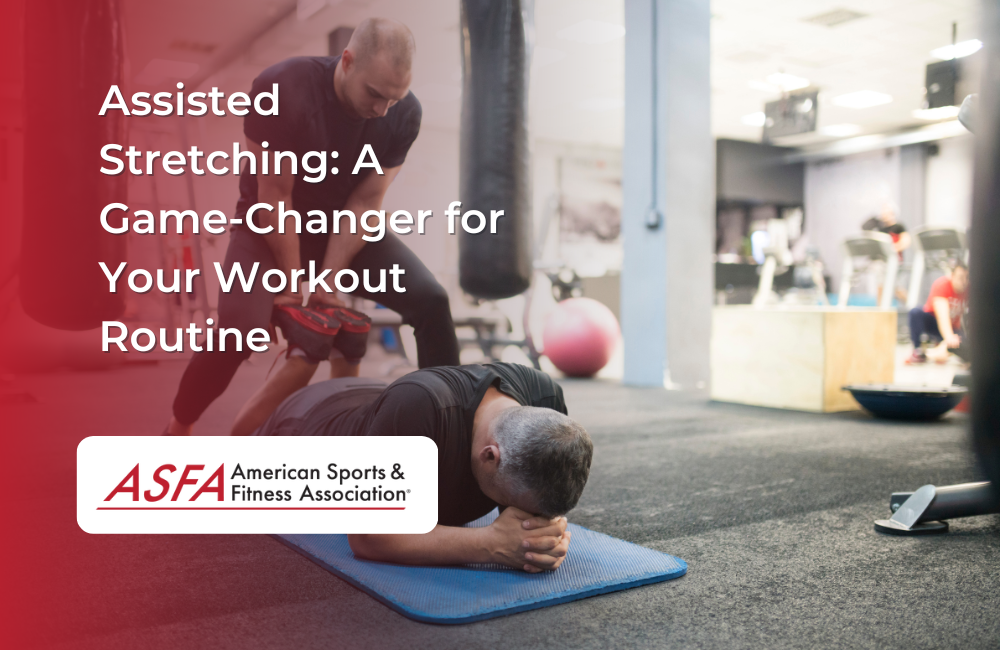
Assisted Stretching: A Game-Changer for Your Workout Routine
There is more to Assisted Stretching: A Game-Changer for Your Workout Routine than one rule. Context determines which details deserve attention.
A stretch can be useful without being extreme. The goal is controlled motion that fits the person and the activity that follows. The next sections turn that principle into specific decisions.
What is assisted stretching?
Assisted stretching is a form of stretching that uses a partner to help you stretch. You can use a strap or towel, as well as your own body weight, to assist in the process.
Even though assisted stretching isn't exactly new, it's gained popularity in recent years thanks to its benefits for both athletes and non-athletes alike--and because it's so easy!
If you're still not sold on the benefits of assisted stretching, check out these six reasons why it's a great way to get in a quick workout!
How to do assisted stretching
Assisted stretching is a form of yoga that uses the help of a partner to stretch muscles. While it may sound like something only practiced by experienced yogis, assisted stretching can benefit everyone.
The most important thing about assisted stretching is that the person doing the assisting needs to know what they're doing--if not, injuries can occur very easily. That's why we've put together this guide: so that anyone who wants to try out this practice can do so safely and effectively!
Why you should try it
Stretching is an important part of any workout routine. It can help you reach your fitness goals and reduce the risk of injury.
This article will explain why assisted stretching is so beneficial, how it works, how much time should be dedicated to this practice during each workout session, and how much time should be dedicated before/after workouts for maximum benefit!
The benefits of assisted stretching
- Reduces risk of injury.
- Improves flexibility.
- Increases range of motion.
- Improves performance, especially in sports that require a lot of lateral movement (e. G.
- Increases muscle strength and endurance by helping you work through a full range of motion with less effort than normal stretching would require, which allows you to train harder without risking injury or exhaustion from overexertion.
Assisted stretching is also known as "pre-habilitation", which means it increases the likelihood that you'll avoid injuries before they happen; research suggests this may be due to increased mobility around joints--and thus decreased risk for sprains and tears--as well as improved flexibility throughout your body.
Try adding these stretches to your workout routine. You'll be glad you did.
Stretching is a great way to improve your flexibility and help manage injury risk, but it's not always easy to know how much or how often to stretch.
To help you get started, we've compiled some basic guidelines for stretching before and after workouts.
Stretching should be gentle, not painful. If you feel any pain while stretching, stop immediately--you're probably doing something wrong!
Programming Considerations
Practical point: Use a range that creates tension without sharp pain, numbness, or loss of control. Longer or deeper is not automatically better; progress should be based on repeatable motion and the demands of the activity.
Limits and Safety
Exercise should be adjusted for the participant's experience, symptoms, environment, and available supervision. Stop for sharp pain, dizziness, chest discomfort, sudden weakness, or loss of control, and seek appropriate professional guidance when symptoms are persistent or concerning.
The Practical Takeaway
The best application is specific enough to guide action and flexible enough to change when the person or circumstances change.
Use Context, Not Assumptions
With Assisted Stretching: A Game-Changer for Your Workout Routine, the same recommendation can produce different results for two people. Experience, recent workload, movement skill, available equipment, schedule, preferences, and recovery all change what is reasonable.
Review the result over several exposures rather than judging one unusually good or difficult session. Useful progress is usually visible as better control, a more appropriate workload, improved consistency, or clearer decision-making.
Give the Idea a Clear Job
Applying the ideas in Assisted Stretching: A Game-Changer for Your Workout Routine starts with a clear training objective rather than copying a movement, drill, or weekly schedule without context.
Decide whether the priority is skill, strength, muscle development, mobility, work capacity, or general activity. That choice affects exercise order, range of motion, resistance, repetitions, rest, and frequency. A program becomes harder to evaluate when several goals are pursued in the same set without a clear priority.
What to Change—and What to Keep Stable
Small programming changes can make the same movement serve a different purpose. Slower repetitions increase time under tension; longer rest may preserve force; shorter rest changes the conditioning demand; additional range can increase difficulty even without more weight.
- Record enough detail to repeat the session accurately.
- Do not treat fatigue as proof that the exercise was well selected.
- Progress only while the intended movement pattern remains recognizable.
- Choose the variable that best matches the current goal.
A Better Way to Increase Difficulty
Progression is not limited to adding weight. Better control, a smoother range of motion, a longer pause, improved balance, or the same work at a lower perceived effort can all represent progress. Choose the next step that fits the goal. An advanced variation is not an upgrade when it changes the exercise so much that the original objective is lost.
Track Enough to Make the Next Decision
Before changing the plan again, compare:
- whether the target goal improved across several sessions
- whether fatigue interfered with other training
- the variation and setup used
- where technique first changed
Look for a pattern across several comparable attempts. One unusually good or difficult day should not determine the entire plan.
Context Changes the Best Choice
Two people can use the same exercise for different reasons and need different versions. Training history, limb proportions, mobility, confidence, equipment, schedule, symptoms, and the rest of the program all affect the decision. Standardize the objective and the tracking method; individualize the setup and dose. That balance makes comparisons more useful without forcing every repetition to look identical.
Mistakes That Make the Result Harder to Read
- Letting speed hide a loss of position or control.
- Treating discomfort as a cue to push through rather than a reason to adjust and seek appropriate guidance when needed.
- Copying an advanced athlete’s program without matching training history or recovery.
- Changing exercises every session before a pattern can be evaluated.
The correction is straightforward: return to the objective, simplify the setup, and change only what the available feedback supports.
A Practical Review Checklist
- What is the primary training objective?
- Which variation allows the intended technique today?
- What load, range, tempo, and rest will be recorded?
- What sign will indicate that the set or session should stop?
- Which single variable may progress next?
If those questions have clear answers, the guidance is more likely to produce a plan that can be followed and evaluated.


