
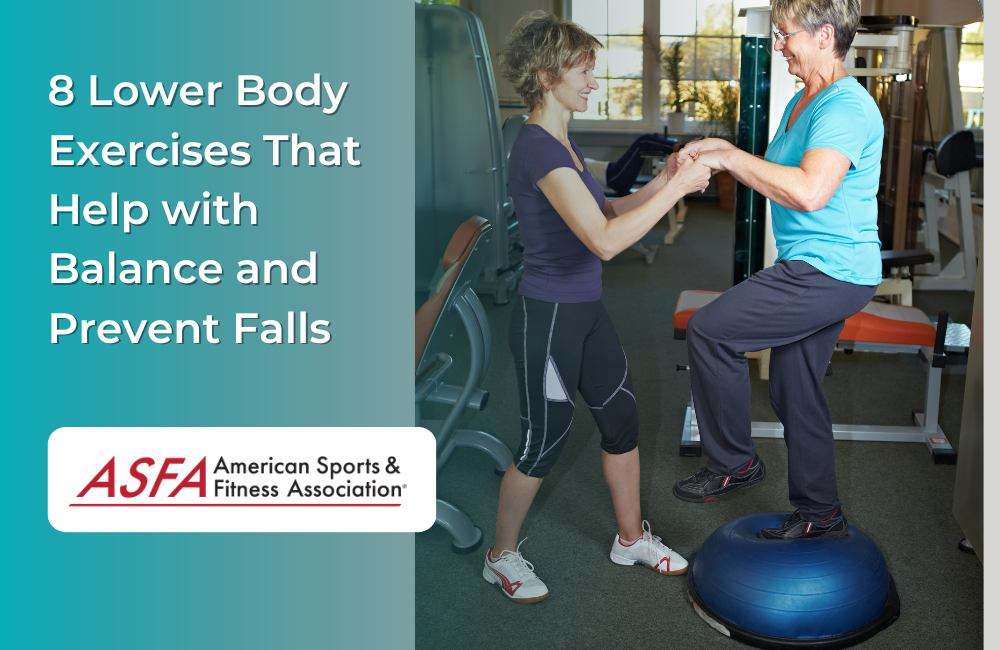
8 Lower Body Exercises That Help with Balance and Prevent Falls
8 Lower Body Exercises That Help with Balance and Prevent Falls covers several ideas, but they do not all carry the same weight. Start with the points that affect execution and consistency.
Balance is a trainable skill influenced by strength, sensory information, attention, and the specific task. Progression should be deliberate, not theatrical. That is where the details become useful.
A Necessary Safety Note
Exercise should be adjusted for the participant's experience, symptoms, environment, and available supervision. Stop for sharp pain, dizziness, chest discomfort, sudden weakness, or loss of control, and seek appropriate professional guidance when symptoms are persistent or concerning.
Heel to Toe Raises are one of the best lower body exercises that can help improve your balance and prevent falls. This exercise helps strengthen the muscles in your lower legs, ankles and feet which are essential for balance.
2) Toe Taps
Toe taps are an excellent lower body exercise that helps improve balance and prevent falls. This exercise strengthens the ankles and improves stability when standing on one leg.
To perform this exercise, start by standing tall with your feet hip-width apart. Place your hands on your hips for balance.
If you need an extra challenge, try performing the toe taps with your eyes closed. This will help you to hone your proprioceptive abilities and improve your balance even further.
By regularly performing toe taps, you will be able to improve your balance and reduce the risk of falls. Add this exercise to your routine today and watch your balance improve!
3) Standing Knee Raise
The standing knee raise is a great lower body exercise to help with balance and prevent falls. This exercise requires you to stand on one leg with the other leg bent at the knee in front of you.
To start this exercise, find a spot where you can safely stand without fear of falling. Stand with your feet shoulder-width apart and keep your arms at your sides.
Doing standing knee raises will help increase the strength and stability of your legs, which will, in turn help with your balance and coordination. Doing this exercise regularly will help prevent falls and build your confidence when walking or running.
4) Leg Swings
Leg swings are an important lower body exercise for improving balance and preventing falls. This exercise helps strengthen the muscles in your hips, glutes, and hamstrings while stretching the muscles in your calves and ankles.
To perform a leg swing, stand near a wall or sturdy chair for balance and begin with one foot off the ground. Swing your leg forward and back as far as you comfortably can without losing your balance.
Leg swings are a great way to help improve balance and coordination while also increasing flexibility. They are especially beneficial for those who suffer from ankle or hip pain, as they helps strengthen the muscles that support these joints.
Before You Progress
Coach's note: Place support within reach, clear the area, and progress one variable at a time. Closing the eyes, narrowing the stance, adding motion, and using an unstable surface should not all be combined at once.
Where This Leaves the Decision
A sound plan does not need to look dramatic. It needs to be understandable, repeatable, and appropriate for the person using it.
Keep the Method Connected to the Goal
With 8 Lower Body Exercises That Help with Balance and Prevent Falls, the same recommendation can produce different results for two people. Experience, recent workload, movement skill, available equipment, schedule, preferences, and recovery all change what is reasonable.
Review the result over several exposures rather than judging one unusually good or difficult session. Useful progress is usually visible as better control, a more appropriate workload, improved consistency, or clearer decision-making.
Connect the Topic to a Real Objective
Applying the ideas in 8 Lower Body Exercises That Help with Balance and Prevent Falls starts with a clear training objective rather than copying a movement, drill, or weekly schedule without context.
For strength, the plan may emphasize load and long rest periods. For muscular endurance, the same movement may use lighter resistance, more repetitions, and shorter recovery. Technique practice may call for low fatigue and frequent high-quality repetitions. Conditioning may use a different structure again. Those approaches are not interchangeable simply because the exercise name is the same.
Review Before You Add More
Progression is not limited to adding weight. Better control, a smoother range of motion, a longer pause, improved balance, or the same work at a lower perceived effort can all represent progress. Choose the next step that fits the goal. An advanced variation is not an upgrade when it changes the exercise so much that the original objective is lost.
Track Enough to Make the Next Decision
Useful tracking can remain simple. Record:
- whether fatigue interfered with other training
- the variation and setup used
- where technique first changed
- whether the target goal improved across several sessions
Keep the review connected to the original goal. More information is not automatically better when the important result remains unclear.
Adapt the Guidance to the Person
Two people can use the same exercise for different reasons and need different versions. Training history, limb proportions, mobility, confidence, equipment, schedule, symptoms, and the rest of the program all affect the decision. Standardize the objective and the tracking method; individualize the setup and dose. That balance makes comparisons more useful without forcing every repetition to look identical.
Mistakes That Make the Result Harder to Read
- Using fatigue or soreness as the only evidence of an effective session.
- Forcing a standardized range or stance when another controlled setup better fits the participant.
- Choosing the hardest variation before the base movement is controlled.
- Increasing load, repetitions, range, and frequency at the same time.
Avoiding these errors makes the guidance easier to individualize and the result easier to evaluate.
A Simple Implementation Check
- What is the primary training objective?
- Which variation allows the intended technique today?
- What load, range, tempo, and rest will be recorded?
- What sign will indicate that the set or session should stop?
- Which single variable may progress next?
- How will this work fit with the rest of the week?
The checklist is intentionally practical: each answer should change how the plan is designed, delivered, or reviewed.
Make the Plan Easier to Evaluate
Small programming changes can make the same movement serve a different purpose. Slower repetitions increase time under tension; longer rest may preserve force; shorter rest changes the conditioning demand; additional range can increase difficulty even without more weight.
- Choose the variable that best matches the current goal.
- Record enough detail to repeat the session accurately.
- Do not treat fatigue as proof that the exercise was well selected.
- Progress only while the intended movement pattern remains recognizable.


