
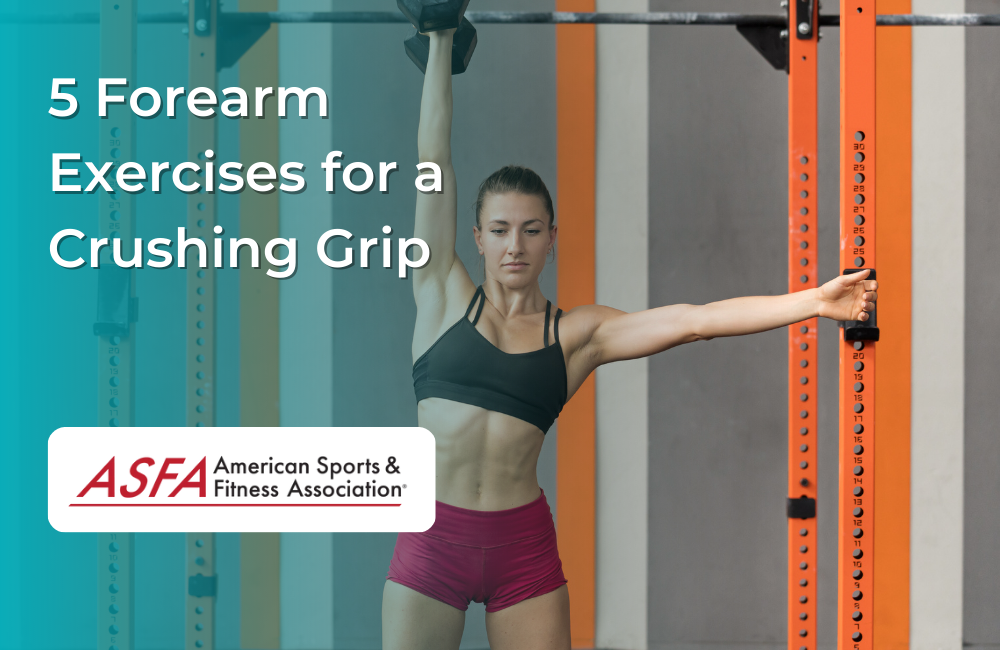
5 Forearm Exercises for a Crushing Grip
The points in 5 Forearm Exercises for a Crushing Grip are organized around practical application rather than exaggerated promises.
Technique is not a single perfect shape. It is a repeatable way to complete the movement while controlling the load, range, and positions that matter for the goal. The next sections turn that principle into specific decisions.
Understanding Grip Strength
Grip strength is a useful component of overall hand and arm strength, playing an important role in various everyday activities and athletic pursuits. It refers to the force exerted by the muscles of the hand, wrist, and forearm to grasp or hold onto an object.
Having a strong grip can significantly enhance your performance in the gym and in daily life. Whether you’re lifting weights, climbing, or simply trying to open a stubborn jar, grip strength is the foundation of many movements.
1) Wrist Curls
Wrist curls are a fundamental exercise for developing the flexor muscles of the forearm. These muscles are responsible for bending your wrist and gripping objects, making wrist curls important for building grip strength.
Why it works for grip strength
Wrist curls target the forearm flexors, which are responsible for gripping and curling motions. Strengthening these muscles increases grip endurance and prevents fatigue when lifting heavy objects or performing sustained gripping tasks.
Pro Tip: Avoid using momentum by focusing on slow, controlled movements. The more you focus on contracting the muscles, the more you'll engage the forearm flexors.
How to Perform Reverse Wrist Curls
- Starting Position: Sit on a bench or chair with your forearms resting on your thighs or a bench. Hold a dumbbell or barbell with an overhand grip (palms facing down).
- Movement: Slowly curl your wrists upward, lifting the back of your hands towards your body. Hold at the top for a moment, then lower the weights back down with control.
- Reps/Sets: Perform 3-4 sets of 8-12 reps. Increase the weight as your strength improves.
3) Farmer's Walks
The farmer’s walk is a full-body exercise that emphasizes grip strength, forearm endurance, and overall body stability. Holding heavy weights and walking a set distance or time not only works the forearms but also activates your core, traps, and legs.
Developing a stronger grip is important for various athletic challenges, particularly in obstacle course events like Tough Mudder, where grip strength is essential for successfully navigating demanding physical obstacles.
How to Perform Farmer’s Walks
- Starting Position: Stand with your feet hip-width apart and hold a heavy dumbbell or kettlebell in each hand. Your arms should be fully extended by your sides, and your palms facing your legs.
- Movement: Walk forward while maintaining an upright posture. Keep your shoulders pulled back, your core engaged, and your grip tight on the weights.
- Reps/Sets: Perform 3-5 sets, increasing the weight or distance as you progress.
Plate Pinches for Pinch Grip
Plate pinches are a unique exercise that targets the pinch grip, which involves the strength of your fingers and thumbs. This grip is important for tasks that require holding onto objects with precision, such as rock climbing or gripping small tools.
Dead Hangs for Dead Hang
Dead hangs are a simple yet highly effective exercise for building grip endurance and strengthening the muscles in your forearms and hands. By hanging from a bar for as long as possible, you engage your entire upper body, especially the muscles in your hands, wrists, and forearms.
Training Tips
To improve grip strength, it is essential to incorporate grip training exercises into your fitness routine. Here are some tips to get you started:
- Start Simple: Begin with basic grip exercises such as squeezing a tennis ball or using hand grippers. These exercises are great for building foundational grip strength and can be done anywhere.
- Target Forearm Muscles: Incorporate exercises that target the forearm muscles, such as wrist curls and extensions. Strong forearm muscles are essential for a strong grip and can help may help manage injury risk.
- Vary Your Grip: Practice grip training with different grip types, such as overhand grip, underhand grip, and neutral grip. This will help improve overall grip strength and versatility, making you more adaptable in various activities.
- Use a Pull-Up Bar: Perform exercises such as dead hangs, pull-ups, and grip hangs on a pull-up bar. These exercises target the support grip and can help improve overall grip strength and endurance.
- Focus on Finger and Wrist Flexors: Incorporate finger flexor and wrist flexor exercises into your grip training routine. These exercises can help improve crush grip and pinch grip strength, making your grip more powerful and precise.
Programming Considerations
Practical point: Choose the variation that permits a stable setup and repeatable range. Add repetitions or resistance only while the same control is maintained; stop when pain or compensation changes the movement.
Limits and Safety
Exercise should be adjusted for the participant's experience, symptoms, environment, and available supervision. Stop for sharp pain, dizziness, chest discomfort, sudden weakness, or loss of control, and seek appropriate professional guidance when symptoms are persistent or concerning.
The Practical Takeaway
The best application is specific enough to guide action and flexible enough to change when the person or circumstances change.
Give the Idea a Clear Job
Applying the ideas in 5 Forearm Exercises for a Crushing Grip starts with a clear training objective rather than copying a movement, drill, or weekly schedule without context.
For strength, the plan may emphasize load and long rest periods. For muscular endurance, the same movement may use lighter resistance, more repetitions, and shorter recovery. Technique practice may call for low fatigue and frequent high-quality repetitions. Conditioning may use a different structure again. Those approaches are not interchangeable simply because the exercise name is the same.
Questions to Answer Before You Proceed
- Which single variable may progress next?
- How will this work fit with the rest of the week?
- What is the primary training objective?
- Which variation allows the intended technique today?
- What load, range, tempo, and rest will be recorded?
Use the answers as the baseline for the next decision rather than relying on a vague impression of progress.
What to Change—and What to Keep Stable
The main programming variables are exercise selection, setup, range of motion, resistance, repetitions, sets, tempo, rest, frequency, and proximity to fatigue.
- Keep technique standards consistent when load or repetitions increase.
- Use a version that fits the available equipment and the participant’s current control.
- Reduce range, resistance, speed, or complexity when quality begins to change.
- Change one major variable at a time so the response can be interpreted.
Build a Progression You Can Defend
Progression is not limited to adding weight. Better control, a smoother range of motion, a longer pause, improved balance, or the same work at a lower perceived effort can all represent progress. Choose the next step that fits the goal. An advanced variation is not an upgrade when it changes the exercise so much that the original objective is lost.


