
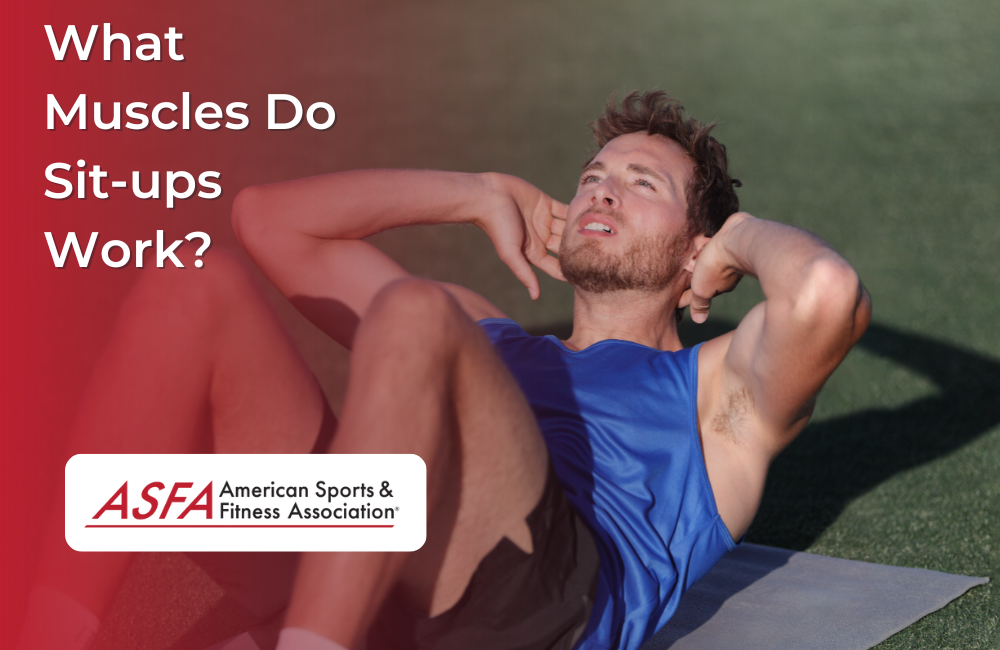
What Muscles Do Sit-ups Work?
With What Muscles Do Sit-ups Work?, an all-or-nothing answer misses the point. The practical answer is more specific.
Technique is not a single perfect shape. It is a repeatable way to complete the movement while controlling the load, range, and positions that matter for the goal. There is room for individual preference, provided the basic constraints are respected.
When to Modify or Stop
Exercise should be adjusted for the participant's experience, symptoms, environment, and available supervision. Stop for sharp pain, dizziness, chest discomfort, sudden weakness, or loss of control, and seek appropriate professional guidance when symptoms are persistent or concerning.
Understanding Sit-ups
Sit-ups are a classic core exercise that targets multiple muscle groups, including the abdominal muscles, hip flexors, and lower back muscles. To perform a sit-up, start by lying on your back with your knees bent and feet flat on the ground.
The rectus abdominis muscle is the primary muscle worked during a sit-up. This muscle runs vertically down the middle of the torso from the lower half of the rib cage to the pelvis.
The Main Muscles Involved in Sit-ups: Including Hip Flexors
When performing sit-ups, three primary muscles are activated:
- Rectus Abdominis
- Obliques
- Transversus Abdominis
These muscles form the core of the abdominal region and are critical for maintaining posture, stability, and core strength. Incorporating a variety of abdominal exercises can enhance core strength and overall fitness.
1) Rectus Abdominis – The Big Muscle
The rectus abdominis is the most prominent muscle involved in sit-ups. Both crunches and sit ups are effective in targeting the rectus abdominis, but sit-ups engage a broader range of muscles.
- Primary Function: The rectus abdominis is mainly responsible for moving your torso upwards during the sit-up. When this muscle contracts, it pulls your ribcage toward your pelvis, allowing you to curl your upper body off the floor.
- Importance in Sit-ups: During sit-ups, the rectus abdominis is the muscle that does most of the work. Controlled contractions of this muscle are important for performing the exercise properly and avoiding injury.
2) Obliques – The Sides of Your Abs
The obliques are the muscles located on the sides of your abdomen, running diagonally from your lower ribs to your pelvis. The obliques are important for many core exercises that involve twisting and rotating the torso.
- External obliques: The larger muscles on the outermost layer of your abdominal wall.
- Internal obliques: The deeper muscles that lie underneath the external obliques.
- Primary Function: The obliques are responsible for twisting and rotating your torso. They also assist with lateral flexion (bending to the side) and stabilizing the core during movement.
- Importance in Sit-ups: When you perform sit-ups, especially variations that involve rotation (like oblique sit-ups or bicycle crunches ), your obliques are activated to help twist your torso. Even in standard sit-ups, the obliques engage to stabilize your body as you rise from the floor.
3) Transversus Abdominis – The Deep Stabilizer
The transverse abdominis (often abbreviated as TVA) is a deep abdominal muscle that lies beneath the rectus abdominis and obliques. It wraps around your torso horizontally, acting like a corset to stabilize the spine and support internal organs.
- Primary Function: The transverse abdominis is key to core stability and maintaining internal abdominal pressure. It plays an important role in stabilizing the lower back and pelvis during movements.
- Importance in Sit-ups: Although the transverse abdominis is not directly responsible for lifting your torso during a sit-up, it is activated to help stabilize your core, spine, and pelvis. Engaging this muscle during sit-ups ensures proper alignment and reduces the risk of lower back injury.
Performing Sit-ups: Proper Muscle Activation and Form
When doing sit-ups, the key to maximizing their effectiveness lies in correctly engaging the abdominal muscles. Here’s a step-by-step guide on how to activate these muscles in the right order:
- Start with the Rectus Abdominis: Begin by lying on your back with your legs bent and feet flat on the ground. Contract the rectus abdominis to lift your upper body off the ground.
- Engage the Transversus Abdominis: Throughout the movement, engage your transversus abdominis by pulling your navel toward your spine. This stabilizes your core and ensures you maintain proper form.
- Activate the Obliques (Optional): If you’re performing a variation of the sit-up that includes rotation, engage your obliques as you twist your torso. For instance, during oblique sit-ups, twist to the side as you lift to activate the side muscles.
Common Mistakes to Avoid
- Using momentum: Swinging your upper body or using momentum to lift yourself can take the strain off your abs and place unnecessary stress on your lower back. Focus on slow, controlled movements.
- Overarching the lower back: If your lower back arches excessively during sit-ups, you’re likely compensating with other muscles. Make sure your core is engaged and your lower back stays grounded.
- Excessive neck strain: Pulling your neck forward with your hands can lead to discomfort or injury. Keep your neck neutral and focus on core engagement.
- Reverse Crunch: Start lying on the floor with your hands positioned by your head. Engage your core as you lift your legs and control the descent to avoid using momentum.
Conclusion: What Muscles Do Sit-ups Work?
Sit-ups primarily target the rectus abdominis, the central muscle responsible for the flexion of the spine and creating the "six-pack" look. Another consideration is that the obliques on the sides of your abdomen and the deep transversus abdominis play critical roles in stabilizing your core and enhancing the overall effectiveness of the exercise.
By focusing on proper form and activating these muscles in the right order—starting with the rectus abdominis, followed by the obliques (if twisting), and stabilizing with the transversus abdominis—you’ll be able to perform sit-ups safely and effectively. Incorporating these tips into your routine will help strengthen your core, improve posture, and reduce the risk of injury while getting the most out of your ab workouts.
Next-Step Perspective
A sound plan does not need to look dramatic. It needs to be understandable, repeatable, and appropriate for the person using it.
How to Apply It
Coach's note: Choose the variation that permits a stable setup and repeatable range. Add repetitions or resistance only while the same control is maintained; stop when pain or compensation changes the movement.


