
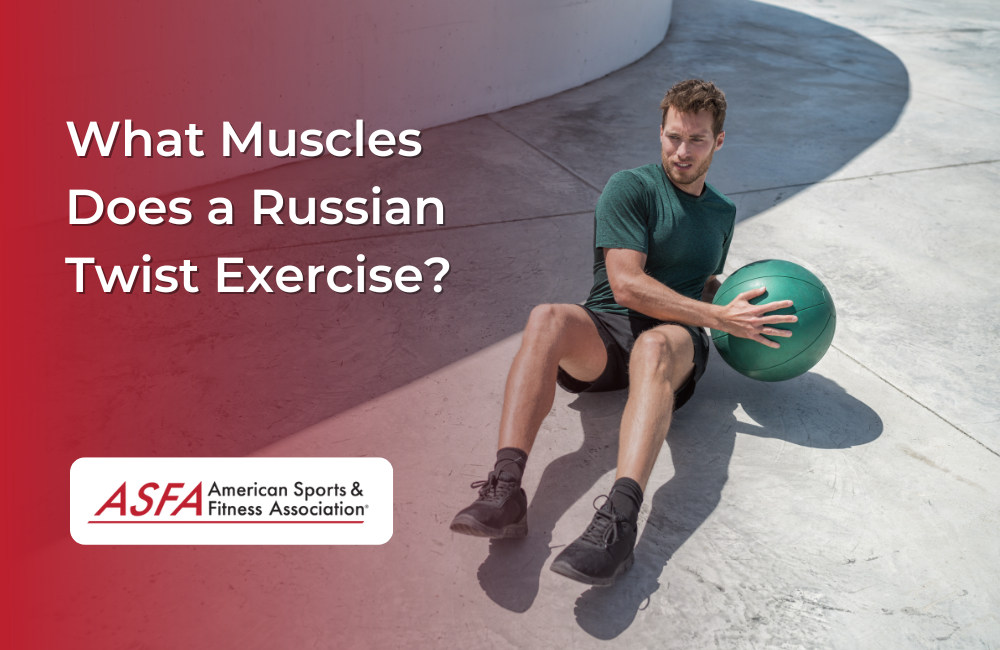
What Muscles Does a Russian Twist Exercise?
The question What Muscles Does a Russian Twist Exercise? deserves a qualified answer. Context matters, and broad claims often hide the most important limitations.
Technique is not a single perfect shape. It is a repeatable way to complete the movement while controlling the load, range, and positions that matter for the goal. What follows is less about chasing novelty and more about applying the idea well.
Understanding the Russian Twist
The Russian twist is a seated exercise that involves rotating your torso from side to side, typically while holding a weight or with your legs elevated for added intensity. This movement challenges your core muscles to stabilize your body and control the rotation, making it an excellent exercise for building core strength, balance, and stability.
The Russian twist can be performed with a variety of equipment, such as a medicine ball, dumbbell, or weight plate, or simply using your bodyweight for resistance. The exercise also enhances isometric core strength, which is useful for developing rigidity during movement and overall core muscular engagement.
Brief Overview of the Exercise’s Benefits
The Russian twist is an effective core exercise that offers numerous benefits, making it a staple in many fitness routines. By consistently incorporating Russian twists into your workout, you can significantly improve core strength, stability, and posture.
Step-by-Step Instructions for the Traditional Russian Twist
- Sit on the floor with your knees bent and feet flat, holding a weight or medicine ball in front of your chest.
- Lean back slightly and lift your feet off the ground, keeping them a few inches apart.
- Twist your torso to the left, touching the weight to the ground beside you.
- Twist your torso to the right, touching the weight to the ground beside you.
- Continue alternating sides for the desired number of repetitions.
Tips for Proper Form and Technique
- Maintain proper form and technique throughout the exercise to avoid injury and maximize the effectiveness of the Russian twist.
- Keep your knees bent and feet flat on the ground to maintain stability and balance.
- Engage your core muscles by drawing your belly button towards your spine.
- Use a weight or medicine ball that allows you to maintain proper form and control.
- Avoid using momentum or jerking the weight from side to side.
- Focus on slow and controlled movements to engage the core muscles and improve rotational strength and stability.
1. Rectus Abdominis
The rectus abdominis is perhaps the most well-known abdominal muscle, commonly referred to as the "six-pack" muscle. It runs vertically down the front of your abdomen and is responsible for flexing the spine, allowing you to bend forward.
- Function: The rectus abdominis is primarily involved in spinal flexion but also plays a role in stabilizing the core during rotational movements. During the Russian twist, this muscle works to maintain the alignment of the spine and support the twisting motion.
- Benefit: Strengthening the rectus abdominis through exercises like the Russian twist can improve your posture, reduce lower back pain, and help you achieve a more defined midsection.
3. Transverse Abdominis
The transverse abdominis is a deep core muscle that wraps around your torso like a belt or corset. It’s located beneath the rectus abdominis and the obliques, providing critical support to your spine and pelvis.
- Function: The transverse abdominis works to compress and stabilize your core, helping to maintain posture and protect your spine from injury. During the Russian twist, this muscle helps prevent your lower back from twisting excessively and ensures that your movements remain controlled.
- Benefit: Strengthening the transverse abdominis improves core stability, enhances your posture, and reduces the risk of lower back pain or injury. This muscle is often referred to as the "foundation" of a strong core, making it important for overall core health and functional movement.
5. Hip Flexors
The hip flexors, particularly the iliopsoas, come into play during the Russian twist when your legs are elevated off the ground. These muscles connect your lower spine to your pelvis and thighs, and they are responsible for lifting and stabilizing your legs during the movement.
- Function: The hip flexors work to lift and stabilize your legs, allowing for controlled movement during the Russian twist. They help keep your legs elevated and balanced as you rotate your torso, adding to the overall intensity of the exercise.
- Benefit: Strengthening the hip flexors can improve lower body stability and coordination, which is essential for movements that require balance, agility, and speed, such as running, jumping, or changing directions quickly in sports.
Benefits of the Russian Twist
Incorporating the Russian twist into your regular workout routine offers numerous benefits beyond simply targeting your abdominal muscles. Russian twists target the core muscles, including the abdominal muscles and obliques.
2. Improved Balance and Stability
The rotational movement of the Russian twist challenges your body’s ability to stabilize itself during dynamic movements. This exercise engages the stabilizing muscles in your core, hips, and lower back, helping to improve your overall balance and coordination.
- Benefit: Improved balance and stability translate to better control over your body during both static and dynamic movements, enhancing your performance in sports and reducing the risk of falls and injuries in everyday life.
4. Enhanced Aesthetic Appeal
A well-toned core is often considered aesthetically pleasing, and the Russian twist can help you achieve that goal by targeting the rectus abdominis and obliques. Consistently incorporating this exercise into your routine can contribute to a more defined waistline and a stronger, more sculpted midsection.
- Benefit: If your goal is to build a lean, defined core, the Russian twist is an excellent exercise to add to your routine. When combined with proper nutrition and cardiovascular exercise, it can help you achieve a well-sculpted, toned appearance.
Teaching Proper Form and Technique
Proper form is essential for getting the most out of the Russian twist and avoiding injury. A certified personal trainer can guide you through the correct technique, ensuring that you engage the targeted muscles effectively.
- Benefit: By learning proper technique from a qualified trainer, you’ll be able to perform the Russian twist more efficiently, targeting the intended muscle groups while minimizing the risk of injury.
2. Personalizing Your Workout Routine
An ASFA-certified personal trainer can design a workout routine that’s tailored to your individual fitness level, goals, and preferences. Whether you’re just starting out or you’re an experienced athlete, a personalized program will ensure that you’re working all your muscle groups effectively and efficiently.
- Benefit: Customized workout plans ensure that you’re working toward your specific goals, whether that’s building strength, improving stability, or toning your midsection. A personalized approach can also help prevent plateaus and keep you motivated.
4. Ensuring Safe Progression
As you become stronger and more comfortable with the Russian twist, your personal trainer can help you safely progress by introducing variations or increasing the difficulty of the exercise. Whether it’s adding weight, increasing the range of motion, or incorporating new equipment, a trainer will ensure that your workouts remain challenging without risking injury.
- Benefit: Safe progression is key to avoiding overuse injuries and continuing to see improvements in your strength, stability, and overall fitness. A trainer will help you progress at a pace that’s right for you, ensuring long-term success.
A Necessary Safety Note
Exercise should be adjusted for the participant's experience, symptoms, environment, and available supervision. Stop for sharp pain, dizziness, chest discomfort, sudden weakness, or loss of control, and seek appropriate professional guidance when symptoms are persistent or concerning.
A Coach's Checklist
For instructors: Choose the variation that permits a stable setup and repeatable range. Add repetitions or resistance only while the same control is maintained; stop when pain or compensation changes the movement.
What to Remember
Keep the goal visible, make the smallest change that addresses it, and reassess before adding complexity.


