
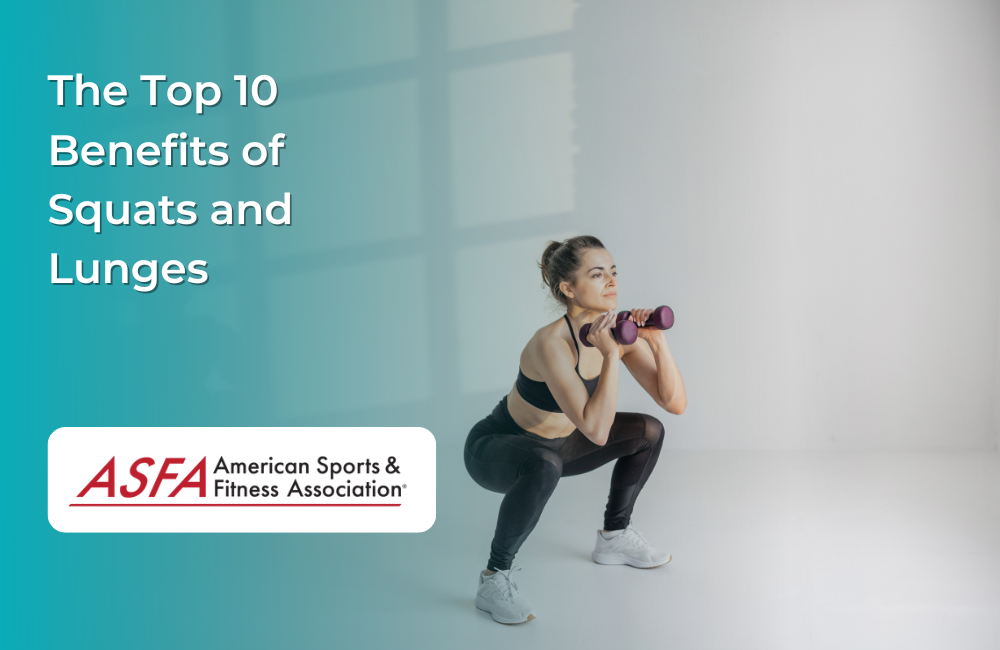
The Top 10 Benefits of Squats and Lunges
The points in The Top 10 Benefits of Squats and Lunges are organized around practical application rather than exaggerated promises.
Technique is not a single perfect shape. It is a repeatable way to complete the movement while controlling the load, range, and positions that matter for the goal. What follows is less about chasing novelty and more about applying the idea well.
A Coach's Checklist
Keep in mind: Choose the variation that permits a stable setup and repeatable range. Add repetitions or resistance only while the same control is maintained; stop when pain or compensation changes the movement.
1) Comprehensive Leg Toning and Strengthening
Squats and lunges are highly effective for toning and strengthening the thigh muscles and abdominal muscles in your lower body. Muscles Engaged:
- Quadriceps: Squats and lunges target the front of your thighs, building strength and definition.
- Hamstrings: Located at the back of your thighs, your hamstrings work to stabilize and bend the knee.
- Glutes: Both exercises engage your glute muscles, helping to shape and strengthen your posterior.
- Calves: Lunges, in particular, engage the calves, adding to the overall toning and strength.
- Abdominal Muscles: Lunges activate the core, enhancing balance and coordination while contributing to overall core strength.
3) Increased Flexibility and Joint Mobility
Squats and lunges help increase flexibility and improve joint mobility, which is useful for injury prevention and overall movement. Key Areas Improved:
- Hips: Squats open up the hip flexor muscles, improving flexibility and range of motion. Lunging forward helps stretch the hip flexors, which is essential for increasing mobility and improving overall lower body strength and coordination.
- Knees and ankles: Lunges increase the flexibility of your knees and ankles, reducing stiffness in these joints.
5) Boosting Calorie Burn and Weight Loss
If your goal is to lose weight, squats and lunges can help you burn calories and shed pounds more efficiently. Why These Exercises Burn Calories:
- Large muscle engagement: Squats and lunges work large muscles like the quads, glutes, and hamstrings, which require more energy and result in higher calorie burn.
- Increased metabolism: These exercises stimulate the production of anabolic hormones like testosterone, boosting your metabolic rate and leading to continued calorie burn after your workout.
6) Compound Movements for Efficient Workouts
Squats and lunges are compound movements, meaning they engage multiple muscle groups at once. Benefits of Compound Movements:
- Time-efficient: These exercises allow you to work several muscle groups in a single move, making your workout more efficient.
- Full-body engagement: While primarily targeting the lower body, squats and lunges also engage the core and stabilizer muscles in your back and shoulders.
- Neurological and muscular demands: Squats and lunges require significant joint stability and control, enhancing balance and coordination by engaging different muscle groups and improving core strength, ultimately benefiting overall athletic performance.
7) Functional Strength for Everyday Tasks
Functional strength is essential for performing everyday tasks like lifting, bending, and carrying, and squats and lunges help your functional fitness as you build it. Why Functional Strength Matters:
- Increased stability: These exercises improve the strength of stabilizer muscles, which play a critical role in maintaining balance during daily activities.
- Better performance in daily tasks: Strengthening your legs and core allows you to lift heavier objects, climb stairs more easily, and perform other daily tasks with greater ease.
9) Improved Posture and Alignment
Good posture is important for reducing strain on your muscles and joints, and squats and lunges help promote better posture by strengthening your core and lower body. How These Exercises Improve Posture:
- Core and back support: Strengthening your core and glutes helps keep your spine in alignment and promotes better posture.
- Reduced slouching: Improved posture reduces the likelihood of slouching, which can cause discomfort and long-term back issues.
11) Enhanced Balance and Coordination
Squats and lunges engage the muscles responsible for maintaining balance and coordination, which are essential for athletic performance and daily activities. How They Improve Balance:
- Proprioception: These exercises challenge your body’s sense of balance and coordination, improving your ability to stabilize yourself during movement.
- Maintaining balance and proper form while shifting weight to the left leg during lunges is important for proper alignment and stability.
- Stabilizer muscles: Squats and lunges engage smaller stabilizer muscles throughout your core and legs, enhancing balance.
13) Muscle Endurance for Longer Workouts
In addition to building strength, squats and lunges improve muscular endurance, allowing you to perform activities for longer periods without fatigue. How They Boost Endurance:
- Slow-twitch muscle fibers: Squats and lunges work the slow-twitch muscle fibers responsible for endurance, helping your muscles sustain prolonged activity.
- Better stamina: Increased endurance helps you perform longer, more intense workouts without tiring quickly.
15) Mental Health and Mood Enhancement
Exercise, including squats and lunges, has a powerful effect on mental health, helping to reduce anxiety, depression, and stress. Mental Health Benefits:
- Endorphin release: Physical activity triggers the release of endorphins, the body’s natural mood enhancers.
- Improved confidence: Building strength and achieving fitness goals through squats and lunges can boost your self-esteem and body confidence.
17) Long-Term Injury Prevention
Regularly practicing squats and lunges can help protect your body from long-term injuries, particularly in the lower back, hips, knees, and ankles. Key Long-Term Benefits:
- Joint protection: Strengthening the muscles around your joints provides long-term stability and reduces wear and tear on the joints.
- Muscle balance: Squats and lunges promote balanced muscle development, reducing the risk of muscle imbalances that can lead to injury over time.
18) Progressive Overload for Muscle Growth
Squats and lunges are versatile exercises that can easily be modified for progressive overload, which is key for building up muscle mass. How to Apply Progressive Overload:
- Increase resistance: Add weight using dumbbells, kettlebells, or a barbell to make squats and lunges more challenging.
- Increase repetitions: Gradually increasing the number of reps you perform can help build muscle endurance and strength.
- Use variations: Experiment with different variations, such as Bulgarian split squats or jump squats, to challenge your muscles in new ways.
20) Time-Efficient and Versatile
Squats and lunges require no equipment, making them a time-efficient option for building strength and endurance. Why This Is Convenient:
- No equipment needed: You can perform squats and lunges anywhere, making them a perfect option for home workouts or when traveling.
- Quick full-body workout: By engaging multiple muscle groups at once, squats and lunges allow you to get a full-body workout in a short amount of time.
22) Variations of Squats and Lunges
While traditional squats and lunges are effective exercises, there are several variations you can try to mix up your routine and target different muscle groups. Here are a few examples:
- Sumo Squats: This variation involves taking a wider stance than traditional squats, which targets the adductor muscles in the thighs.
- Pistol Squats: Performing a squat on one leg, this variation intensely targets the quadriceps and glutes, enhancing balance and strength.
- Side Lunges: Instead of stepping forward, step to the side. This variation targets the adductor muscles in the thighs, adding variety to your lower body workout.
- Reverse Lunges: Step backward instead of forward. This variation places more emphasis on the glutes and hamstrings, offering a different challenge.
24) Common Mistakes to Avoid
Here are some common mistakes to avoid when performing squats and lunges:
- Knees extending past toes: Letting your knees extend past your toes can put unnecessary strain on your joints.
- Not engaging core muscles: Failing to engage your core muscles can lead to poor form and technique.
- Not keeping your back straight: A straight back is important to avoid strain on your lower back.
- Ignoring proper form: Not using proper form and technique can lead to injury or ineffective workouts.
A Necessary Safety Note
Exercise should be adjusted for the participant's experience, symptoms, environment, and available supervision. Stop for sharp pain, dizziness, chest discomfort, sudden weakness, or loss of control, and seek appropriate professional guidance when symptoms are persistent or concerning.
What to Remember
Good coaching leaves room for feedback. If the response does not match the goal, adjust the dose, range, exercise, or expectation.


