
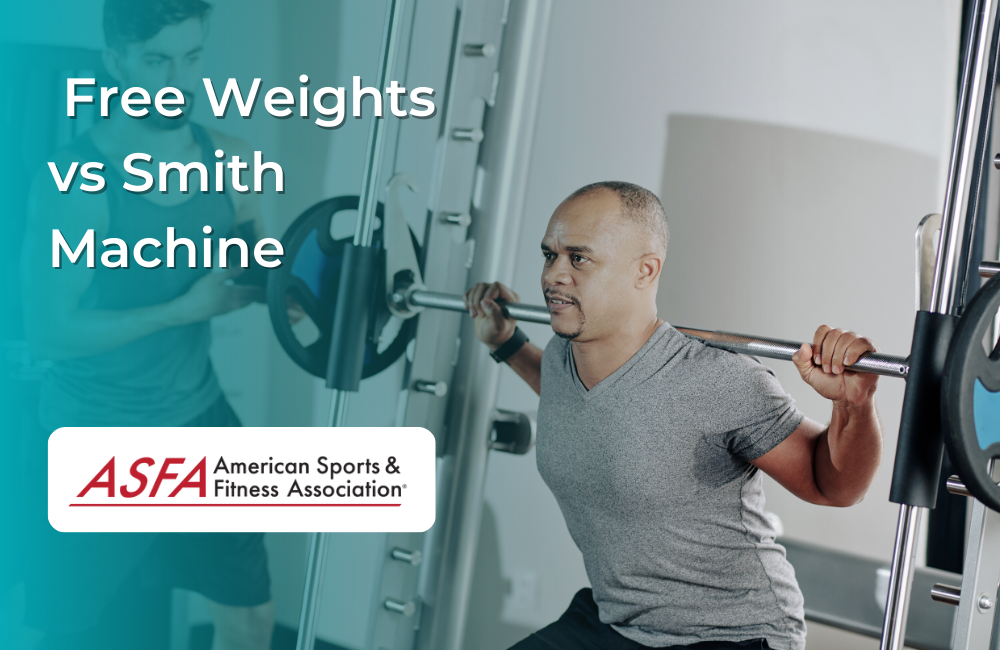
The Great Weight Debate: Free Weights vs Smith Machine
Choosing between two training options starts with the job each one needs to do. The Great Weight Debate: Free Weights vs Smith Machine is therefore a question of fit, not a search for an absolute winner.
Fitness advice becomes useful when it can be applied consistently. The best option is usually the one that fits the goal, equipment, experience, and recovery available. What follows is less about chasing novelty and more about applying the idea well.
A Necessary Safety Note
Exercise should be adjusted for the participant's experience, symptoms, environment, and available supervision. Stop for sharp pain, dizziness, chest discomfort, sudden weakness, or loss of control, and seek appropriate professional guidance when symptoms are persistent or concerning.
Overview of the Debate
Weight training is one of the most popular forms of exercise, known for building strength, improving endurance, and enhancing overall health. When it comes to weight training, two primary options stand out: free weights and Smith machines.
When choosing between free weights and a Smith machine, it’s important to consider your fitness goals, available time, and current ability level. Free weights often offer greater potential for muscle growth because they require the activation of more stabilizing muscles.
Muscle Activation
Free Weights: When using free weights, your body is required to stabilize the weight throughout the entire range of motion, engaging stabilizer muscles. This stabilization recruits additional muscles, particularly the core and smaller stabilizing muscles, leading to a more comprehensive workout.
Smith Machine: The Smith machine, with its fixed barbell path, reduces the need for stabilizing muscles, allowing you to focus more on the primary muscles targeted by the exercise. While this can be advantageous for isolating specific muscle groups, it may not provide the same overall muscle activation as free weights.
Range of Motion and Movement Patterns
Free Weights: Free weights allow for a full range of motion and natural movement patterns. This is particularly important for functional strength and flexibility, as it mimics real-life movements.
Smith Machine: The Smith machine restricts movement to a fixed vertical or near-vertical path, which can limit the range of motion. This may lead to less natural movement patterns and could potentially contribute to imbalances or joint stress over time if used exclusively.
Advantages of Free Weights
- Muscle Engagement: Free weights are highly effective for building strength and muscle mass because they require you to balance and stabilize the weight, engaging more muscles in the process. This is particularly true for compound exercises like squats and bench presses.
- Flexibility and Range of Motion: Free weights allow for movement in multiple planes, which can increase flexibility and enhance range of motion. This is useful for injury prevention and overall performance improvement.
- Customization: With free weights, you have the freedom to choose from a variety of equipment (dumbbells, barbells, kettlebells, etc. ) and combine different movements to create a workout tailored to your specific needs.
- Affordability: Free weights are generally more affordable than Smith machines, making them an excellent option for those on a budget.
Day 2: Lower Body
- Warm-Up: 5-10 minutes of dynamic stretching
- Barbell Squats: 4 sets of 8-10 reps
- Romanian Deadlift: 4 sets of 8-10 reps
- Lunges: 3 sets of 10 reps per leg
- Leg Press: 3 sets of 10-12 reps
- Calf Raises: 4 sets of 15-20 reps
Day 3: Upper Body Pull
- Warm-Up: 5-10 minutes of light cardio
- Pull-Ups: 4 sets of 8-10 reps
- Barbell Bent-Over Rows: 4 sets of 8-10 reps
- Dumbbell Rows: 3 sets of 10 reps per arm
- Face Pulls: 3 sets of 12-15 reps
- Bicep Curls: 3 sets of 12-15 reps
Day 5: Full-Body
- Warm-Up: 5-10 minutes of light cardio
- Deadlift: 4 sets of 5-7 reps
- Overhead Press: 4 sets of 8-10 reps
- Barbell Rows: 4 sets of 8-10 reps
- Squats: 3 sets of 8-10 reps
- Plank: 3 sets of 60 seconds
Day 6: Core and Conditioning
- Warm-Up: 5-10 minutes of light cardio
- Hanging Leg Raises: 3 sets of 12-15 reps
- Russian Twists: 3 sets of 20 reps per side
- Mountain Climbers: 3 sets of 30 seconds
- HIIT (High-Intensity Interval Training): 20 minutes
The Case for the Smith Machine
The Smith machine has gained popularity as a weight-training tool, particularly for those who are new to lifting or prefer a more controlled environment. However, compared to a free weight squat, the Smith machine may not engage as many stabilizer muscles and overall muscle groups, which can limit functional training benefits.
Advantages of the Smith Machine
- Safety: One of the primary benefits of the Smith machine is safety. Because the barbell is fixed within a steel frame, it eliminates the need for stabilizing muscles to keep the bar balanced, reducing the risk of injury.
- Ease of Use: The Smith machine is designed to simplify weightlifting, allowing users to focus on lifting heavier weights without worrying about balance. The ability to adjust the height and angle of the barbell further enhances its user-friendliness, making it accessible for individuals of varying fitness levels.
- Progressive Training: For beginners or those focused on gradually increasing strength, the Smith machine provides a controlled environment where users can safely increase the weight they lift over time.
Combining Free Weights and Smith Machine for Optimal Safety and Muscular Development
Incorporating both free weights and the Smith machine into your workout routine can provide the best of both worlds. The free weight bench press plays an important role in this hybrid workout, offering significant benefits for muscle activation and natural movement patterns.
One example: starting your workout with free weight exercises like squats, deadlifts, or bench presses can help you build overall strength and engage stabilizing muscles. Following up with Smith machine exercises can allow you to push your limits safely, especially when your muscles are fatigued, as the machine provides additional support and reduces the risk of injury.
Hybrid Weekly Workout Plan (7 Days)
- Warm-Up: 5-10 minutes of light cardio
- Barbell Bench Press (Free Weights): 4 sets of 8-10 reps
- Smith Machine Overhead Press: 4 sets of 10-12 reps
- Dumbbell Incline Press (Free Weights): 3 sets of 8-10 reps
- Smith Machine Tricep Extension: 3 sets of 12-15 reps
- Warm-Up: 5-10 minutes of dynamic stretching
- Barbell Squats (Free Weights): 4 sets of 8-10 reps
- Smith Machine Deadlift: 4 sets of 8-10 reps
- Dumbbell Lunges (Free Weights): 3 sets of 10 reps per leg
- Smith Machine Calf Raises: 4 sets of 15-20 reps
A Coach's Checklist
Coach's note: Use a starting workload that can be repeated with consistent technique. The most useful progression is often modest: an extra repetition, a small load increase, or slightly more total work.
What to Remember
A sound plan does not need to look dramatic. It needs to be understandable, repeatable, and appropriate for the person using it.


