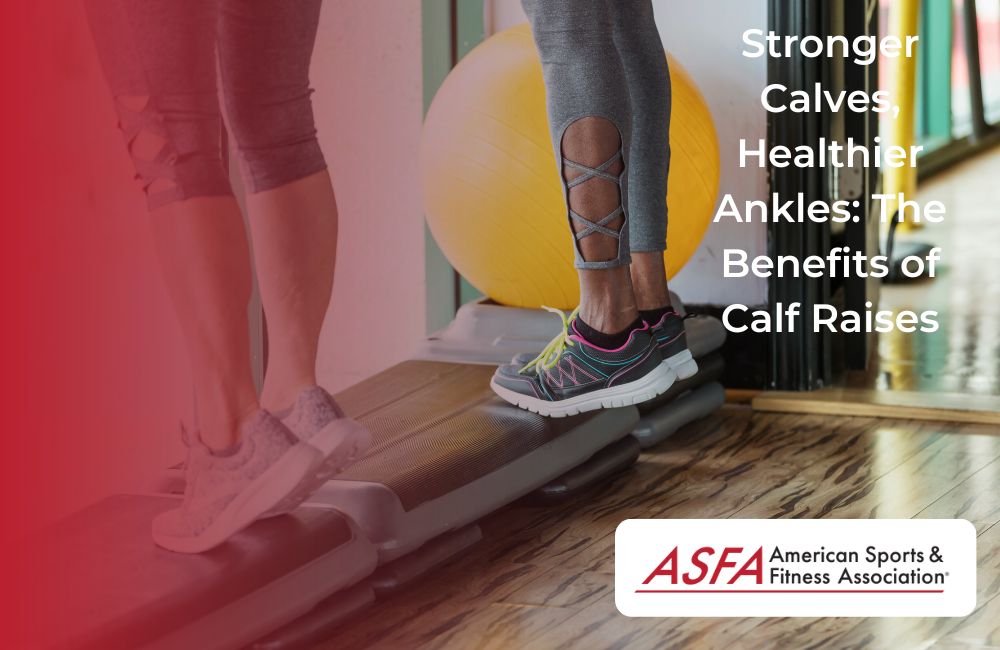
The Benefits of Calf Raises
There is more to The Benefits of Calf Raises than one rule. Context determines which details deserve attention.
Technique is not a single perfect shape. It is a repeatable way to complete the movement while controlling the load, range, and positions that matter for the goal. There is room for individual preference, provided the basic constraints are respected.
How to Apply It
Keep in mind: Choose the variation that permits a stable setup and repeatable range. Add repetitions or resistance only while the same control is maintained; stop when pain or compensation changes the movement.
When to Modify or Stop
Exercise should be adjusted for the participant's experience, symptoms, environment, and available supervision. Stop for sharp pain, dizziness, chest discomfort, sudden weakness, or loss of control, and seek appropriate professional guidance when symptoms are persistent or concerning.
1. Targeted Calf Development
Muscle Focus: Calf raises primarily target the gastrocnemius and soleus muscles, which together form the bulk of the calf muscle. The gastrocnemius is the larger, more visible muscle that gives the calf its rounded shape, while the soleus lies underneath and contributes to overall calf thickness.
Benefits: Regularly performing calf raises stimulates muscle growth in these areas, leading to increased muscle size, definition, and strength. This targeted development helps shape and define your calves, resulting in a more toned and sculpted appearance.
2. Improved Ankle Strength and Stability
Ankle Support: The muscles, tendons, and ligaments surrounding the ankle joint are important for maintaining stability and supporting the body during movement. Calf raises help strengthen these structures by engaging the calf muscles, which in turn provide greater support to the ankle.
Benefits: Improved ankle strength and stability reduce the risk of common ankle injuries, such as sprains and strains, which are particularly prevalent in sports that involve running, jumping, or quick changes in direction. Also, enhanced ankle stability contributes to better overall balance and coordination, both in athletic activities and daily tasks.
3. Enhanced Athletic Performance
Power and Agility: Strong calves and ankles are essential for various athletic movements, including sprinting, jumping, and lateral movements. The calf muscles play a key role in propelling the body forward, pushing off the ground, and absorbing impact.
Benefits: By incorporating calf raises into your fitness routine, you can improve your performance in sports and activities that require power, agility, and balance. Ultimately enhancing your overall athletic performance.
4. Better Balance and Coordination
Stability Challenge: Performing calf raises challenges your balance and coordination, as you must maintain stability while lifting and lowering your heels. This exercise engages not only the calf muscles but also the stabilizing muscles in the legs and core.
Benefits: Regularly practicing calf raises can improve your overall balance and coordination, which are important for both sports performance and everyday activities. Improved balance reduces the risk of falls and injuries, especially as you age, and enhances your ability to perform complex movements with precision and control.
5. Increased Jumping Power
Explosive Strength: Jumping power largely depends on the strength and explosiveness of the calf muscles. Calf raises strengthen the gastrocnemius and soleus, increasing their capacity for force generation.
Benefits: Stronger calf muscles contribute to a more powerful push-off during jumps, leading to increased vertical leap and improved performance in sports that require jumping, such as basketball, volleyball, and track and field. By incorporating calf raises into your training, you can develop the explosive strength needed for better jumping ability and overall lower body power.
6. Reduced Risk of Lower Leg Injuries
Impact Absorption: The calf muscles play a significant role in absorbing impact forces during activities like running and jumping. Strong calves help distribute these forces more evenly, reducing the strain on other parts of the lower leg, such as the shins and Achilles tendon.
Benefits: By strengthening the calf muscles through calf raises, you can reduce the risk of common lower leg injuries, including shin splints, stress fractures, and Achilles tendonitis. This not only supports long-term health and performance but also allows you to continue participating in your favorite activities without the interruption of injury.
7. Improved Posture
Postural Alignment: Strong calves and ankles contribute to better overall posture by maintaining proper alignment of the lower legs and feet. This alignment is important for distributing weight evenly across the body and supporting the natural curves of the spine.
Benefits: By strengthening the muscles that support your lower legs and feet, calf raises can help promote proper body alignment and reduce the risk of postural issues that can lead to discomfort and injury. Good posture is essential for preventing back pain, improving breathing, and enhancing overall body mechanics during movement.
8. Versatility and Progression
Adaptable Exercise: Calf raises can be easily modified to suit your fitness level and goals, making them accessible to individuals of all fitness levels. Here are some variations and progressions to consider:
- Single-Leg Calf Raises: This variation challenges your balance and increases the intensity by focusing on one leg at a time, allowing for more targeted development.
- Weighted Calf Raises: Adding dumbbells, a barbell, or a weighted vest increases the resistance, promoting greater muscle growth and strength.
- Seated Calf Raises: This variation targets the soleus muscle more effectively and is ideal for those who may have difficulties with balance during standing exercises.
- Incorporating Balance Elements: Using tools like a Bosu ball or balance board adds an additional challenge to your stability, further enhancing the benefits of the exercise.
- Body Weight Calf Raises: Performing calf raises using body weight makes the exercise accessible to those without gym equipment, while still effectively strengthening and toning the calf muscles.
9. No Equipment Required
Convenience: One of the greatest advantages of standing calf raises is that they can be performed using body weight. This makes them an ideal exercise for individuals with limited access to gym facilities or those looking to maintain their fitness routine while traveling.
Benefits: You can perform calf raises virtually anywhere—at home, in the office, or even while waiting in line—making it easy to incorporate this effective lower leg exercise into your daily routine. The convenience of calf raises eliminates excuses and ensures you can work on your calf strength and definition regardless of your circumstances.
10. Easy to Incorporate into Your Routine
Seamless Integration: Calf raises can be easily added to your existing workout routine, whether as a standalone exercise or as part of a larger lower body workout. They can also be performed during daily activities, such as while brushing your teeth, waiting for the bus, or watching TV.
Benefits: The simplicity and versatility of calf raises make it easy to work on calf strength and definition throughout the day. By consistently incorporating calf raises into your routine, you can gradually build stronger, more sculpted calves and ankles without dedicating extra time to your workout schedule.
Beginner Calf Workout
- Standing Double-Leg Calf Raise: 3 sets of 15 reps. This exercise can be performed using body weight, making it accessible for beginners without gym equipment.
- Seated Calf Raise (using a bench or chair): 3 sets of 15 reps. Utilizing body weight for this exercise is effective in strengthening and toning the calf muscles.
- Toe Walks: 3 sets of 30 seconds. Performing this exercise with body weight ensures it can be done in various settings, catering to those without access to gym equipment.
Intermediate Calf Workout
- Single-Leg Calf Raise: 3 sets of 12 reps per leg
- Weighted Standing Calf Raise (hold dumbbells): 3 sets of 15 reps
- Calf Stretch ** (hold for 30 seconds on each leg between sets):** 3 sets
Note: These exercises can also be performed using body weight, making them accessible for those without gym equipment. Utilizing body weight is effective in strengthening and toning the calf muscles.
Advanced Calf Workout
- Single-Leg Calf Raise on a Step: 4 sets of 12 reps per leg
- Seated Calf Raise (with added weight): 4 sets of 15 reps
- Donkey Calf Raise (use a partner or weight): 4 sets of 12 reps
- Jump Rope: 3 sets of 1 minute (focus on pushing off with your calves)
Note: These exercises can also be performed using body weight, making them accessible for those without gym equipment. Utilizing body weight can effectively strengthen and tone the calf muscles.
Next-Step Perspective
Good coaching leaves room for feedback. If the response does not match the goal, adjust the dose, range, exercise, or expectation.