
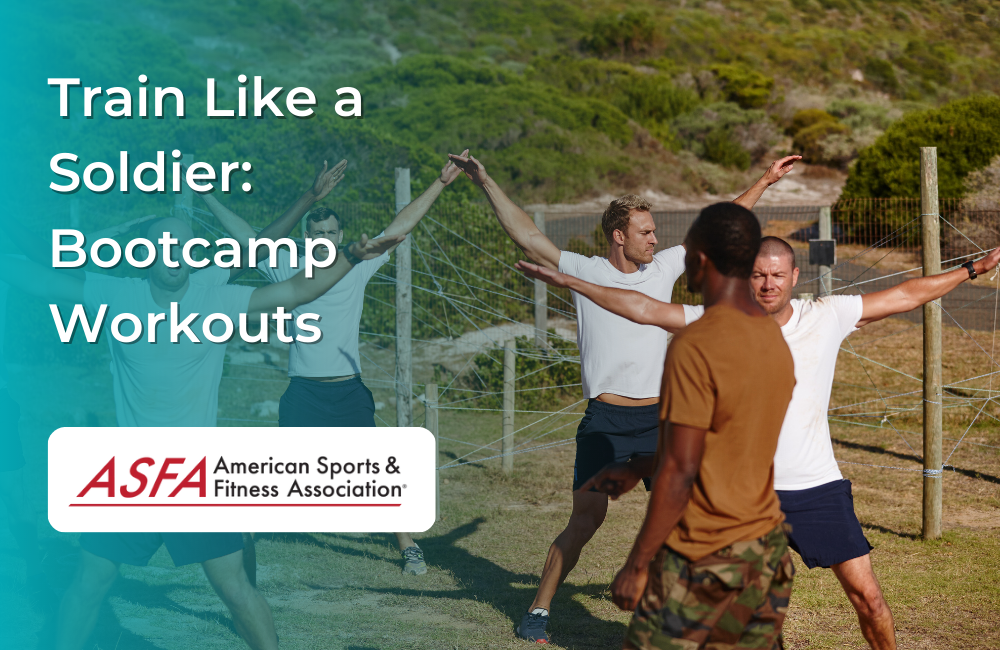
Military-Style Bootcamp Workouts: Structure, Benefits, and Scaling
Military-style bootcamp workouts borrow simple movements, timed intervals, teamwork, and work-capacity training from group physical preparation. They should not pretend to duplicate military selection or use exhaustion as proof of toughness.
A sound session develops general strength, aerobic and anaerobic conditioning, movement under manageable fatigue, and the ability to follow clear instructions. It also offers progressions for participants who have different training histories.
How to Structure a Military-Style Bootcamp
Begin with a movement-based warm-up, teach the exercises, and state the work and recovery periods before the main circuit. Organize equipment and travel lanes so participants do not cross paths while carrying or running.
Use bodyweight exercises, carries, crawls, sleds, sandbags, and running only when the environment supports them. Outdoor terrain, heat, cold, lightning, and visibility are programming variables—not background details.
Exercises and Coaching Notes
1. Loaded Carry
Carry dumbbells, kettlebells, or a sandbag over a marked distance with a tall, controlled posture. Turn carefully and return the equipment to a defined area.
Coaching note: Scale load and distance independently. Grip should not fail in a crowded travel lane.
2. Push-Up
Use the floor, a bench, or a wall. Maintain a stable trunk and lower through a range the participant controls.
Coaching note: Elevation is the preferred way to preserve a good pressing pattern under fatigue.
3. Squat or Sit-to-Stand
Lower with the feet planted and stand by driving through the floor. Use a box when a consistent depth is helpful.
Coaching note: Do not require one squat depth from an entire group.
4. Bear Crawl
Move on hands and feet with the knees hovering close to the floor. Use short distances and keep the travel lane clear.
Coaching note: Crawls can be demanding on the wrists and shoulders; marching or sled work may be a better option for some participants.
5. Sled Push or Drag
Push or pull a sled over a short marked course. Keep the spine controlled and use small, forceful steps.
Coaching note: Sled work is easy to scale and creates less eccentric loading than many jumping drills.
6. Shuttle Run
Run between two markers, decelerate under control, and turn without reaching the foot far outside the body.
Coaching note: Use a fast but controlled pace. A march, walk, or bike interval can replace running.
7. Sandbag Ground-to-Shoulder
Lift a sandbag from a stable position and guide it to one shoulder, then return it under control. Alternate sides.
Coaching note: Use a bag that can be gripped securely and teach the hinge before adding speed.
Programming the Movements
A practical class may use seven stations with thirty to forty seconds of work, twenty to thirty seconds to transition, and three rounds. Another option is a team circuit based on distance and repetitions, provided each participant can scale the task without pressure to match someone else's load.
Track total running, jumping, and loaded-carry volume. High-impact work should be introduced gradually, especially when participants also strength train or play sports. Provide water access and modify or cancel outdoor sessions when conditions are unsafe.
Common Mistakes to Avoid
- Using punishment language: Coaching should build competence and accountability, not humiliation.
- Programming complexity under fatigue: Choose movements that remain understandable and scalable.
- Ignoring the surface: Inspect traction, holes, obstacles, and equipment placement before class.
- No low-impact option: Prepare walking, marching, cycling, or non-jumping alternatives.
- Confusing soreness with effectiveness: Evaluate whether the session met its goal and allowed recovery.
Practical Takeaway
Military-style bootcamp training can be demanding without becoming reckless. Use simple movements, clear standards, planned recovery, and realistic scaling. Discipline in coaching means controlling the session—not merely making it harder.
Teamwork Without Unsafe Competition
Partner and team formats can build accountability when the task rewards communication and steady work. Avoid relays that encourage people to carry a load they cannot control or continue after technique fails because teammates are waiting.
Use shared distance, synchronized low-skill movements, or alternating work and recovery. The team can succeed while each participant uses an appropriate load or movement option.
Recovery Between Bootcamp Sessions
Leave at least a day between demanding full-body sessions for many recreational participants. Walking, easy aerobic work, and mobility can fill the interval. The next class should begin with participants ready to train, not still unable to perform basic movements.


