
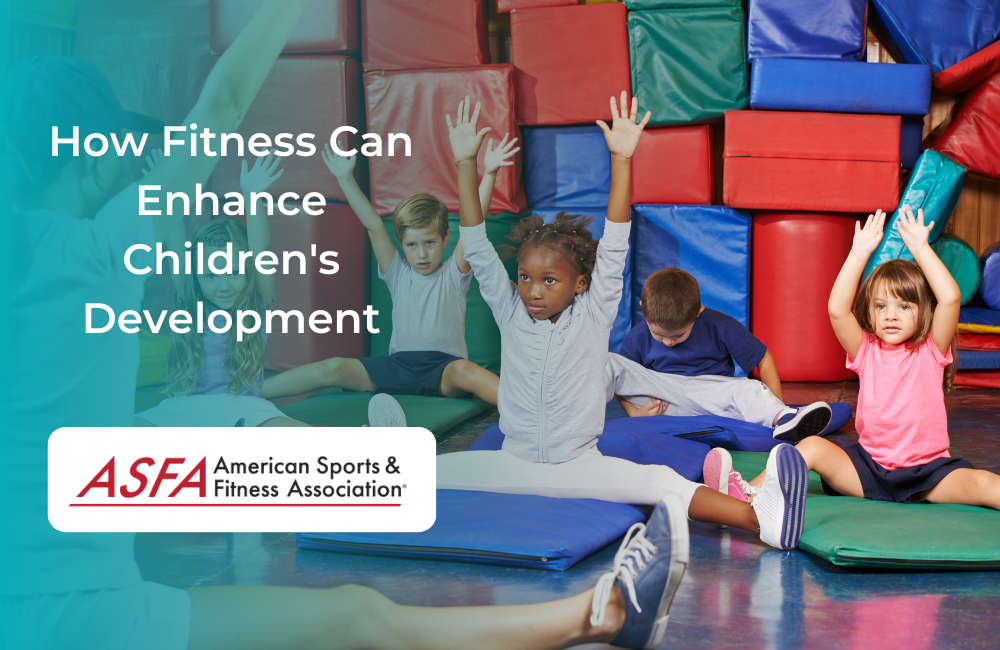
How Fitness Can Enhance Children's Development
For How Fitness Can Enhance Children's Development, sequence matters: decide on the goal, choose a workable starting point, and use feedback to guide the next change.
Youth fitness should build skill, confidence, and positive experiences with movement. Adult programming should not simply be scaled down by weight. The practical question is how to use the information without overstating it.
Physical fitness is an important part of the body and mind.
Physical fitness is an important part of the body and mind. It helps your body to function better, and it helps your mind to function better too.
Physical activity is one way to be physically fit, but there are others as well:
Structured physical activities like sports or exercise programs are good for you. These activities allow you to get active in a specific way with other people who share similar goals, such as improving their speed or strength or learning to play a new sport together as a team.
Good physical fitness is essential for growth and development.
The benefits of regular physical activity include improved cardiovascular health, stronger bones and muscles, better coordination and balance, reduced risk of obesity (and other chronic diseases) in adulthood--and more.
When children are fit, they can do more things: run faster. Jump higher.
Physical activity helps children perform better in school, too; studies show that kids who participate in organized sports make higher grades than those who don't play sports because being active makes them feel good about themselves, which leads them to want to try new things like taking advanced classes at school instead sticking with easier ones all day long just because they're scared no one else will accept them if they fail those classes later down the road when everyone else gets older too old listen carefully now.
Regular physical activity boosts your child's self-esteem.
Regular physical activity boosts your child's self-esteem. Active kids tend to have a more positive body image and higher confidence levels than their inactive peers.
Younger children may not be aware that exercise impacts how they feel about themselves. Still, as they age, they'll see the changes in their bodies and understand why working out benefits them (and everyone else).
Being fit makes it easier for children to concentrate on their studies.
Being fit can help children focus on their studies. Physical active children tend to be more alert and attentive than sedentary children, which is important for learning.
Exercise has been shown to improve concentration in students by improving their brain function, increasing blood flow to the brain, and releasing chemicals that promote alertness and reduce stress. Regular physical activity also helps kids stay focused during long hours of study or exams when they need all the energy they can get!
Physically active children tend to do better in school, have a lower risk of being overweight and obese, and may be at less risk for developing diabetes, heart disease, or high blood pressure.
Physical activity can also help children with their concentration. Physically fit children tend to have more energy than those who aren't, so they're better able to focus on whatever task is at hand, whether paying attention in class or completing homework assignments.
Being physically fit gives kids confidence too! When kids know that they're strong enough to complete tasks like climbing stairs without getting tired easily (or even running), then this gives them the self-assurance needed for when they need more challenging tasks such as learning new skills like playing sports or instruments - which will make them feel proud of themselves when successful outcomes happen because of their hard work!
Safety and Scope
Exercise should be adjusted for the participant's experience, symptoms, environment, and available supervision. Stop for sharp pain, dizziness, chest discomfort, sudden weakness, or loss of control, and seek appropriate professional guidance when symptoms are persistent or concerning.
A Clear Bottom Line
Use the information to make one clear adjustment, then judge the result from repeatable performance rather than novelty.
Use It in Practice
A useful checkpoint: Prioritize instruction, variety, age-appropriate tasks, supervision, and positive feedback. Progress skill before load, and coordinate with parents or guardians and relevant professionals when limitations are known.

Use a Goal-First Framework
When applying How Fitness Can Enhance Children's Development, the program should create an appropriate challenge while preserving control, communication, and a safe setup.
Define success in terms the participant can recognize: smoother movement, greater confidence, another controlled repetition, a longer comfortable interval, or improved consistency. The starting point should be based on present ability rather than an assumption about what someone of a certain age should be able to do.
Create a Useful Feedback Loop
A practical review includes:
- whether the environment supports safe participation
- small improvements in control, endurance, or independence
- feedback from the participant and relevant qualified professionals
- the starting option selected
Keep the review connected to the original goal. More information is not automatically better when the important result remains unclear.
Adapt the Guidance to the Person
Environment can be as important as exercise selection. Lighting, floor surface, noise, temperature, space, equipment access, and the availability of support may determine whether a session is practical. Remove avoidable barriers before increasing physical difficulty.
Keep the Application From Drifting
- Using age as the only measure of ability.
- Removing all challenge instead of providing a suitable challenge.
- Adding complexity before the participant understands the task.
- Failing to plan support, space, hearing, vision, balance, or transition needs.
Avoiding these errors makes the guidance easier to individualize and the result easier to evaluate.
Questions to Answer Before You Proceed
- What support or option preserves the goal?
- Is the challenge appropriate without being rushed?
- What small sign of progress will be reviewed?
- What feedback should change the plan?
- Does the participant understand the task?
- Is the environment organized and accessible?
Use the answers as the baseline for the next decision rather than relying on a vague impression of progress.
What to Change—and What to Keep Stable
The most useful modification is the one that preserves the purpose of the activity. A smaller range or more support can still train strength, balance, coordination, or endurance when it is applied deliberately.
- Check that instructions are easy to hear and understand.
- Keep equipment and walking paths organized.
- Allow time for transitions and position changes.
- Use feedback to determine the next level of challenge.
Progress From Repeatable Success
Progress can be subtle and still matter. A participant may use less hand support, move through a slightly larger range, complete another controlled repetition, recover more quickly, or perform the same task with greater confidence. Choose one progression at a time and keep the environment predictable enough that the participant can focus on the movement.


