
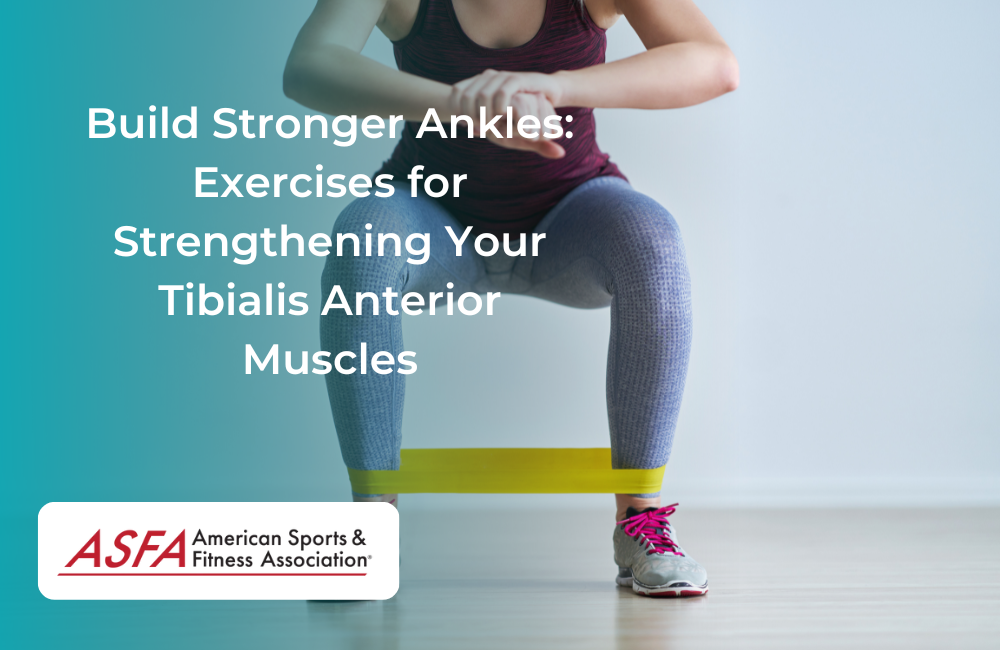
Exercises for Strengthening Your Tibialis Anterior
There is more to Exercises for Strengthening Your Tibialis Anterior than one rule. Context determines which details deserve attention.
Technique is not a single perfect shape. It is a repeatable way to complete the movement while controlling the load, range, and positions that matter for the goal. The next sections turn that principle into specific decisions.
Tibia Exercises: Tibialis Anterior Training for Balance
As we get older, our muscles tend to get weaker. This is especially true for the ankle joint muscles, which are critical for balance and stability.
Single Leg Calf Raises
Single-leg calf raises are a great exercise for strengthening your tibialis anterior muscles. To do this, stand on one leg and raise your other foot off the ground.
Repeat this exercise 10 times per set, doing 3 sets daily (you’ll want to rest at least 48 hours between each workout). When working out regularly with single-leg calf raises, you should notice improvement within 4 weeks!
Standing Wall Ankle Inversion/Eversion (calf raises)
Inversion and eversion are terms used to describe the movement of the ankle. Inversion means turning your foot inward, while eversion means turning your foot outward.
You can do these exercises against a wall or on an incline bench with or without weights. The key is to keep your heel on the ground at all times so that you don’t overstretch or strain any part of your lower leg muscles during this exercise routine.
Wall Ankle Dorsiflexion and Kneeling Tibialis Anterior Stretch
To perform this exercise:
- Stand with your back against a wall and place the balls of your feet flat on the floor.
- Lift up through your heels and point them back toward the ceiling.
- Hold for five seconds before lowering down again.
- Repeat 10 times.
This exercise strengthens the tibialis anterior muscle, located at the front of the shin bone, by making it contract against resistance from gravity during upward ankle movements (dorsiflexion). It also strengthens other muscles involved in maintaining balance, such as flexor hallucis longus, flexor digitorum longus, and peroneus tertius.
Heel Slides
- Step 1: Find a towel, small weight, or sandbag you can comfortably hold in one hand.
- Step 2: Place the object on the floor and then place your foot on top of it at a 90-degree angle.
- Step 3: Slide your foot back and forth using only the muscles in your lower leg (the tibialis anterior). Keep your ankle aligned with your knee–don’t let it roll inward or outward as you slide back and forth!
Calf Raises on an Incline Bench
Calf raises on an incline bench are a great way to strengthen your anterior tibialis muscles and improve ankle stability. You’ll need a bench or step between 4 and 6 inches high (or whatever height is comfortable) to do this exercise.
- Stand with your feet shoulder-width apart and place one foot on top of the bench/step. Your other foot will remain on the floor for balance.
- Raise onto tip-toes with both legs straight until both heels are as high as possible; hold for 3 seconds, then slowly lower yourself back down until both feet are flat on the floor again. Repeat 10 times per leg before switching sides!
Tibialis Anterior Exercises Can Improve Balance
The tibialis anterior muscle is important for walking and balance. It helps you to lift your foot and toes, as well as stabilize the ankle joint.
Tibialis anterior exercises can strengthen this muscle and improve balance by improving its strength and endurance to do its job better than before. Incorporating tibialis anterior stretches into your routine can help may help manage injury risk and improve overall muscle function.
Programming Considerations
Practical point: Choose the variation that permits a stable setup and repeatable range. Add repetitions or resistance only while the same control is maintained; stop when pain or compensation changes the movement.
Limits and Safety
Exercise should be adjusted for the participant's experience, symptoms, environment, and available supervision. Stop for sharp pain, dizziness, chest discomfort, sudden weakness, or loss of control, and seek appropriate professional guidance when symptoms are persistent or concerning.
The Practical Takeaway
The best application is specific enough to guide action and flexible enough to change when the person or circumstances change.
Define the Purpose Before Adding More
Exercises for Strengthening Your Tibialis Anterior becomes more practical when the exercise choice, training dose, and progression method all point toward the same outcome.
For strength, the plan may emphasize load and long rest periods. For muscular endurance, the same movement may use lighter resistance, more repetitions, and shorter recovery. Technique practice may call for low fatigue and frequent high-quality repetitions. Conditioning may use a different structure again. Those approaches are not interchangeable simply because the exercise name is the same.
Why the Same Advice Produces Different Results
Two people can use the same exercise for different reasons and need different versions. Training history, limb proportions, mobility, confidence, equipment, schedule, symptoms, and the rest of the program all affect the decision. Standardize the objective and the tracking method; individualize the setup and dose. That balance makes comparisons more useful without forcing every repetition to look identical.
Keep the Application From Drifting
- Copying an advanced athlete’s program without matching training history or recovery.
- Changing exercises every session before a pattern can be evaluated.
- Letting speed hide a loss of position or control.
- Treating discomfort as a cue to push through rather than a reason to adjust and seek appropriate guidance when needed.
The goal is not perfect control of every variable. It is enough consistency to make an informed next decision.
The Final Planning Questions
- What load, range, tempo, and rest will be recorded?
- What sign will indicate that the set or session should stop?
- Which single variable may progress next?
- How will this work fit with the rest of the week?
- What is the primary training objective?
Use the answers as the baseline for the next decision rather than relying on a vague impression of progress.
Make the Plan Easier to Evaluate
Small programming changes can make the same movement serve a different purpose. Slower repetitions increase time under tension; longer rest may preserve force; shorter rest changes the conditioning demand; additional range can increase difficulty even without more weight.
- Progress only while the intended movement pattern remains recognizable.
- Choose the variable that best matches the current goal.
- Record enough detail to repeat the session accurately.
- Do not treat fatigue as proof that the exercise was well selected.
Review Before You Add More
Start with a version that allows a stable setup and repeatable range. Establish a baseline for repetitions, load, tempo, and perceived effort. Progress one element—such as another repetition, a small resistance increase, more range, or a more demanding variation—only when the prior version remains controlled. If technique changes early, recovery declines, or the target area is no longer doing the intended work, reduce the demand and rebuild from a clearer baseline.


