
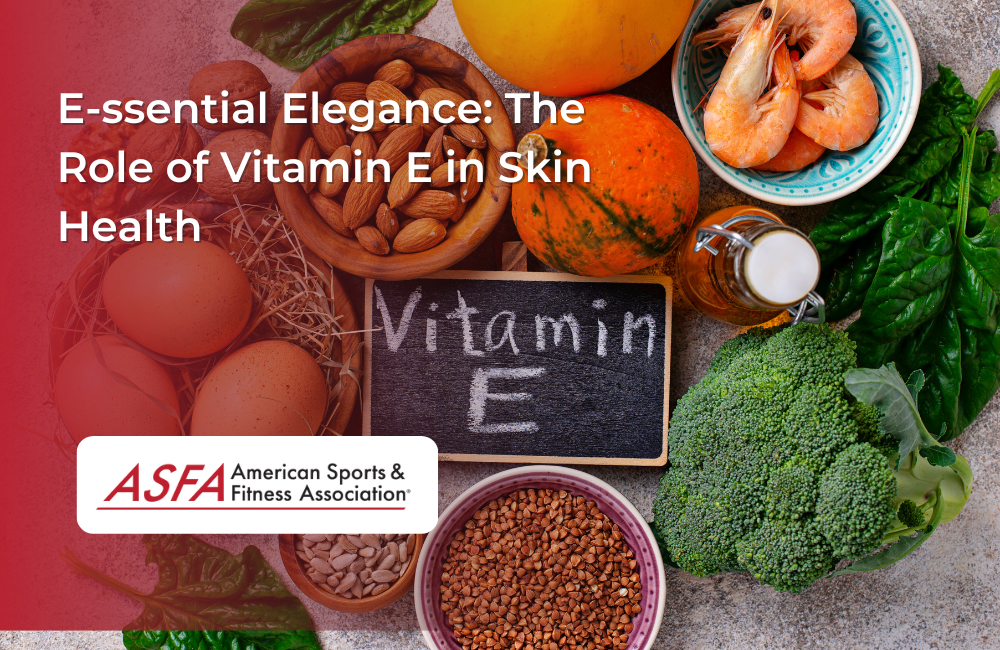
E-ssential Elegance: The Role of Vitamin E in Skin Health
Viewed practically, E-ssential Elegance: The Role of Vitamin E in Skin Health should change a decision in training, coaching, or day-to-day operations.
Nutrition headlines tend to promise more certainty than the evidence supports. Food choices work within an overall eating pattern; no single ingredient controls health or body composition. A simple rule helps: keep the goal visible and adjust the method.
Vitamin E is a powerful antioxidant that protects the skin from free radicals and UV damage.
Vitamin E is a powerful antioxidant that protects the skin from free radicals and UV damage. It prevents the breakdown of collagen and elastin, which helps reduce fine lines and wrinkles.
If you want to keep your complexion looking healthy, consider using essential elegance products like our Natural Moisturizer or Gentle Cleanser with Vitamin E & Sea Kelp Extracts! These products are formulated with healthy ingredients such as aloe vera gel extract - an excellent source of antioxidants including vitamins A & C - plus sea kelp extract which provides nourishment while cleansing away any impurities lingering behind after cleansing off makeup or dirt from working out at the gym.
It prevents the breakdown of collagen and elastin, which helps reduce fine lines and wrinkles.
Vitamin E is a powerful antioxidant that helps prevent the breakdown of collagen and elastin, two proteins that help keep skin looking healthy and youthful. Collagen is the main structural protein in our bodies, while elastin helps skin stretch and return to its original shape.
Vitamin E also has anti-inflammatory properties that make it beneficial for people with acne-prone or rosacea-affected skin types (2). It's even being studied as an alternative treatment for psoriasis!
Vitamin E can help protect against sunburn, reduce redness from pimples, and help may support recovery from wounds.
Vitamin E is a powerful antioxidant that can help protect against sunburn, reduce redness from pimples and help may support recovery from wounds. Vitamin E can be used as a treatment for acne-prone skin.
Vitamins A through K have been shown to have benefits for your health--but vitamin E may be the most important one yet! This fat-soluble vitamin protects against sunburns while also decreasing redness after pimples may support recovery from; plus it's an antioxidant that prevents cell damage due to free radicals in your body (which has been linked with cancer).
It can also be used as a treatment for acne-prone skin.
Vitamin E is a natural anti-inflammatory that can help reduce redness and inflammation. It also has antioxidant properties, which means it can help prevent acne breakouts by neutralizing free radicals that cause damage to your skin.
Vitamin E has been shown to improve skin texture by reducing fine lines and wrinkles, as well as protecting against sun damage by blocking UV rays from penetrating deep within your epidermis (the top layer of your skin).
Find out how you can use essential elegance to keep your skin looking healthy
Vitamin E is an antioxidant that can be found in many foods and is also available as a supplement. It's also used topically to treat acne, sunburn, and other skin conditions.
Vitamin E helps prevent sunburn by protecting the skin from UVB rays and reducing inflammation caused by UVB exposure. It works by forming an outer barrier around cells so they don't absorb damaging free radicals from pollution or smoke (which causes wrinkles).
The Useful Conclusion
Treat the method as a tool, not an identity. Keep what improves the plan and remove what does not.
Practical Guidance
Programming note: Evaluate the whole eating pattern before crediting one food with a specific outcome. Allergies, intolerances, medications, pregnancy, and diagnosed conditions require individualized advice from an appropriately qualified professional.
Safety and Scope
This material is general education, not an individualized nutrition prescription. People with diagnosed conditions, allergies, pregnancy, medication considerations, or a history of disordered eating should seek guidance from an appropriately qualified professional.

Turn the Information Into a Decision
The guidance in E-ssential Elegance: The Role of Vitamin E in Skin Health is most useful when it is placed inside the person’s complete eating pattern rather than treated as a rule about one food or nutrient.
A food can be convenient in one setting and impractical in another. A higher-protein choice may support one meal, but it does not compensate for an overall pattern that fails to match energy needs, food preferences, or training demands. Compare realistic portions and preparation methods rather than judging foods from a headline or a single nutrient.
What to Review After Several Sessions
Useful tracking can remain simple. Record:
- hunger, energy, and satisfaction
- training performance and recovery across normal weeks
- digestive comfort, convenience, and cost
- meal consistency and realistic portions
Look for a pattern across several comparable attempts. One unusually good or difficult day should not determine the entire plan.
Individual Context Still Matters
The same food can be useful in one meal and unnecessary in another. Context determines whether the portion and timing support the goal. Avoid moral labels such as “good” or “bad” when a more precise description—convenient, nutrient-dense, energy-dense, high in protein, low in fiber, or easy to tolerate—would support a better decision.
Keep the Application From Drifting
- Comparing labels that use different serving sizes.
- Using general education to manage a condition that requires individualized guidance.
- Following a trend that conflicts with preferences, budget, access, or tolerance.
- Treating supplement marketing as a substitute for a workable eating pattern.
Avoiding these errors makes the guidance easier to individualize and the result easier to evaluate.
Put the Guidance Through This Test
- How does the choice fit the complete meal and day?
- Is the plan realistic for schedule, budget, access, and preferences?
- What response will be monitored across normal days?
- Is individualized guidance needed for a condition, allergy, or complex goal?
- What is the smallest sustainable improvement?
- What is the actual portion and preparation method?
Use the answers as the baseline for the next decision rather than relying on a vague impression of progress.
What to Change—and What to Keep Stable
Nutrition choices are easier to evaluate when the variables are visible. A food eaten alone may produce a different experience than the same food combined with protein, carbohydrate, fat, fiber, and fluid in a complete meal.
- Read the full label when packaged foods are involved.
- Account for preparation oils, sauces, and added ingredients.
- Use a realistic weekly pattern instead of an idealized single day.
- Keep cultural preferences and budget inside the plan.
Build a Progression You Can Defend
Change the plan in small, observable steps. That might mean adding one consistent meal, adjusting a portion, preparing a reliable snack, improving fluid access, or testing a different timing strategy. Review the change across several normal days rather than judging it from one workout or one meal. A workable improvement should fit the person’s schedule and remain tolerable enough to repeat.


