
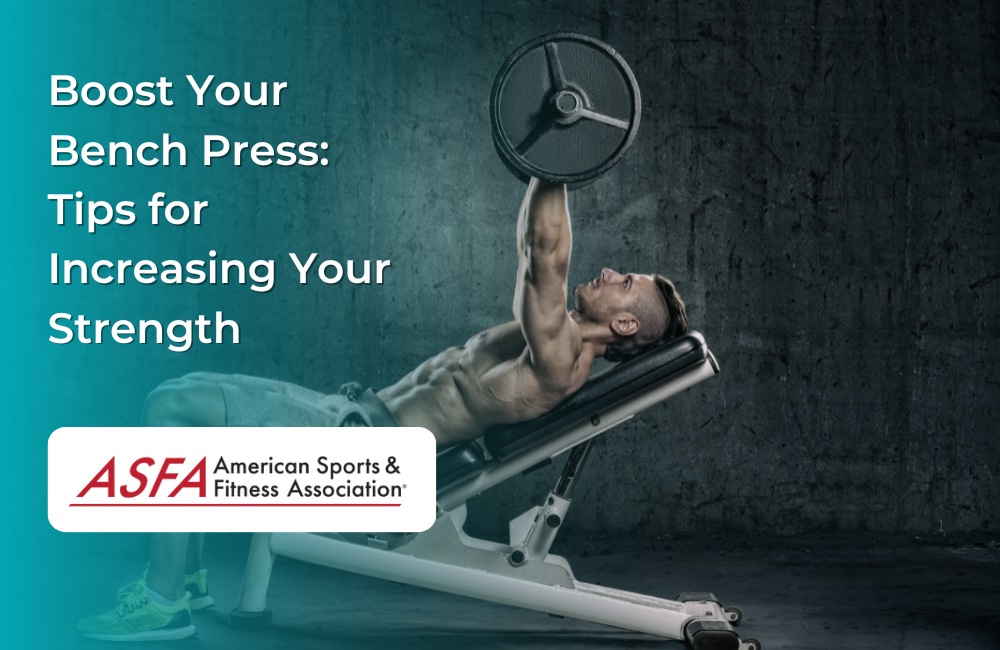
Boost Your Bench Press: Tips for Increasing Your Strength
The clearest way to discuss Boost Your Bench Press: Tips for Increasing Your Strength is to narrow the claims and state the practical limits plainly.
Technique is not a single perfect shape. It is a repeatable way to complete the movement while controlling the load, range, and positions that matter for the goal. There is room for individual preference, provided the basic constraints are respected.
How to Improve Your Bench Press: An Overview
Improving your bench press requires more than just pushing heavy weights. It involves perfecting your form, progressively overloading your muscles, and using proper bench press form along with training techniques that promote both strength and hypertrophy (muscle growth).
Volume vs. Intensity: Understanding the Difference
- Volume refers to the total amount of work you do in a session, which includes the number of sets, reps, and exercises. Higher volume encourages muscle growth and builds endurance.
- Intensity refers to how much weight you're lifting relative to your one-rep max (1RM). Higher intensity leads to increased strength gains by recruiting more muscle fibers.
Here’s how to incorporate both into your training plan:
Use the 10-20% Rule
A useful guideline is to work with weights that are 60-70% of your 1RM. For instance, if your 1RM is 225 pounds (102 kg), aim for sets of 6-10 reps using 135-155 pounds (60-70 kg).
Perfect Your Proper Bench Press Form for Maximum Efficiency
Proper form, starting with the correct starting position, is important for maximizing the weight you can lift and minimizing the risk of injury. Small adjustments in your technique can make a huge difference in how much weight you can push.
Foot Placement
Keep your feet flat on the floor and drive through your heels during the lift. This leg drive provides extra stability and helps generate more force when pressing the weight.
Grip Width
Your grip should be just outside shoulder-width apart. A wider grip will place more emphasis on your chest, while a narrower grip will target your triceps more.
3. Train to Failure for Maximum Muscle Recruitment
Training to failure—performing as many reps as possible until you can no longer lift the weight with proper form—is an effective method for building both strength and muscle mass, especially when addressing bench press struggles. By pushing your muscles to their limits, you force them to adapt and grow stronger.
Here’s how to incorporate training to failure in your bench press routine:
Focus on Good Form
While training to failure is beneficial, it’s important to maintain proper form. If your form starts to break down, stop the set.
4. Incorporate Resistance Bands for Progressive Resistance
Resistance bands are an excellent tool for adding variable resistance to your bench press. When you press the bar, the bands stretch, increasing the resistance as you push higher.
Here’s how to incorporate resistance bands into your bench press routine:
Start with Light Bands
Begin with bands that offer manageable resistance and gradually increase the tension as you get stronger. This allows your muscles to adapt to the new challenge without compromising form.
Examples of Plyometric Exercises Include
- Explosive Push-ups: Perform regular push-ups, but push yourself off the ground with enough force that your hands leave the floor. This explosive movement helps build power in the chest and triceps.
- Medicine Ball Chest Passes: Lie on your back and hold a medicine ball at chest level. Explosively push the ball straight up as high as you can, then catch it as it comes back down.
Plyometrics can be done at the beginning of your workout as part of your warm-up to prime your muscles for heavy lifting. Incorporating them regularly will help you generate more explosive force during the pressing phase of your bench press.
Change Grip Width
Alternate between wide, standard, and close grip bench presses to target different parts of your chest and triceps. A wider grip emphasizes the chest, while a closer grip places more stress on the triceps.
Incorporate Incline and Decline Presses
Incline presses emphasize the upper chest, while decline presses target the lower chest. Both variations will help you develop a more balanced chest and increase your overall bench press strength.
Next-Step Perspective
A sound plan does not need to look dramatic. It needs to be understandable, repeatable, and appropriate for the person using it.
How to Apply It
Coach's note: Choose the variation that permits a stable setup and repeatable range. Add repetitions or resistance only while the same control is maintained; stop when pain or compensation changes the movement.
Start With the Decision That Matters
A strong plan for Boost Your Bench Press: Tips for Increasing Your Strength connects technique with programming, recovery, and the participant’s current level of control.
For strength, the plan may emphasize load and long rest periods. For muscular endurance, the same movement may use lighter resistance, more repetitions, and shorter recovery. Technique practice may call for low fatigue and frequent high-quality repetitions. Conditioning may use a different structure again. Those approaches are not interchangeable simply because the exercise name is the same.
Use Simple Evidence, Not Guesswork
A practical review includes:
- load, range, tempo, and rest used
- perceived effort and how close the set came to technical failure
- recovery, soreness, and performance in the next session
- repetitions completed with the intended technique
Use the record to make a decision: continue, progress, simplify, or replace the current approach. Data that never changes a decision is unnecessary.
Use Principles Without Forcing Uniformity
Two people can use the same exercise for different reasons and need different versions. Training history, limb proportions, mobility, confidence, equipment, schedule, symptoms, and the rest of the program all affect the decision. Standardize the objective and the tracking method; individualize the setup and dose. That balance makes comparisons more useful without forcing every repetition to look identical.
Avoid These Planning Errors
- Treating discomfort as a cue to push through rather than a reason to adjust and seek appropriate guidance when needed.
- Copying an advanced athlete’s program without matching training history or recovery.
- Changing exercises every session before a pattern can be evaluated.
- Letting speed hide a loss of position or control.
The goal is not perfect control of every variable. It is enough consistency to make an informed next decision.
A Practical Review Checklist
- What load, range, tempo, and rest will be recorded?
- What sign will indicate that the set or session should stop?
- Which single variable may progress next?
- How will this work fit with the rest of the week?
- What is the primary training objective?
Use the answers as the baseline for the next decision rather than relying on a vague impression of progress.


