
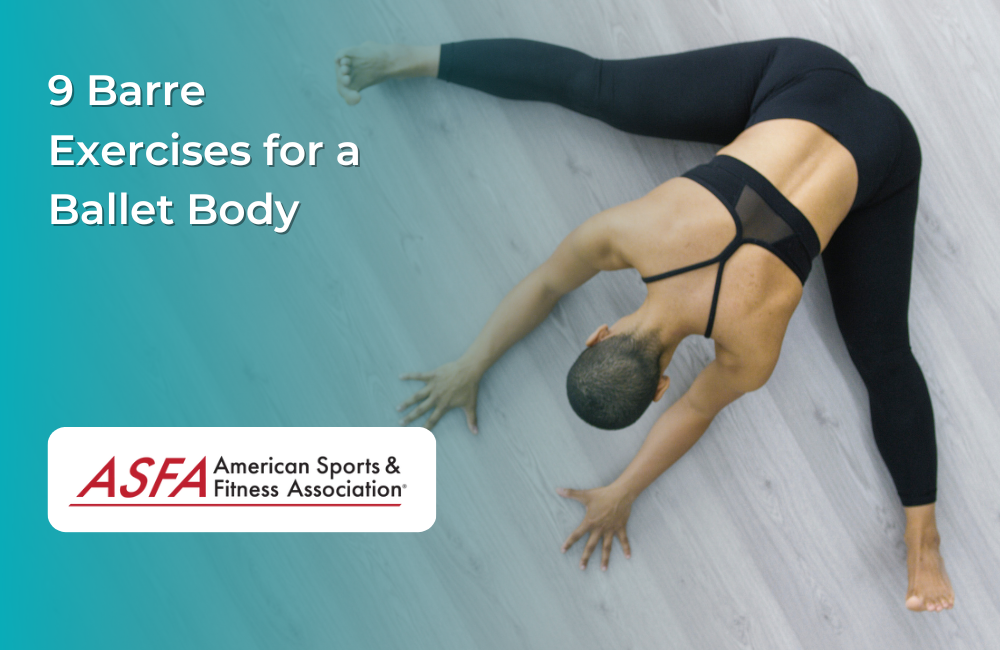
9 Barre Exercises for a Ballet Body
9 Barre Exercises for a Ballet Body covers several ideas, but they do not all carry the same weight. Start with the points that affect execution and consistency.
A strong group session looks energetic from the outside and organized underneath. Coaching, spacing, scaling, and transitions determine whether the class works. Small setup choices can change the experience considerably.
1. Plie Squats for Inner Thighs
Target Muscles: Thighs, glutes, calves, and inner thighs
- Stand with your feet wider than hip-width apart, toes turned out at a 45-degree angle. Keep your shoulders back, chest lifted, and engage your core.
- Benefits: Improves leg strength, enhances balance, and tones the lower body.
2. Leg Lifts
Target Muscles: Outer thighs, hips, glutes, and obliques
- Lie on your side with your bottom leg bent for stability and your top leg straight. Rest your head on your lower arm and place your upper hand on the floor in front of you for support.
- Benefits: Tones and strengthens the outer thighs and glutes, enhances hip mobility.
3. Arabesque Lifts
Target Muscles: Glutes, hamstrings, lower back, and core
- How to Do It: Stand facing the barre or a sturdy chair for support. Position yourself with your feet hip-width apart.
- Benefits: Strengthens and tones the glutes and hamstrings, improves balance and stability.
4. Plank Holds for Full Body Workout
Target Muscles: Core, shoulders, arms, and back
- Begin in a plank position with your forearms on the ground, elbows directly beneath your shoulders, and body in a straight line from head to heels. Engage your core, glutes, and legs to maintain a stable position.
- Benefits: Enhances core stability and strength, improves posture and overall body tension.
5. Tendus
Target Muscles: Inner thighs, calves, ankles, and core
- Stand with your feet parallel and your arms at your sides. Shift your weight onto one leg, and point the other foot forward, keeping your toes on the ground and your leg straight.
- Benefits: Increases leg strength, improves flexibility and coordination, enhances muscle control.
6. Battements
Target Muscles: Quads, glutes, hips, and core
- Stand with your feet parallel and your hands on your hips or holding onto a barre for support. Lift one leg up and out to the side, keeping it straight and your toes pointed.
- Benefits: Tones and strengthens the legs and glutes, improves hip flexibility.
7. Bridge Lifts
- Lie on your back with your knees bent, feet flat on the floor, and arms by your sides. Lift your hips towards the ceiling, squeezing your glutes and hamstrings at the top of the movement.
- Benefits: Strengthens and tones the glutes and hamstrings, enhances lower back stability.
8. Side Leg Lifts
Target Muscles: Outer thighs, hips, glutes, and core
- Lie on your side with your bottom leg bent for support and your top leg straight. Rest your head on your lower arm and place your upper hand on the floor in front of you.
- Benefits: Tones and strengthens the outer thighs and glutes, enhances hip mobility.
9. Passe Releve
Target Muscles: Calves, glutes, core, and lower legs
- Stand facing the barre or a sturdy chair for support. Lift one leg up, placing the foot on the opposite knee in a passe position.
- Benefits: Strengthens and tones the calves, glutes, and lower legs, improves balance and stability.
Additional Tips for Barre Exercises at Home Success
- Proper Form and Alignment: Ensure correct form and alignment in each exercise to maximize effectiveness and may help manage injury risk. Engage your core and maintain a neutral spine throughout your movements.
- Consistency and Progression: Incorporate these exercises into your fitness routine consistently, gradually increasing the number of repetitions and intensity as you build strength and endurance. Mixing up your fitness routine can help avoid plateaus in fitness and weight loss.
- Breathing Techniques: Practice deep, controlled breathing to maintain focus and ensure sufficient oxygen supply to your muscles during exercises.
Expand Your Knowledge with ASFA: Beginner Barre Workout
For those looking to deepen their understanding of barre fitness and enhance their credentials, consider exploring the courses offered by the American Sports & Fitness Association (ASFA). Certifications such as the Barre Fitness Instruction Certification and the Group Fitness Certification provide comprehensive training and knowledge, empowering you to guide others in achieving their fitness goals.
By integrating these detailed barre exercises into your workout routine, you can sculpt a lean, toned physique while improving your overall strength, flexibility, and endurance. Embrace the elegance and effectiveness of barre workouts, and transform your fitness plan with dedication and precision.
Put It Into Practice
A sound plan does not need to look dramatic. It needs to be understandable, repeatable, and appropriate for the person using it.
Important Boundaries
Coach's note: Plan regressions, progressions, traffic flow, equipment spacing, and transition time before class. The coach should be able to see participants and change the session when technique or fatigue warrants it.

Connect the Topic to a Real Objective
The class-design decisions in 9 Barre Exercises for a Ballet Body are strongest when every block has a clear objective and an accessible alternative.
State the class objective in one sentence. Then make each block support it. A conditioning class, technique session, mobility format, and strength-endurance workout should not use identical timing or cueing. Clear intent also makes it easier to offer options without turning the class into several unrelated workouts.
What to Review After Several Sessions
Useful tracking can remain simple. Record:
- technique as fatigue increased
- attendance, feedback, and the ability to repeat the format
- whether participants understood the base option
- transition time and room flow
Use the record to make a decision: continue, progress, simplify, or replace the current approach. Data that never changes a decision is unnecessary.
Use Principles Without Forcing Uniformity
The room itself changes the plan. Class size, equipment, temperature, acoustics, floor space, and sight lines affect what can be coached well. A format that works in a small studio may need a different structure in a crowded facility or outdoor setting.
Avoid These Planning Errors
- Using long explanations while participants are moving quickly.
- Treating every participant as if the same range, load, or pace is appropriate.
- Allowing equipment changes to create rushed, unsupervised transitions.
- Introducing a complex movement only after the room is already fatigued.
The goal is not perfect control of every variable. It is enough consistency to make an informed next decision.
Use This Before the Next Session
- Does intensity match the class description?
- What will be repeated next time to build competence?
- Can the class objective be stated in one sentence?
- Is the base option clear before progressions are introduced?
- Are transitions and equipment organized?
- Can the instructor observe the room during the hardest block?
If those questions have clear answers, the guidance is more likely to produce a plan that can be followed and evaluated.


