
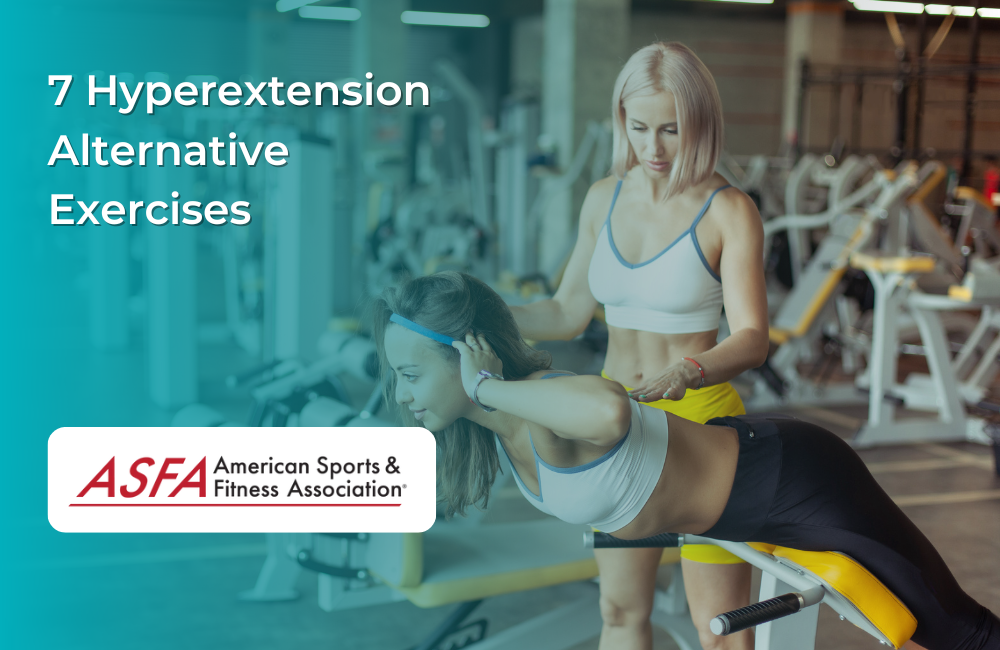
7 Hyperextension Alternative Exercises
7 Hyperextension Alternative Exercises is most useful when each item connects to a real training or coaching decision. A longer list is not automatically a better one.
Technique is not a single perfect shape. It is a repeatable way to complete the movement while controlling the load, range, and positions that matter for the goal. Small setup choices can change the experience considerably.
Important Boundaries
For instructors: Choose the variation that permits a stable setup and repeatable range. Add repetitions or resistance only while the same control is maintained; stop when pain or compensation changes the movement.
What is a Hyperextension Exercise?
A hyperextension exercise is a powerful movement designed to target the muscles of the lower back, glutes, and hamstrings. Typically performed while lying face down on a bench or stability ball, this exercise involves extending the hips and lower back to strengthen and tone these important muscle groups.
1. Bird-Dog
- Muscles Targeted: Lower back, glutes, core, and overall lower body.
How to Perform:
- Begin on your hands and knees in a tabletop position, with your wrists aligned under your shoulders and knees under your hips.
- Extend your right arm forward while simultaneously lifting your left leg backward.
- Keep your core engaged to maintain balance and stability.
- Hold for a few seconds, then return to the starting position.
- Repeat with the opposite arm and leg.
3. Glute Bridge
Muscles Targeted: Lower back, glutes, and hamstrings.
- Lie on your back with your knees bent and feet flat on the floor, hip-width apart.
- Place your arms at your sides, palms facing down.
- Engage your core and push through your heels to lift your hips off the ground, creating a straight line from your shoulders to your knees.
- Squeeze your glutes at the top of the movement.
- Lower your hips back to the ground and repeat.
4. Stability Ball Hamstring Curl
Muscles Targeted: Hamstrings and glutes.
- Lie on your back with your legs extended and your heels resting on a stability ball.
- Place your arms at your sides for stability.
- Lift your hips off the ground, creating a straight line from your shoulders to your heels.
- Bend your knees to roll the stability ball toward your glutes using your hamstrings.
- Slowly extend your legs, rolling the ball back to the starting position.
5. Kettlebell Swings
- Muscles Targeted: Lower back, hamstrings, glutes, and shoulders.
- Stand with your feet shoulder-width apart, holding a kettlebell with both hands in front of you.
- Keep your chest up, shoulders back, and core engaged.
- Hinge at your hips and swing the kettlebell backward between your legs.
- Quickly reverse the motion, driving your hips forward to swing the kettlebell upward.
- The kettlebell should reach chest height, and your arms should remain straight.
7. Single-Leg Deadlifts
- Muscles Targeted: Lower back, hamstrings, glutes, and core.
- Stand with your feet hip-width apart, holding a dumbbell in your right hand.
- Shift your weight onto your left leg and lift your right foot off the ground slightly.
- Keep your back straight and core engaged as you hinge at your hips, lowering the dumbbell toward the ground.
- Extend your right leg behind you for balance.
- Return to the starting position by driving your hips forward.
- Repeat on the other leg.
Tips for Effective Hyperextension Alternatives
When performing hyperextension alternative exercises, maintaining proper form is essential to avoid injury and ensure you effectively target the desired muscle groups. Here are some trainer tips to keep in mind:
- Starting Position: Begin in a position that allows you to maintain a straight line from your head to your heels.
- Core Engagement: Engage your core muscles to support your lower back and maintain proper posture throughout the movement.
- Legs and Feet: Keep your legs straight and your feet shoulder-width apart to ensure stability and balance.
- Controlled Resistance: Use a weight plate or resistance band that allows you to maintain control throughout the exercise.
- Muscle Focus: Concentrate on squeezing your glutes and hamstrings at the top of the movement for maximum engagement.
- Avoid Momentum: Ensure you are not arching your back or using momentum to lift the weight, as this can lead to injury.
Benefits of Hyperextension Alternative Exercises
Incorporating hyperextension alternative exercises into your fitness routine offers a multitude of benefits:
- Improved Posture: Strengthening the muscles of the lower back, glutes, and hamstrings can significantly enhance your posture, reducing the risk of back pain.
- Increased Strength and Muscle Mass: These exercises help build strength and muscle mass in the targeted muscle groups, contributing to overall physical fitness.
- Enhanced Athletic Performance: A strong posterior chain can improve athletic performance by increasing power, speed, and endurance.
- Reduced Risk of Injury: Strengthening the lower back, glutes, and hamstrings can help may help manage injury risk in both sports and daily activities.
- Overall Fitness Improvement: Hyperextension alternatives can be integrated into a comprehensive fitness program, promoting overall well-being and fitness.
Conclusion: Enhance Your Posterior Chain with Variety
Incorporating these hyperextension alternatives into your workout routine can help you strengthen your lower back, hamstrings, and glutes while offering variety. These exercises are especially useful if you experience discomfort with traditional hyperextensions or lack access to specific equipment.
- Always prioritize proper form to avoid injury, especially with exercises that engage the lower back.
- Start with a weight or resistance level that suits your fitness level and gradually increase intensity as you progress.
- Consult with a fitness professional if you have any concerns or pre-existing conditions that may affect your ability to perform these exercises safely.
When to Modify or Stop
Exercise should be adjusted for the participant's experience, symptoms, environment, and available supervision. Stop for sharp pain, dizziness, chest discomfort, sudden weakness, or loss of control, and seek appropriate professional guidance when symptoms are persistent or concerning.
Put It Into Practice
Keep the goal visible, make the smallest change that addresses it, and reassess before adding complexity.
Start With the Decision That Matters
A strong plan for 7 Hyperextension Alternative Exercises connects technique with programming, recovery, and the participant’s current level of control.
Decide whether the priority is skill, strength, muscle development, mobility, work capacity, or general activity. That choice affects exercise order, range of motion, resistance, repetitions, rest, and frequency. A program becomes harder to evaluate when several goals are pursued in the same set without a clear priority.
Progress Without Losing the Original Goal
Start with a version that allows a stable setup and repeatable range. Establish a baseline for repetitions, load, tempo, and perceived effort. Progress one element—such as another repetition, a small resistance increase, more range, or a more demanding variation—only when the prior version remains controlled. If technique changes early, recovery declines, or the target area is no longer doing the intended work, reduce the demand and rebuild from a clearer baseline.


