
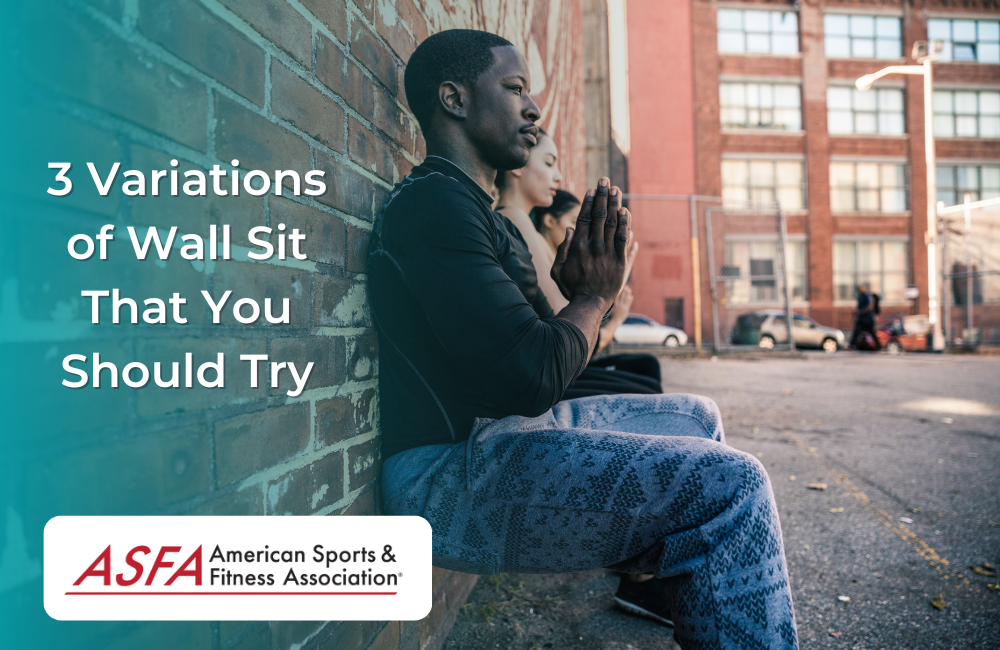
3 Variations of Wall Sit That You Should Try
A wall sit is an isometric exercise: the quadriceps produce force while the knees remain at a nearly fixed angle. It can build local muscular endurance with little equipment, but the position and hold time should match the person's current strength and joint comfort.
How to Perform a Standard Wall Sit
- Stand with your back against a stable wall and place your feet about one to two foot-lengths forward.
- Slide down until you reach a comfortable knee angle. A 90-degree bend is not mandatory; a higher position is a useful regression.
- Keep the feet flat, knees tracking in line with the feet, and head and torso comfortably supported.
- Breathe continuously during the hold. End the set when you cannot maintain the position.
Three Wall-Sit Variations
1. High Wall Sit
Use a shallower knee bend than the standard version. This reduces the demand on the quadriceps and is a practical starting point for a new exerciser. Progress by lowering the position slightly or adding a few seconds to the hold.
2. Wall Sit with Alternating Heel Raise
Hold a stable wall-sit position and lift one heel at a time without shifting the hips. This adds a calf challenge while keeping both feet in contact with the floor. Use a higher wall sit if balance or control is limited.
3. Single-Leg Emphasis Wall Sit
From a comfortable wall sit, shift slightly toward one leg while the other foot remains lightly on the floor for support. Advanced exercisers may briefly lift the unloaded foot, but only if the pelvis stays level and the working knee remains controlled.
Programming and Safety
Start with short holds and full recovery between sets. Progress gradually rather than holding your breath or forcing a deeper angle. Isometric exercise can be part of a well-designed blood-pressure program, but it also produces an acute cardiovascular response during the hold. People with cardiovascular concerns or unmanaged high blood pressure should follow guidance from their health professional and avoid breath-holding.
Wall sits should create muscular effort, not sharp knee, hip, or back pain. Adjust the angle or choose a different lower-body exercise if the position is uncomfortable.
Practical Takeaway
The most useful wall-sit variation is the one you can hold with steady breathing and consistent joint position. Make it harder through small changes in angle, time, or loading—not by sacrificing control.
How to Choose the Right Wall-Sit Angle
A deeper wall sit increases the knee-extensor demand, but ninety degrees is not a mandatory target. Begin higher on the wall and use a position that can be held without the feet slipping or the knees becoming uncomfortable. Progress by lowering slightly, adding a few seconds, or completing another set—one variable at a time.
Foot position matters. If the feet are too close to the wall, the knees may feel crowded and the heels may lift. If the feet are too far forward, the body can slide. Adjust until the whole foot stays planted and the shins are in a stable position.
Programming Wall Sits
Two to four holds of fifteen to forty-five seconds is a practical starting range. End the hold before the hips slide or the feet shift. Longer holds emphasize local endurance; external load increases force demand. Neither progression is automatically better, so select the one that matches the training goal.
Wall sits can appear after squats, lunges, or step-ups as an accessory exercise. They can also serve as a simple home or travel option when equipment is limited. Because they are isometric, they should complement—not replace—training through a full, comfortable range of motion.
Common Wall-Sit Errors
- Placing the feet so close that the heels lift or the knees feel compressed.
- Holding the breath instead of maintaining steady breathing.
- Pressing the hands into the thighs to reduce the work without intending to.
- Adding a plate before a stable bodyweight hold has been established.
- Forcing a fixed depth despite pain or loss of position.
Who Should Modify the Exercise?
Anyone who cannot maintain the position comfortably should use a higher angle, shorter hold, or different quadriceps exercise. Persistent knee pain, swelling, or symptoms that affect daily movement call for qualified evaluation rather than a harder wall-sit variation.
Wall Sits and Knee Position
The knees do not need to remain exactly above the ankles, and a small amount of forward travel is not automatically unsafe. The useful standard is whether the feet stay planted, the knees track in a stable direction, and the selected angle remains comfortable. An individual's limb lengths and stance will change how the position looks.
For athletes, wall sits may supplement but should not replace dynamic strength and sport movement. Isometric endurance at one angle transfers most strongly near that angle, so include squats, step-ups, lunges, or other controlled ranges elsewhere in the program.


