
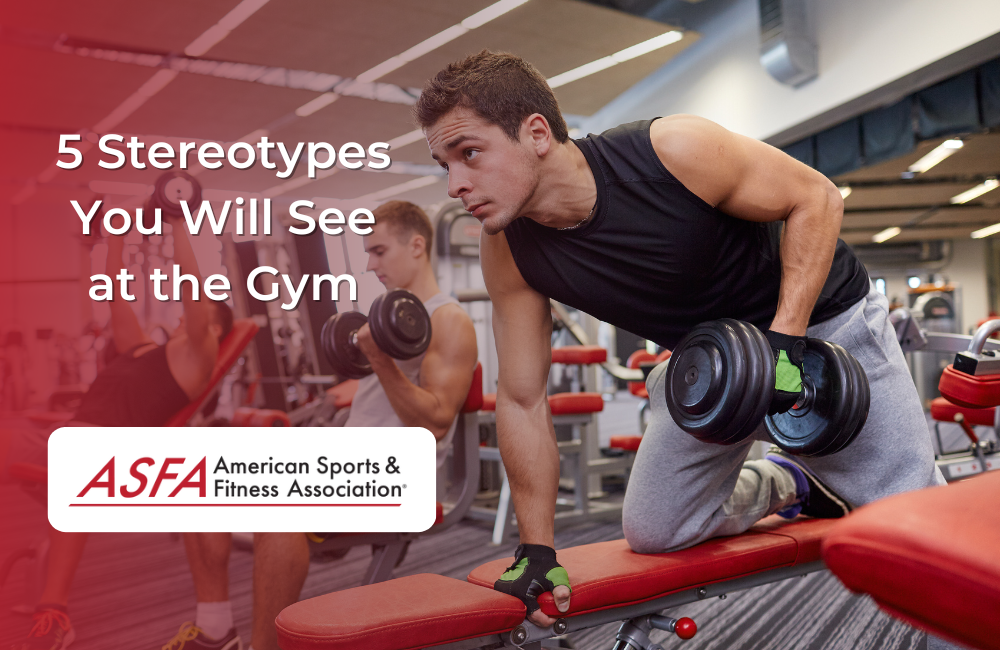
5 Stereotypes You Will See at the Gym
5 Stereotypes You Will See at the Gym covers several ideas, but they do not all carry the same weight. Start with the points that affect execution and consistency.
Fitness advice becomes useful when it can be applied consistently. The best option is usually the one that fits the goal, equipment, experience, and recovery available. There is room for individual preference, provided the basic constraints are respected.
When to Modify or Stop
Exercise should be adjusted for the participant's experience, symptoms, environment, and available supervision. Stop for sharp pain, dizziness, chest discomfort, sudden weakness, or loss of control, and seek appropriate professional guidance when symptoms are persistent or concerning.
Typical Behaviors
- Strikes up conversations with strangers mid-set or while you're trying to catch your breath.
- Frequently asks for workout advice, but may not actually follow through with it.
- May linger around specific machines or areas, not using them but simply chatting.
Challenges They Pose
The Gym Clinger can disrupt your focus and interrupt your workout flow. They often don’t recognize social cues indicating you’re not in the mood to chat, which can be frustrating.
2. The Selfie Queen
The Selfie Queen treats the gym as their personal photo studio. Armed with a smartphone, ring light, or even a tripod, they seem more focused on curating the perfect Instagram post than breaking a sweat.
- Sets up a camera to capture every move, from warm-ups to post-workout flexing.
- Changes outfits mid-session for more varied content.
- Spends more time posing than performing reps.
They can inadvertently monopolize equipment or spaces while setting up their shots. Their focus on documenting every moment might disrupt the flow of others who are there to focus on their workouts.
Typical Workout Behaviors
- Engages in marathon sessions, sometimes hogging equipment for extended periods to build and showcase their muscles.
- Can be overly intense, grunting loudly or dropping weights for dramatic effect.
- May offer unsolicited advice to others, assuming their way is the only way.
Their enthusiasm and intensity can feel overwhelming, especially for newcomers who might feel intimidated or judged by the pain and physical challenges that come with intense gym workouts.
- Observe and learn; Gym Rats often have a wealth of fitness knowledge.
- Politely decline advice if you’re not interested, saying something like, “Thanks, I’ve got it covered. ”
- If they’re monopolizing equipment, politely ask to alternate sets or use the machine when they’re resting.
4. The Gym Flirt
The Gym Flirt is the kind of guy who uses the gym as his social playground, often more focused on catching someone’s attention than working on his fitness goals. Their charm can sometimes feel overbearing or out of place in a fitness-focused environment.
- Strikes up conversations with multiple people, often using compliments or flirtatious remarks.
- May hover around specific individuals or equipment, in the hope of catching someone’s attention, particularly females.
- Often seen lingering in common areas, making prolonged eye contact or chatting unnecessarily.
Defining Traits and Muscles
The Fit Father balances his fitness routine with family responsibilities. He’s often juggling time constraints and might even bring his kids along to watch from the sidelines or participate in age-appropriate activities.
- Works out efficiently, often sticking to tried-and-true exercises like bench presses, squats, or deadlifts, and visits the gym multiple times a week to maintain consistency.
- Offers friendly tips or encouragement to others, often with a dad-joke style humor.
- May coordinate family-friendly workouts or encourage family members to join in.
Tips for Thriving in Any Gym Environment
- Wear Headphones: A great way to signal that you’re in the zone and not open for extended conversations.
- Stick to Your Plan: Know your workout routine before you arrive to avoid distractions or feeling overwhelmed.
- Be Courteous: Share equipment and spaces, and practice good gym etiquette.
- Engage When Appropriate: While some behaviors can be frustrating, remember that gyms are also social spaces. A little friendliness can go a long way.
- Focus on Progress: Whether you’re surrounded by Gym Rats who diligently work to improve their skills and performance in sports or Selfie Queens, remember why you’re there—your own fitness plan.
Next-Step Perspective
A sound plan does not need to look dramatic. It needs to be understandable, repeatable, and appropriate for the person using it.
How to Apply It
Coach's note: Use a starting workload that can be repeated with consistent technique. The most useful progression is often modest: an extra repetition, a small load increase, or slightly more total work.
Define the Purpose Before Adding More
A practical application of 5 Stereotypes You Will See at the Gym starts by defining who the advice is for, what outcome matters, and what constraints apply.
Write the objective in plain language and choose one or two indicators that would show progress. Avoid adding complexity before the basic action is being performed consistently. A useful framework should make the next decision easier, not create more tasks than the person can reasonably manage.
Measure the Response That Matters
A practical review includes:
- the starting point and the exact change made
- a result connected to the stated objective
- consistency across several normal attempts
- constraints or side effects that make the plan harder to sustain
Look for a pattern across several comparable attempts. One unusually good or difficult day should not determine the entire plan.
Keep the Recommendation Proportional
Experience, resources, schedule, environment, preferences, and competing priorities can all change the best application. Use the principle as a starting point and adjust the method. A recommendation is more useful when it acknowledges the conditions required for it to work.
Avoid These Planning Errors
- Continuing an approach because it sounds persuasive rather than because it works.
- Replacing the whole plan when one component needs adjustment.
- Using a best-case scenario as the normal expectation.
- Ignoring the environment and resources required to follow the plan.
A clear plan does not remove uncertainty, but it makes the next adjustment more responsible and easier to explain.
The Final Planning Questions
- What outcome matters most?
- Which assumptions are being made?
- What action can be repeated under normal conditions?
- What evidence will be reviewed?
- When will the plan be reassessed?
If those questions have clear answers, the guidance is more likely to produce a plan that can be followed and evaluated.
The Details That Alter the Outcome
A recommendation is easier to test when only one or two meaningful variables change at a time. Constantly replacing the entire plan makes it difficult to know what helped.
- Separate short-term variation from a persistent pattern.
- Use the evidence from the person’s response.
- Keep the starting point simple.
- Set a review date before making another change.
Review Before You Add More
Establish a baseline, make one meaningful adjustment, and set a review point. Progress when the result is stable enough to interpret. If the change creates more friction than benefit, simplify it. A plan that can be repeated and evaluated usually produces better information than a dramatic change that is abandoned quickly.


