
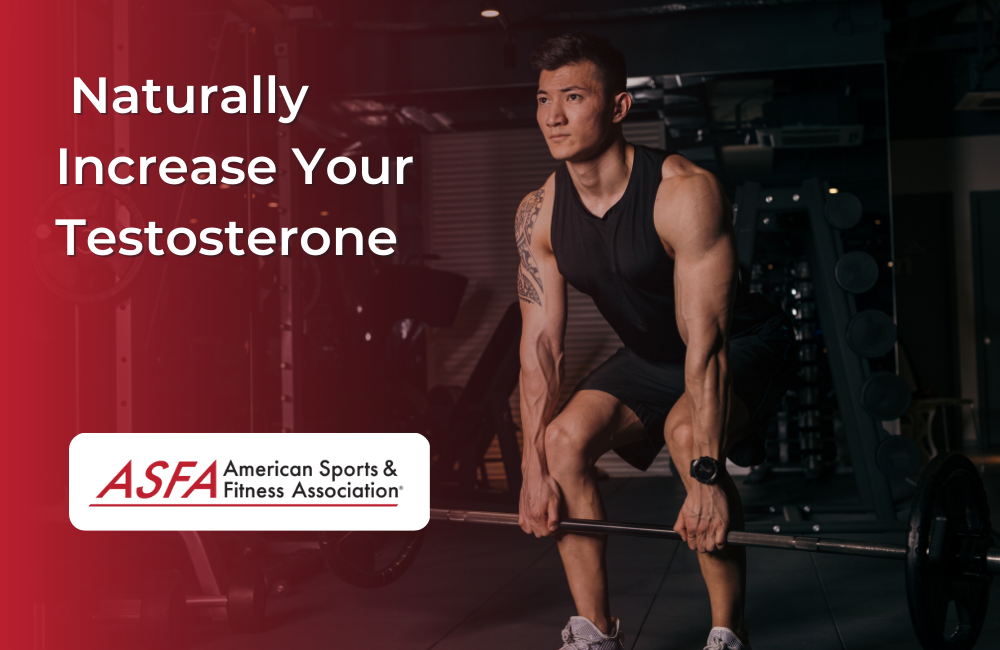
5 Exercises That Can Naturally Increase Your Testosterone
The points in 5 Exercises That Can Naturally Increase Your Testosterone are organized around practical application rather than exaggerated promises.
Technique is not a single perfect shape. It is a repeatable way to complete the movement while controlling the load, range, and positions that matter for the goal. There is room for individual preference, provided the basic constraints are respected.
How to Apply It
Keep in mind: Choose the variation that permits a stable setup and repeatable range. Add repetitions or resistance only while the same control is maintained; stop when pain or compensation changes the movement.
When to Modify or Stop
Exercise should be adjusted for the participant's experience, symptoms, environment, and available supervision. Stop for sharp pain, dizziness, chest discomfort, sudden weakness, or loss of control, and seek appropriate professional guidance when symptoms are persistent or concerning.
2) Deadlifts for Muscle Mass
One of the most effective exercises for boosting testosterone levels is deadlifts. Deadlifts work multiple muscle groups, including your core and lower back muscles, as well as your glutes and hamstrings.
When performing deadlifts, make sure that you maintain proper form. Start by standing with your feet shoulder-width apart, bend at the hips to grip the barbell in an overhand grip, keep your chest up and shoulders back, and maintain a flat back throughout the movement.
Benefits of Deadlifts
- Full-Body Workout: Engages multiple muscle groups, enhancing overall strength.
- Hormonal Release: Stimulates the release of testosterone and growth hormones.
- Functional Strength: Improves functional fitness and posture.
3) Standing Military Press for Upper Body
The standing military press is a great way to increase your natural testosterone levels. This exercise focuses on the shoulder muscles, targeting the anterior deltoids and upper trapezius, which are part of the upper body and rich in androgen receptors.
The standing military press is an excellent exercise for increasing natural testosterone levels because it engages the entire body in a single movement. Also, by focusing on the shoulders you will be directly targeting the most common area of testosterone production.
How to Perform Standing Military Press
- Stand with your feet shoulder-width apart.
- Grasp the barbell just outside of shoulder width.
- Keep your back straight and your head up.
- With a slight bend in your knees, press the barbell up over your head until your arms are fully extended.
- Lower the bar back to its original starting position and repeat.
4) Bench Press
The bench press is a great exercise for naturally increasing your testosterone levels. It works both the chest and shoulders, two muscle groups that are heavily involved in producing testosterone.
How to Perform Bench Press
- Lie down flat on a weight bench with a barbell above your head.
- Grip the barbell with hands shoulder-width apart.
- Lower the barbell to your chest while inhaling deeply and keeping your core tight.
- Press the barbell back up to the starting position, fully extending your arms.
- Control the barbell as it moves both up and down and keep your elbows close to your body throughout the movement.
5) Barbell Curls
Barbell curls are a great exercise for boosting your natural testosterone levels. The curl is one of the most fundamental exercises for building muscle in the arms, and it’s also effective for stimulating testosterone production.
Performing barbell curls can help increase testosterone production in a variety of ways. It helps stimulate the muscles of the arms which triggers an increased release of testosterone in the body.
How to Perform Barbell Curls
- Stand up straight with a barbell in both hands, hands shoulder-width apart.
- Keep your elbows close to your body and your palms facing upward.
- Lift the barbell up towards your chest, keeping your arms close to your sides.
- Engage your core muscles and maintain good posture throughout the movement.
- Pause briefly at chest level before slowly lowering the barbell back down.
Next-Step Perspective
Good coaching leaves room for feedback. If the response does not match the goal, adjust the dose, range, exercise, or expectation.
Connect the Topic to a Real Objective
Applying the ideas in 5 Exercises That Can Naturally Increase Your Testosterone starts with a clear training objective rather than copying a movement, drill, or weekly schedule without context.
For strength, the plan may emphasize load and long rest periods. For muscular endurance, the same movement may use lighter resistance, more repetitions, and shorter recovery. Technique practice may call for low fatigue and frequent high-quality repetitions. Conditioning may use a different structure again. Those approaches are not interchangeable simply because the exercise name is the same.
Why the Same Advice Produces Different Results
Two people can use the same exercise for different reasons and need different versions. Training history, limb proportions, mobility, confidence, equipment, schedule, symptoms, and the rest of the program all affect the decision. Standardize the objective and the tracking method; individualize the setup and dose. That balance makes comparisons more useful without forcing every repetition to look identical.
Where Good Information Can Go Wrong
- Increasing load, repetitions, range, and frequency at the same time.
- Using fatigue or soreness as the only evidence of an effective session.
- Forcing a standardized range or stance when another controlled setup better fits the participant.
- Choosing the hardest variation before the base movement is controlled.
The goal is not perfect control of every variable. It is enough consistency to make an informed next decision.
A Simple Implementation Check
- What sign will indicate that the set or session should stop?
- Which single variable may progress next?
- How will this work fit with the rest of the week?
- What is the primary training objective?
- Which variation allows the intended technique today?
If those questions have clear answers, the guidance is more likely to produce a plan that can be followed and evaluated.
Adjust One Variable at a Time
Small programming changes can make the same movement serve a different purpose. Slower repetitions increase time under tension; longer rest may preserve force; shorter rest changes the conditioning demand; additional range can increase difficulty even without more weight.
- Record enough detail to repeat the session accurately.
- Do not treat fatigue as proof that the exercise was well selected.
- Progress only while the intended movement pattern remains recognizable.
- Choose the variable that best matches the current goal.
Build a Progression You Can Defend
Progression is not limited to adding weight. Better control, a smoother range of motion, a longer pause, improved balance, or the same work at a lower perceived effort can all represent progress. Choose the next step that fits the goal. An advanced variation is not an upgrade when it changes the exercise so much that the original objective is lost.


