
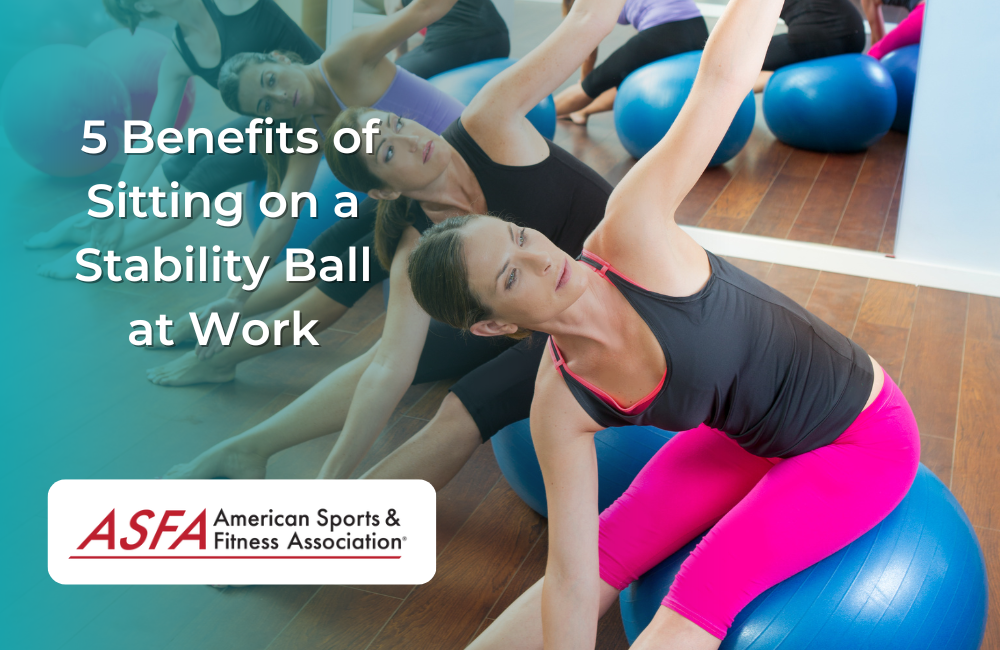
5 Benefits of Sitting on a Stability Ball at Work
5 Benefits of Sitting on a Stability Ball at Work is most useful when each item connects to a real training or coaching decision. A longer list is not automatically a better one.
Balance is a trainable skill influenced by strength, sensory information, attention, and the specific task. Progression should be deliberate, not theatrical. The next sections turn that principle into specific decisions.
What Is a Stability Ball?
A stability ball, also known as an exercise ball or balance ball, is a large inflatable ball made of durable rubber or plastic. Originally designed for physical therapy and rehabilitation, these balls are now widely used for fitness, yoga, and even as a replacement for office chairs.
When used correctly in a workspace, a stability ball can transform a sedentary activity like sitting into an opportunity for fitness and better posture.
Maximizing Calorie Burn During Exercise
You can maximize the calorie-burning potential of your stability ball by adding in small movements or exercises throughout your day. One example: try bouncing lightly on the ball, doing mini- squats, or adding seated leg lifts during breaks.
Avoiding Slouching
One of the challenges of prolonged sitting in a traditional chair is that it often encourages slouching or leaning forward. In contrast, sitting on a stability ball encourages you to sit up straight and maintain a neutral spine position, as slouching could cause you to lose balance.
A Fun Way to Work
Many people find that using a stability ball adds an element of fun to their workday. Whether it’s the subtle bouncing or the need to focus on balancing, using a ball can make the day feel more interactive and engaging.
Mind and Body Connection
There’s a strong connection between physical activity and mental performance. Studies show that movement, even subtle movements like those required to balance on a stability ball, can increase blood flow to the brain, which helps with concentration and cognitive function.
5. Strengthen Your Core
Perhaps the most well-known benefit of sitting on a stability ball is its ability to strengthen your core. Unlike a chair, which provides full support, a stability ball requires you to engage your core muscles to maintain balance and stay upright.
1. Choose the Right Size Ball
The size of your stability ball matters. If the ball is too large or too small, it can lead to poor posture and discomfort.
4. Incorporate Movement Breaks
While sitting on a stability ball promotes active sitting, it’s still important to take regular breaks to stand, stretch, and move around. Try to stand up and move every 30-60 minutes to prevent stiffness and improve circulation.
Pros
- Improves posture by promoting active sitting
- Strengthens core muscles and back
- Burns more calories compared to sitting in a chair
- Enhances focus and reduces mental fatigue
- Adds variety to your workday and can boost mood
Programming Considerations
Programming note: Place support within reach, clear the area, and progress one variable at a time. Closing the eyes, narrowing the stance, adding motion, and using an unstable surface should not all be combined at once.
The Practical Takeaway
Treat the method as a tool, not an identity. Keep what improves the plan and remove what does not.
Limits and Safety
Exercise should be adjusted for the participant's experience, symptoms, environment, and available supervision. Stop for sharp pain, dizziness, chest discomfort, sudden weakness, or loss of control, and seek appropriate professional guidance when symptoms are persistent or concerning.
What Changes the Answer
With 5 Benefits of Sitting on a Stability Ball at Work, the same recommendation can produce different results for two people. Experience, recent workload, movement skill, available equipment, schedule, preferences, and recovery all change what is reasonable.
Review the result over several exposures rather than judging one unusually good or difficult session. Useful progress is usually visible as better control, a more appropriate workload, improved consistency, or clearer decision-making.

Use a Goal-First Framework
A strong plan for 5 Benefits of Sitting on a Stability Ball at Work connects technique with programming, recovery, and the participant’s current level of control.
For strength, the plan may emphasize load and long rest periods. For muscular endurance, the same movement may use lighter resistance, more repetitions, and shorter recovery. Technique practice may call for low fatigue and frequent high-quality repetitions. Conditioning may use a different structure again. Those approaches are not interchangeable simply because the exercise name is the same.
Control the Variables That Change the Result
Small programming changes can make the same movement serve a different purpose. Slower repetitions increase time under tension; longer rest may preserve force; shorter rest changes the conditioning demand; additional range can increase difficulty even without more weight.
- Record enough detail to repeat the session accurately.
- Do not treat fatigue as proof that the exercise was well selected.
- Progress only while the intended movement pattern remains recognizable.
- Choose the variable that best matches the current goal.
Review Before You Add More
Start with a version that allows a stable setup and repeatable range. Establish a baseline for repetitions, load, tempo, and perceived effort. Progress one element—such as another repetition, a small resistance increase, more range, or a more demanding variation—only when the prior version remains controlled. If technique changes early, recovery declines, or the target area is no longer doing the intended work, reduce the demand and rebuild from a clearer baseline.
Create a Useful Feedback Loop
A short record is usually enough. Review:
- repetitions completed with the intended technique
- load, range, tempo, and rest used
- perceived effort and how close the set came to technical failure
- recovery, soreness, and performance in the next session
Use the record to make a decision: continue, progress, simplify, or replace the current approach. Data that never changes a decision is unnecessary.
Adapt the Guidance to the Person
Exercise selection should fit the participant rather than require the participant to fit a preferred variation. A different stance, grip, range, resistance, or tool may preserve the goal more effectively. Use the version that allows a controlled and repeatable pattern, then progress from the response rather than from an arbitrary timetable.
Common Ways the Idea Gets Misapplied
- Forcing a standardized range or stance when another controlled setup better fits the participant.
- Choosing the hardest variation before the base movement is controlled.
- Increasing load, repetitions, range, and frequency at the same time.
- Using fatigue or soreness as the only evidence of an effective session.
The correction is straightforward: return to the objective, simplify the setup, and change only what the available feedback supports.
Use This Before the Next Session
- How will this work fit with the rest of the week?
- What is the primary training objective?
- Which variation allows the intended technique today?
- What load, range, tempo, and rest will be recorded?
- What sign will indicate that the set or session should stop?
- Which single variable may progress next?
Use the answers as the baseline for the next decision rather than relying on a vague impression of progress.


