
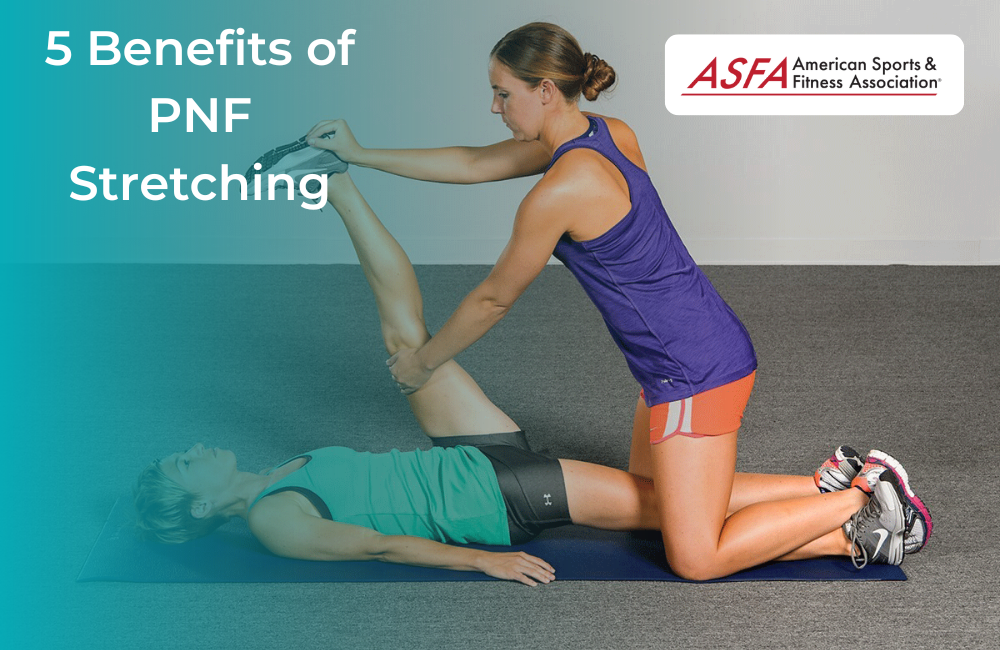
5 Benefits of PNF Stretching
5 Benefits of PNF Stretching covers several ideas, but they do not all carry the same weight. Start with the points that affect execution and consistency.
Mobility changes slowly and responds to regular practice. Sensation alone is not proof that a drill is helping. Small setup choices can change the experience considerably.
When to Modify or Stop
Exercise should be adjusted for the participant's experience, symptoms, environment, and available supervision. Stop for sharp pain, dizziness, chest discomfort, sudden weakness, or loss of control, and seek appropriate professional guidance when symptoms are persistent or concerning.
What is Proprioceptive Neuromuscular Facilitation (PNF) Stretching?
Proprioceptive Neuromuscular Facilitation (PNF) stretching is a sophisticated technique designed to enhance muscle flexibility and range of motion. Unlike traditional static stretching, PNF stretching involves a combination of passive stretching and isometric muscle contractions.
The technique leverages the inverse myotatic reflex, also known as the Golgi tendon reflex, to achieve deeper muscle relaxation. By alternating between contracting and relaxing the muscles, PNF stretching helps realign muscle fibers and improve overall muscle flexibility.
Greater Muscle Length and Elasticity
PNF stretching is known for significantly enhancing flexibility and expanding range of motion, allowing muscles to extend and contract more effectively. PNF techniques help realign muscle fibers and restore connective tissue after micro-damage sustained during intense workouts.
Better Joint Stability and Muscle Balance
One of the primary functions of PNF stretching is to support muscle and joint stability, which can be instrumental in reducing the risk of injuries. Flexible muscles are more resilient under pressure and can better absorb impact, decreasing the likelihood of strains, sprains, and other injuries.
How PNF Stretching Improves Muscle Strength and Endurance
Incorporating PNF stretching into your fitness routine can significantly improve muscle strength and endurance. This stretching technique not only increases the length of the muscle but also enhances neuromuscular efficiency.
Studies have shown that athletes who incorporate PNF stretching into their regular routines experience notable improvements in activities such as jogging, vertical jumping, and throwing distance. For instance, a study found that athletes who performed PNF stretching twice a week for eight weeks saw more than double the improvement in their vertical jump and throwing distance compared to those who did not.
Correcting Muscle Imbalances and Realigning Muscle Fibers for Better Posture
PNF stretching is an effective tool for correcting postural issues, as it balances out muscle groups by stretching tight muscles and activating weaker ones. Poor posture can result from muscular imbalances, often caused by repetitive motions, prolonged sitting, or inadequate stretching.
Safety Precautions and Guidelines for PNF Stretching
While PNF stretching is highly effective, it’s essential to approach it with caution to avoid injury. PNF stretching involves specific techniques that require proper guidance, making it advisable to perform these stretches with a knowledgeable partner or under the supervision of a trained professional.
One of the key safety precautions is to avoid stretching unstable joints, such as the shoulders, to prevent potential injuries. PNF stretching can temporarily decrease muscular performance in activities that require maximal muscle effort, such as plyometrics, sprinting, weightlifting, and high-intensity training.
Seeking Certified Guidance for Optimal Results
PNF stretching can be complex, and having guidance from a qualified trainer is important to ensure proper technique and avoid overstretching. Trainers certified through organizations like the ASFA can tailor PNF stretching routines to your specific needs, helping you achieve safe and effective results.
Put It Into Practice
A sound plan does not need to look dramatic. It needs to be understandable, repeatable, and appropriate for the person using it.
Important Boundaries
Coach's note: Use a range that creates tension without sharp pain, numbness, or loss of control. Longer or deeper is not automatically better; progress should be based on repeatable motion and the demands of the activity.
Keep the Method Connected to the Goal
With 5 Benefits of PNF Stretching, the same recommendation can produce different results for two people. Experience, recent workload, movement skill, available equipment, schedule, preferences, and recovery all change what is reasonable.
Review the result over several exposures rather than judging one unusually good or difficult session. Useful progress is usually visible as better control, a more appropriate workload, improved consistency, or clearer decision-making.
Give the Idea a Clear Job
A strong plan for 5 Benefits of PNF Stretching connects technique with programming, recovery, and the participant’s current level of control.
Decide whether the priority is skill, strength, muscle development, mobility, work capacity, or general activity. That choice affects exercise order, range of motion, resistance, repetitions, rest, and frequency. A program becomes harder to evaluate when several goals are pursued in the same set without a clear priority.
A Better Way to Increase Difficulty
Progression is not limited to adding weight. Better control, a smoother range of motion, a longer pause, improved balance, or the same work at a lower perceived effort can all represent progress. Choose the next step that fits the goal. An advanced variation is not an upgrade when it changes the exercise so much that the original objective is lost.
What to Review After Several Sessions
Before changing the plan again, compare:
- the variation and setup used
- where technique first changed
- whether the target goal improved across several sessions
- whether fatigue interfered with other training
When the response differs from the expectation, revisit the setup and assumptions before adding more volume, restriction, or complexity.
Adapt the Guidance to the Person
Exercise selection should fit the participant rather than require the participant to fit a preferred variation. A different stance, grip, range, resistance, or tool may preserve the goal more effectively. Use the version that allows a controlled and repeatable pattern, then progress from the response rather than from an arbitrary timetable.
Keep the Application From Drifting
- Choosing the hardest variation before the base movement is controlled.
- Increasing load, repetitions, range, and frequency at the same time.
- Using fatigue or soreness as the only evidence of an effective session.
- Forcing a standardized range or stance when another controlled setup better fits the participant.
The goal is not perfect control of every variable. It is enough consistency to make an informed next decision.
A Practical Review Checklist
- What sign will indicate that the set or session should stop?
- Which single variable may progress next?
- How will this work fit with the rest of the week?
- What is the primary training objective?
- Which variation allows the intended technique today?
- What load, range, tempo, and rest will be recorded?
The checklist is intentionally practical: each answer should change how the plan is designed, delivered, or reviewed.
Make the Plan Easier to Evaluate
The main programming variables are exercise selection, setup, range of motion, resistance, repetitions, sets, tempo, rest, frequency, and proximity to fatigue.
- Reduce range, resistance, speed, or complexity when quality begins to change.
- Change one major variable at a time so the response can be interpreted.
- Keep technique standards consistent when load or repetitions increase.
- Use a version that fits the available equipment and the participant’s current control.


