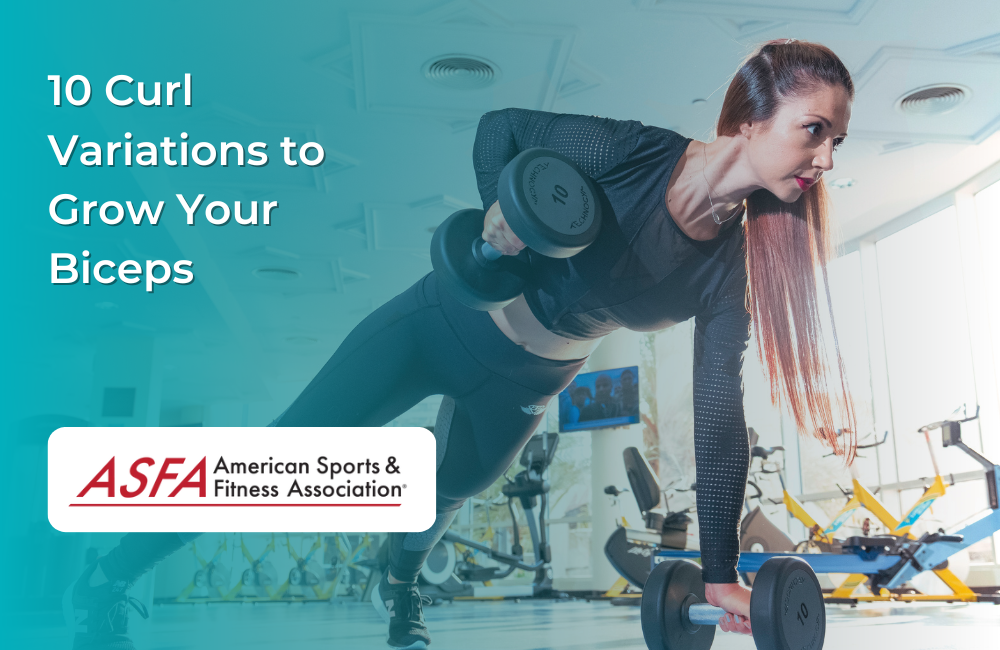
10 Curl Variations to Grow Your Biceps
The points in 10 Curl Variations to Grow Your Biceps are organized around practical application rather than exaggerated promises.
Technique is not a single perfect shape. It is a repeatable way to complete the movement while controlling the load, range, and positions that matter for the goal. The practical question is how to use the information without overstating it.
Use It in Practice
Practical point: Choose the variation that permits a stable setup and repeatable range. Add repetitions or resistance only while the same control is maintained; stop when pain or compensation changes the movement.
Benefits of Biceps Curls
Biceps curls are a cornerstone of arm workouts, offering numerous benefits that go beyond just building muscle. Here’s why incorporating biceps curls into your routine is essential:
- Increased Muscle Mass: Regular biceps curls are a surefire way to build muscle mass in your biceps brachii, enhancing the overall size and strength of your upper arms.
- Improved Muscle Tone: Consistent biceps curls help in sculpting well-defined bicep muscles, giving your arms a more athletic and toned appearance.
- Enhanced Athletic Performance: Strong biceps are important for sports that require upper arm strength, such as tennis, basketball, and football. Biceps curls can improve your performance by boosting your arm power.
- Injury Prevention: Strengthening your biceps can help may help manage injury risk, especially in activities involving repetitive arm movements. Strong biceps support the shoulder blades and reduce the risk of strain.
- Overall Fitness: Biceps curls contribute to overall fitness by improving muscle strength and endurance. When combined with other exercises, they help create a balanced and effective workout routine.
1. Barbell Bicep Curl
The classic barbell curl is foundational for bicep development, allowing you to lift heavier weights and target the long head of the biceps for improved arm thickness.
How to do it: Stand with your feet shoulder-width apart, holding a barbell with palms facing forward. Curl the bar toward your chest, keeping your elbows close to your body, and control the lowering phase to maximize muscle engagement.
- Use a challenging weight without compromising form.
- Keep wrists stable to protect them from strain and maintain alignment.
2. Incline Dumbbell Curl
Dumbbell curls offer a greater range of motion and allow for unilateral training, which can address muscle imbalances between your arms.
How to do it: Hold a dumbbell in each hand with arms fully extended. Curl them upward in a smooth arc, then lower with control.
- Try seated curls for stricter form and focused movement.
- Slightly rotate the palms outward at the bottom for a greater stretch.
- Perform the dumbbell biceps curl both standing and seated for versatility.
- Avoid common mistakes such as swinging the weights or using momentum. Focus on a controlled motion.
- Variations include hammer curls and concentration curls to target different parts of the biceps.
3. Hammer Curls
Hammer curls emphasize the brachialis, the muscle under the biceps, adding width and peak to your arms.
How to do it: Hold dumbbells with a neutral grip (palms facing each other) and curl up, keeping elbows close to your sides.
- Focus on a slow eccentric (lowering) phase to build strength.
- Incorporate hammer curls to create arms that look fuller from all angles.
5. Concentration Curls
Made popular by Arnold Schwarzenegger, concentration curls ensure peak muscle activation and emphasize the mind-muscle connection. Proper form and controlled movements are important while performing the concentration curl to effectively target and build the biceps, particularly the biceps peak.
How to do it: Sit on a bench, spread your legs apart, and hold a dumbbell in one hand. Rest your elbow against your inner thigh and curl the weight slowly, focusing on squeezing the bicep at the top.
6. Spider Curls
Spider curls are ideal for hitting the short head of the biceps, helping you achieve a fuller, more rounded appearance. Also, the incline dumbbell curl is highly effective for targeting the biceps.
How to do it: Set an incline bench to 45 degrees, lie face down with your arms hanging, hold a barbell or dumbbells, and curl toward your forehead. For the incline dumbbell curl, sit on an inclined bench with your back firmly against it, hold a dumbbell in each hand, and curl the weights while keeping your shoulders stable.
7. Zottman Curls
This unique variation targets both the biceps and forearms, making it a valuable addition to your arm training.
How to do it: Start with a regular dumbbell curl, then rotate your wrists to a palms-down position at the top before slowly lowering.
- Emphasize the eccentric phase for improved forearm activation.
- Great for those seeking forearm strength and endurance along with bicep development.
8. Reverse Curls
Reverse curls target the brachioradialis and biceps, giving the arms a balanced look and engaging forearm muscles for overall arm development.
How to do it: Hold a barbell or dumbbells with a palms-down grip and curl up while keeping wrists and elbows aligned.
- Tighten your grip to prevent slipping and enhance forearm engagement.
- Perfect for those aiming for stronger, more defined forearms.
9. 21s
21s combine partial and full reps, exhausting your biceps and enhancing the mind-muscle connection.
How to do it: Perform 7 partial reps from the bottom to the midpoint, 7 partial reps from the midpoint to the top, and finish with 7 full reps.
- Use lighter weights due to the intensity and length of each set.
- Try using this exercise as a finisher to burn out your biceps.
10. Resistance Band Curls
Resistance bands provide constant tension, adding a unique challenge to the movement that dumbbells or barbells alone can’t replicate.
How to do it: Stand on the band, hold the handles, and curl, maintaining tension throughout each rep.
- Ideal for home workouts or as a warm-up to activate biceps.
- Adjust band tension to challenge your muscles without strain.
Key Tips for Effective Biceps Curl Variations
With a variety of curl options, it’s essential to focus on proper technique to get the best results. Here are tips to elevate your bicep training:
- Focus on Form: Strict form ensures your biceps are doing the work without assistance from other muscles. Avoid swinging or using momentum.
- Progressive Overload: Consistently increase the weight or reps to challenge your muscles and stimulate growth.
- Incorporate Variation: Alternate between curl types to avoid plateaus and target all areas of the biceps.
- Control Your Tempo: A slower tempo helps build strength and muscle control. Squeeze at the top and lower the weight with control.
- Full Range of Motion: Maximize muscle activation by using a full range of motion, avoiding short reps.
- Recovery Matters: Allow at least 48 hours between intense bicep workouts for muscle recovery and growth.
Designing a Bicep Workout Plan
Here’s how to incorporate these curl variations into a dedicated bicep workout plan. Adjust sets, reps, and weights to suit your goals and fitness level.
- Barbell Bicep Curl – 3 sets of 8-10 reps
- Hammer Curl – 3 sets of 10-12 reps
- Preacher Curl – 3 sets of 8-10 reps
- Spider Curl – 2 sets of 12- 15 reps
- 21s – 2 sets (one per arm for unilateral exercises)
Weekly Approach: Train your biceps 1-2 times a week, either as part of an upper-body day or in a dedicated arm day to avoid overtraining.
Tracking Progress and Avoiding Plateaus
Stagnation can hinder your progress, so tracking and adjusting your workouts is key:
- Increase Intensity: Boost weights or reps every few weeks.
- Track Metrics: Log weights, sets, and reps to monitor your progress.
- Mix Up the Order: Changing the exercise sequence keeps muscles guessing, avoiding adaptation.
Common Mistakes to Avoid in Biceps Brachii Training
To achieve optimal results, steer clear of these common pitfalls:
- Neglecting Other Arm Muscles: Remember that triceps make up two-thirds of your upper arm. Balance your arm training by including tricep exercises.
- Training Too Frequently: Biceps need recovery time to grow. Stick to 1-2 focused sessions per week.
- Using Excessive Weight: Form matters more than weight. Avoid ego lifting, as it increases injury risk and decreases effectiveness.
- Ignoring Progressive Overload: Without progression, muscles won’t grow. Gradually increase weight, reps, or intensity.
A Clear Bottom Line
The best application is specific enough to guide action and flexible enough to change when the person or circumstances change.
Safety and Scope
Exercise should be adjusted for the participant's experience, symptoms, environment, and available supervision. Stop for sharp pain, dizziness, chest discomfort, sudden weakness, or loss of control, and seek appropriate professional guidance when symptoms are persistent or concerning.