
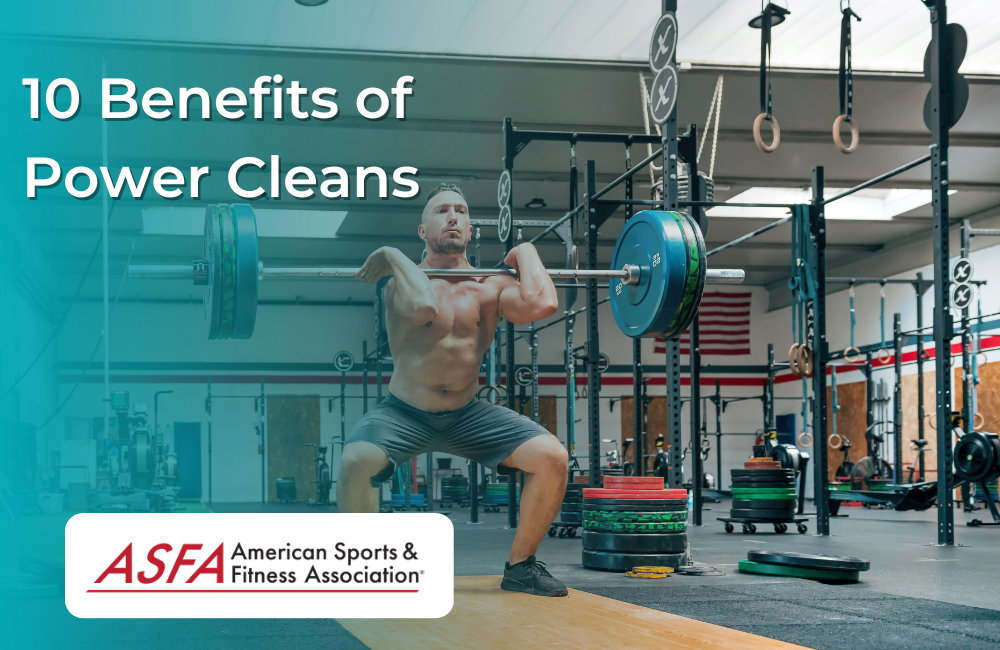
10 Benefits of Power Cleans
The points in 10 Benefits of Power Cleans are organized around practical application rather than exaggerated promises.
Technique is not a single perfect shape. It is a repeatable way to complete the movement while controlling the load, range, and positions that matter for the goal. The next sections turn that principle into specific decisions.
Introduction to Power Cleans
The power clean is a compound exercise that involves lifting a barbell from the floor to a racked position across the shoulders with speed and force. Originating from the clean and jerk, one of the lifts in Olympic weightlifting, the power clean is a high-intensity exercise that demands both strength and technique.
1. Full-Body Workout
Power cleans activate multiple muscle groups throughout the entire body simultaneously, making them a top choice for efficient full-body training. This exercise targets the legs, glutes, back, core, shoulders, and arms in one powerful movement.
2. Increased Power and Explosiveness
As an explosive lift, the power clean trains the body to generate force quickly. The movement involves the rapid extension of the hips, knees, and ankles, known as the “triple extension,” which is essential for explosive power.
3. Improved Athletic Performance
Because power cleans train the body for explosive power, they directly improve performance in sports that require speed, agility, and power. By incorporating power cleans, athletes can enhance their ability to jump, sprint, and change direction quickly.
5. Improved Body Composition
Power cleans are a high-intensity exercise that demands significant energy, making them effective for fat loss and muscle gain. Since power cleans engage large muscle groups, they can increase metabolic rate, aiding in calorie burning both during and after your workout.
6. Increased Muscle Activation
Power cleans involve extensive activation of the lower body and posterior chain—the muscles along the backside of the body, including the calves, hamstrings, glutes, lower back, and upper back. This helps correct imbalances in muscle activation, especially if you spend long hours sitting or have weaker posterior muscles.
7. Enhanced Core Strength
Core stability is essential for performing power cleans correctly, as a strong core helps maintain a neutral spine and transfer force from the lower to the upper body. During the lift, your core muscles are engaged to stabilize your torso and protect the spine.
8. Improved Grip Strength
Holding and controlling a barbell through the entire range of motion of a power clean requires a firm grip, especially during the catch phase. Over time, performing power cleans can increase your grip strength, which is beneficial not only for lifting but also for various sports and daily tasks requiring strong hand and forearm muscles.
9. Increased Flexibility and Mobility
Power cleans require good mobility in the hips, knees, ankles, shoulders, and wrists. Regular practice can help improve flexibility in these areas, allowing for better movement patterns and reducing stiffness.
10. Mental Toughness
Power cleans are a demanding exercise that challenges not only physical but also mental strength. The complexity and intensity of the movement require focus, determination, and perseverance.
Additional Performance Benefits
The power clean is not just about building muscle; it also offers several performance benefits that can give athletes a competitive edge. One of the key advantages is the ability to produce force quickly, which is essential for sports that require rapid, explosive movements.
Tips for Incorporating Power Cleans into Your Workout Routine
To maximize the benefits of power cleans while reducing the risk of injury, consider these tips:
1. Learn Proper Technique: Power cleans are a technical exercise that requires precision to perform safely and effectively.
2. Warm-Up Thoroughly: Given the explosive nature of power cleans, a thorough warm-up is important.
3. Start with Lighter Weights: Mastering the movement with lighter weights allows you to build a strong foundation of good form and confidence before progressing to heavier loads.
Common Mistakes and Variations
When performing power cleans, it’s important to avoid common mistakes to ensure you get the most out of the exercise and reduce the risk of injury. One frequent error is using the arms to pull the barbell up instead of relying on the legs and hips.
To add variety to your training and target different muscle groups, consider incorporating variations of the power clean. The hang power clean, For instance, starts from a standing position with the barbell at hip level, rather than from the floor, emphasizing the upper body’s role in the lift.
Boost Your Athletic Performance with Power Cleans
Power cleans are a versatile and rewarding exercise that can enhance strength, power, and overall fitness. By incorporating them into your routine with proper form and technique, you can tap into a wealth of benefits, from improved athletic performance to a stronger, more balanced physique.
Programming Considerations
Practical point: Choose the variation that permits a stable setup and repeatable range. Add repetitions or resistance only while the same control is maintained; stop when pain or compensation changes the movement.
The Practical Takeaway
The best application is specific enough to guide action and flexible enough to change when the person or circumstances change.

Define the Purpose Before Adding More
A strong plan for 10 Benefits of Power Cleans connects technique with programming, recovery, and the participant’s current level of control.
For strength, the plan may emphasize load and long rest periods. For muscular endurance, the same movement may use lighter resistance, more repetitions, and shorter recovery. Technique practice may call for low fatigue and frequent high-quality repetitions. Conditioning may use a different structure again. Those approaches are not interchangeable simply because the exercise name is the same.
Keep the Recommendation Proportional
Two people can use the same exercise for different reasons and need different versions. Training history, limb proportions, mobility, confidence, equipment, schedule, symptoms, and the rest of the program all affect the decision. Standardize the objective and the tracking method; individualize the setup and dose. That balance makes comparisons more useful without forcing every repetition to look identical.
Common Ways the Idea Gets Misapplied
- Copying an advanced athlete’s program without matching training history or recovery.
- Changing exercises every session before a pattern can be evaluated.
- Letting speed hide a loss of position or control.
- Treating discomfort as a cue to push through rather than a reason to adjust and seek appropriate guidance when needed.
Avoiding these errors makes the guidance easier to individualize and the result easier to evaluate.
A Simple Implementation Check
- Which variation allows the intended technique today?
- What load, range, tempo, and rest will be recorded?
- What sign will indicate that the set or session should stop?
- Which single variable may progress next?
- How will this work fit with the rest of the week?
This review keeps the next step tied to the topic while leaving room for individual judgment and feedback.


